









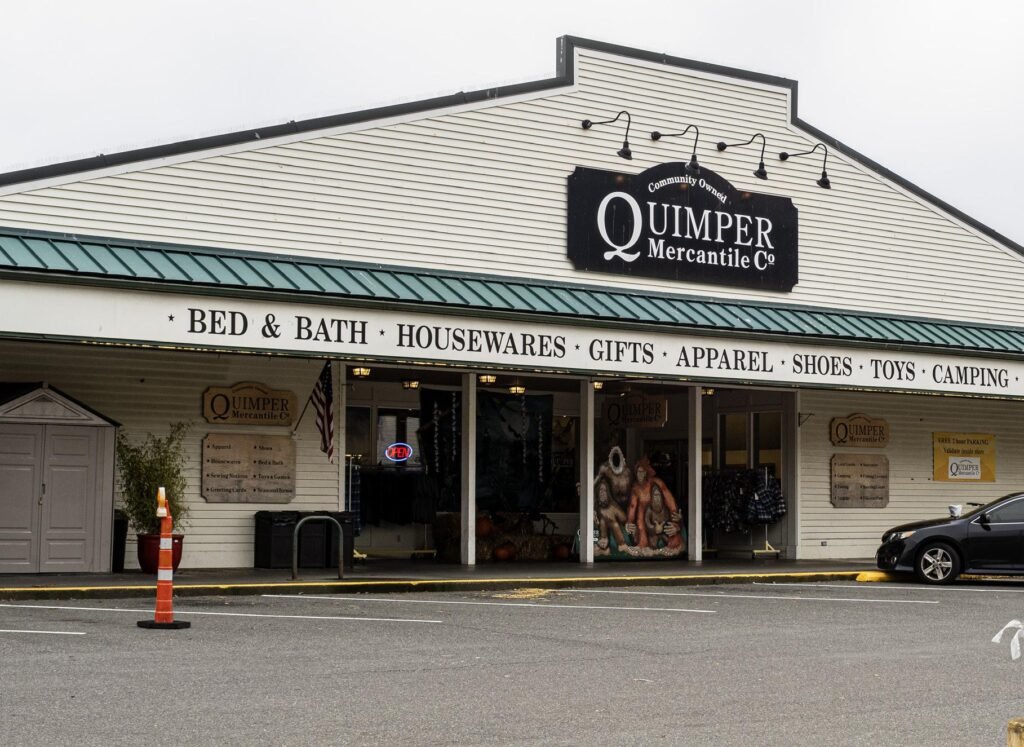
The landscape of Port Townsend’s retail sector is undergoing a significant shift as long-standing local businesses prepare to abandon the Port Townsend Plaza. The exodus, triggered by the site’s acquisition by California-based private equity firm Hall Equities Group, highlights the increasing friction between local commerce and the rise of automated, high-tech management solutions.
For many tenants, the decision to leave comes down to a controversial parking enforcement system that has frustrated residents and visitors alike. Since Hall Equities purchased the plaza in 2022, the once-public parking lot has been transformed into a monitored zone utilizing a network of eight AI-powered license plate reader cameras.
The Tech Behind the Tension
The parking facility, managed by Colorado-based Parking Revenue Recovery Services (PRRS), relies on advanced computer vision technology to enforce its policies. The cameras, mounted strategically throughout the property, automatically track incoming vehicles and cross-reference them with payment data processed at onsite digital kiosks. When a driver fails to pay or exceeds their allotted time, the system automatically triggers a bill.
While this type of automated infrastructure is becoming standard in property management, its rollout in Port Townsend has been marred by accusations of poor user experience and technical opacity. The system’s implementation sparked an immediate community outcry, with critics citing confusing signage and the reputation of the management firm itself. PRRS has been the subject of thousands of complaints globally, and in 2023, the company reached a settlement with the Colorado Attorney General’s office for inappropriately charging and collecting fines from consumers.
The local impact was swift. “It has hurt our sales and complicated Port Townsend’s downtown shopping experience,” said Peter Quinn, president of the Board of Quimper Mercantile. The business, a staple of the plaza, has announced it will vacate its space by 2032 and has already secured a new location at the intersection of Sims Way and Evans Vista Road to escape the ongoing management conflict.
The Challenge of Algorithmic Management
Hall Equities Group has defended the deployment of these automated systems, characterizing them as a necessary tool for managing a property that lacks the budget for full-time, on-site personnel. During an August 2025 hearing, Board Chairman Mark Hall argued that the technology serves as a “disincentive” for people using the private lot as free public parking.
However, the aggressive nature of the software and its enforcement policies has alienated the very customers that local businesses rely on. Retailers have noted that the “black box” nature of these systems—where drivers are penalized by algorithms—makes it difficult for local merchants to provide the kind of customer-friendly atmosphere that keeps a local economy thriving. Even with the introduction of two-hour validation programs, many shoppers remain wary of the cameras, choosing to avoid the plaza entirely to prevent potential billing disputes.
Regulatory Limitations and Community Identity
The controversy has left local officials in a difficult position. While City Finance Director Jodi Adams and Interim City Manager Steve King have acknowledged the negative impact on the community—particularly for elderly residents who find the digital-only payment kiosks difficult to navigate—the city government admits it has little leverage to intervene.
Existing city ordinances are designed to maintain local character, such as rules limiting large national chains, but they were never intended to regulate the private equity firms that increasingly control local real estate. As Steve King noted, the city must balance its desire to protect small businesses with the legal limits of government oversight.
For now, the future of the Port Townsend Plaza remains clouded by speculation, with rumors that the owners may look to replace current retail tenants with hospitality developments like hotels. As the town grapples with the transition from human-managed spaces to automated, tech-driven ones, the struggle serves as a case study in the tension between profit-maximizing corporate technology and the organic, community-based needs of a local economy.
Disclaimer: This content is auto-generated for informational purposes only.
Source: Read Original News