








Ganga Water Treaty Renewal: India Confirms Continued Engagement via Joint River Commission
NEW DELHI — With the landmark 1996 Ganga Water Treaty between India and Bangladesh set to expire on December 12, 2026, the Ministry of External Affairs (MEA) has reaffirmed that bilateral cooperation on transboundary water sharing remains a top priority. Addressing concerns over the upcoming expiration, the official spokesperson for the MEA emphasized that the existing “structured mechanism” between the two nations is robust enough to handle the transition and address any emerging water-sharing requirements.
A Structured Approach to Transboundary Water
The MEA’s official stance underscores the role of the Joint River Commission (JRC) as the primary platform for negotiations and conflict resolution. Established in the aftermath of Bangladesh’s liberation in 1971, the JRC was designed to serve as a high-level bilateral body tasked with managing the complexities of the shared river systems.
“The Joint River Commission remains our dedicated mechanism for navigating water-related discussions,” the spokesperson stated. The government’s assertion suggests that regardless of the formal status of the 1996 treaty, diplomatic channels are firmly in place to ensure that both nations continue to collaborate on vital water management issues, flood control, and irrigation requirements without disruption.
The Vitality of Shared River Basins
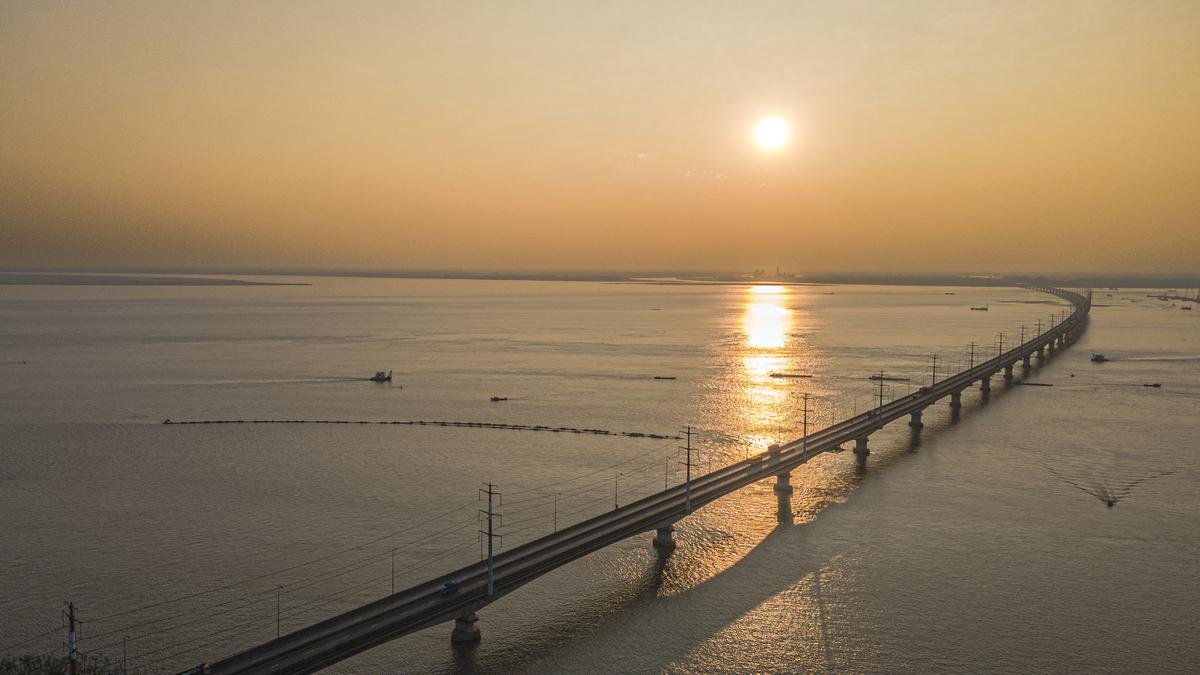
India and Bangladesh share a complex network of approximately 54 transboundary rivers, forming the lifeline of the regional economy. Among these, the Ganga, Brahmaputra, and Teesta are arguably the most significant. For Bangladesh, the management of these rivers is not merely a matter of environmental policy but a fundamental necessity for agricultural sustainability and effective flood-preparation mechanisms.
The Ganga, in particular, flows through a densely populated region where water demand frequently outstrips supply during the lean season. Since the signing of the 1996 treaty, the accord has provided a predictable framework for sharing the water flow at the Farakka Barrage point. As the sunset date for the current agreement approaches, there is a clear expectation that a new, modernized framework will be discussed under the purview of the JRC to address contemporary challenges, including climate change and shifting hydrological patterns.
Moving Forward
The diplomatic dialogue between New Delhi and Dhaka regarding the treaty reflects a broader commitment to regional stability. Experts observe that the focus on the JRC as the primary negotiation vehicle signals a desire to move away from rigid, legacy-based agreements toward a more dynamic, technical, and data-driven approach to water management.
While the 1996 treaty has been a cornerstone of bilateral relations for three decades, the upcoming expiration presents an opportunity for both countries to evaluate their respective water security needs. By utilizing the JRC, India and Bangladesh aim to ensure that the process of renegotiation or extension remains insulated from broader political volatility, prioritizing instead the millions of people who depend on the Ganga’s waters for their livelihoods.
As December 2026 nears, all eyes will be on the technical meetings held under the JRC. Both capitals have signaled that they are prepared to engage in comprehensive discussions, ensuring that the critical water-sharing arrangements continue to function seamlessly in the years to come.
Disclaimer: This content is auto-generated for informational purposes only.
Source: Read Original News