







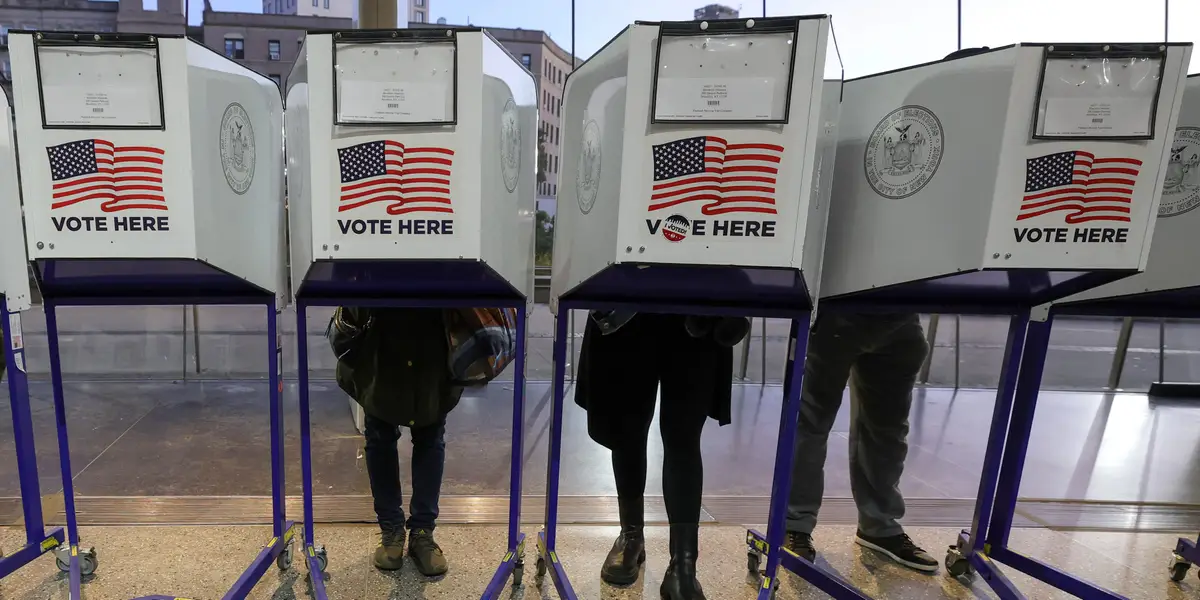
The results of the 2026 midterm elections have sent a shockwave through the American political landscape, prompting an immediate and lighthearted pivot in online discourse regarding corporate culture and Diversity, Equity, and Inclusion (DEI) initiatives. As Democratic candidates secured victories in key races—including decisive wins in Georgia, South Carolina, and Texas—social media users have begun speculating that the era of corporate “de-wokening” may be coming to an abrupt end.
## The Viral “Vibe Shift” in Corporate Culture
Following the 2024 presidential transition, a notable trend emerged across the U.S. economy. Under pressure from a federal government keen on dismantling progressive corporate policies, many major firms performed a swift about-face. Businesses were frequently observed pulling back on DEI commitments, with some high-profile organizations even instructing employees to remove gender pronouns from their email signatures to align with a more conservative regulatory environment.
However, the recent “blue tsunami” has triggered a wave of memes on platforms like X, where users are jokingly declaring that DEI is “back.” The sentiment has manifested in satirical posts suggesting that workers should brace for the mandatory return of pronouns in email headers and professional biographies. While clearly hyperbolic, these posts highlight a genuine anticipation of a “vibe shift” among the workforce, suggesting that the private sector may soon recalibrate its policies to match the new political reality.
## DEI Resilience in the Tech and Corporate Sectors
Despite the highly publicized rollbacks of the last two years, the underlying architecture of corporate diversity initiatives has proven remarkably resilient. While many companies stripped away the explicit branding of “DEI” to avoid attracting political scrutiny, internal investigations and industry reports suggest that many organizations continued to utilize diverse hiring practices behind the scenes.
In the tech sector specifically, the tension between employee expectations and executive-level policy has been palpable. Reports have emerged of tech workers expressing deep frustration over the suppression of diversity-focused internal groups. As the political pendulum swings back toward a Democratic-led Congress, firms that maintained their commitment to these values are now finding themselves in a position of potential advantage. For many, the shift in federal momentum may provide the necessary cover to re-prioritize internal equity programs that were previously stifled by the threat of executive action.
## Potential for Innovation and Policy Evolution
As the federal government prepares for a period of unified Democratic control, observers are watching closely to see how this transition impacts corporate compliance and workplace standards. There is significant speculation that the legislative change could usher in a new wave of innovation regarding inclusive office technologies.
Industry analysts note that as companies navigate this new environment, the focus may move beyond simple policy reversals toward more integrated, technology-driven solutions. From AI-powered recruiting tools designed to minimize unconscious bias to sophisticated HR platforms that automate inclusive communications, the tech industry is uniquely positioned to help corporations adapt to shifting social expectations.
If the current election results serve as a barometer for national sentiment, the “DEI fatigue” that characterized the previous two years may be rapidly fading. Whether this leads to a formal return of the terminology or simply a more aggressive implementation of inclusive practices remains to be seen. However, one thing is clear: the corporate sector, ever reactive to the shifting winds of Washington, is already preparing for a future that looks significantly different than the one envisioned just a few months ago.
Disclaimer: This content is auto-generated for informational purposes only.
Source: Read Original News