








The King’s Generosity: Why Shah Rukh Khan Once Walked Away from a Near-Million Rupee Payday
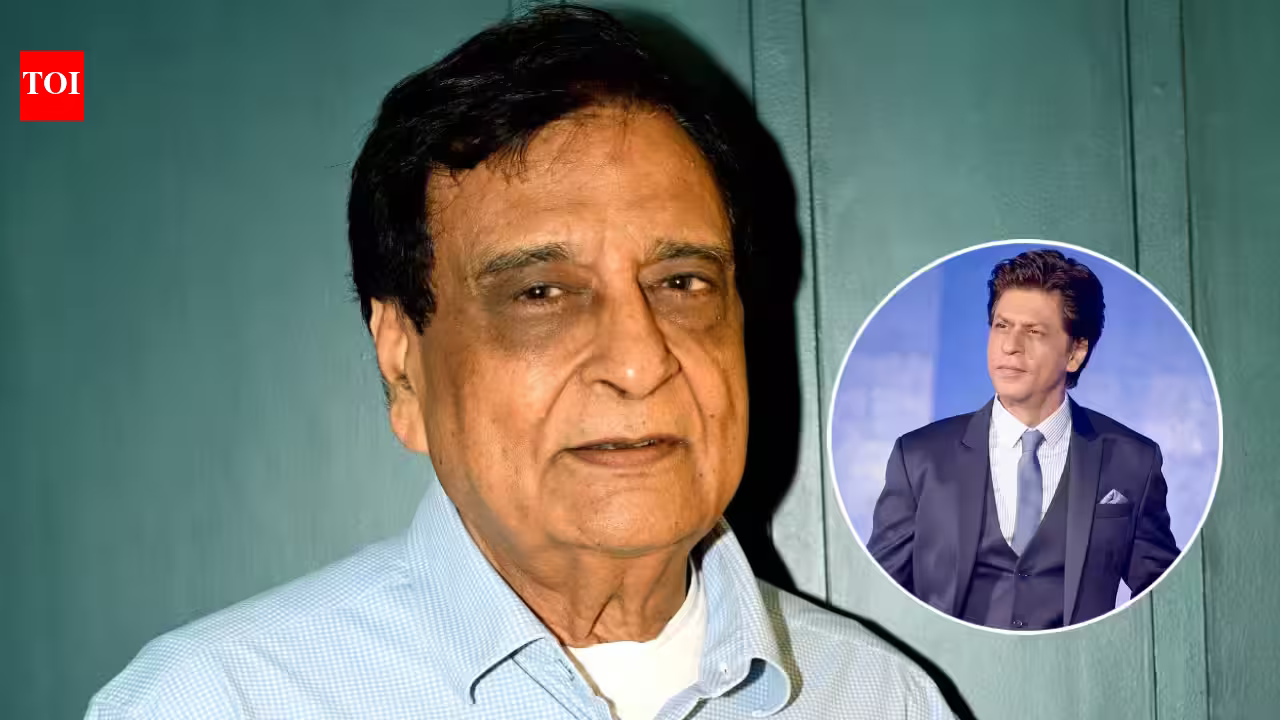
In an industry often defined by high-stakes negotiations, ironclad contracts, and the cold arithmetic of the box office, it is rare to find a story that pivots on pure, unadulterated human decency. Yet, veteran filmmaker KC Bokadia has recently peeled back the curtain on a decade-old interaction that offers a poignant reminder of why Shah Rukh Khan remains more than just a box-office titan—he is a man whose personal currency is built on loyalty and respect.
The narrative centers on the production of the 2002 multi-starrer Hum Tumhare Hain Sanam. While the film is remembered today for bringing together the magnetic trinity of Shah Rukh Khan, Salman Khan, and Madhuri Dixit, the behind-the-scenes reality was a testament to the evolving dynamics of Bollywood’s star-producer relationships.
The Weight of a Handshake Agreement
According to Bokadia’s recent recollections shared with ANI, the financial arrangement for the project was rooted in a bygone era of industry trust. The filmmaker had contracted the superstar for a fee of Rs 2 crore. As production hummed along, Rs 1.05 crore had been disbursed—a significant sum, but still short of the full balance. In the modern cinematic landscape, such an outstanding balance would likely trigger a flurry of emails from talent managers and legal notices. But for Khan, the contract was secondary to the rapport he had cultivated with the producer.
Bokadia’s recount suggests that the decision to waive the remaining Rs 95 lakh wasn’t a desperate act of charity, but a deliberate gesture of recognition. Khan, ever the observant professional, had clearly gauged the financial pressures that can plague independent producers. Rather than demanding his pound of flesh, he opted to absolve his producer of the burden, marking a rare moment where a top-tier star prioritized the stability of a production house over his own bottom line.
A Lesson in Character: The Conversation with the Son
The most revealing aspect of the story involves a conversation Khan held with Bokadia’s son. It highlights the actor’s acute awareness of the “gentleman’s agreement” culture that once permeated the industry.
“One day, he told my son that ‘Mr. Bokadia is a very good man. I will not take any money from him,'” the producer recalled. When the younger Bokadia attempted to reassure the star that the studio was prepared to pay—insisting that they were “men of our words”—Khan’s response was characteristically empathetic. He noted that he was fully aware of the financial hurdles inherent in filmmaking, even going so far as to suggest that he could easily recoup such losses through a quick appearance at a wedding. It was a humble, almost self-deprecating admission: for a man who could command millions, his integrity was not for sale, even when his services were.
The Empire Studio Encounter: Closing the Chapter
Time has a way of eroding memories, but in the case of Khan and Bokadia, the sentiment remained fixed. Years after the credits had rolled on Hum Tumhare Hain Sanam, the two crossed paths again at Empire Studio, a legendary hub for Bollywood post-production.
Bokadia, ever mindful of the outstanding balance, reportedly broached the subject once more. It was a test of the actor’s resolve, and perhaps a reflection of the producer’s own pride in settling his debts. However, Khan’s reaction was immediate and dismissive in the best possible way. “What money, sir? Leave it,” he reportedly said, waving away the substantial sum as if it were a trifling inconvenience. That fleeting moment in the studio wasn’t just about a waived fee; it was the final seal on a professional bond that transcended the standard artist-producer transaction. It served as a reminder that to Khan, the relationship was the true asset—everything else was negotiable.
Beyond the Stardom
In an era where “Superstar” is a title often used to describe someone’s reach on social media or their opening weekend numbers, anecdotes like these serve as a reality check. They remind us of the “human” behind the myth. Shah Rukh Khan’s trajectory from a struggling actor to an international icon has been marked by many such stories, but the Hum Tumhare Hain Sanam episode feels uniquely personal.
It highlights a deep-seated respect for the “strugglers” and the veteran producers who built the foundation of the industry before the era of corporate studios. By refusing to pressure Bokadia, Khan wasn’t just being “nice”; he was actively contributing to the longevity of a filmmaker who had provided him with a platform.
The Legacy of ‘Hum Tumhare Hain Sanam’
When we watch Hum Tumhare Hain Sanam today, we see a romantic drama—a triangle that captivated audiences in the early 2000s. But beneath the songs and the emotional dialogues lies a story that is arguably more compelling than the film itself.
The movie, directed by KS Adhiyaman, remains a time capsule of a certain style of filmmaking that relied heavily on star power and the personal relationships between those stars and their directors. While the film had its share of creative hurdles, the off-screen grace displayed by its lead actor ensured that, regardless of the box office outcome, the bridges remained intact.
As fans continue to analyze Khan’s filmography and his massive success, it’s worth noting that his greatest performances might not always be the ones captured on 70mm film. Sometimes, the most significant performance is the one delivered in a quiet moment at a mixing studio—a moment of generosity that defines a career far better than any critic’s review ever could. In the cutthroat world of Bollywood, Shah Rukh Khan proved that there is one thing more valuable than a successful release: his word. And, as it turns out, that word was worth Rs 95 lakh.
Disclaimer: This content is auto-generated for informational purposes only.
Source: Read Original News