








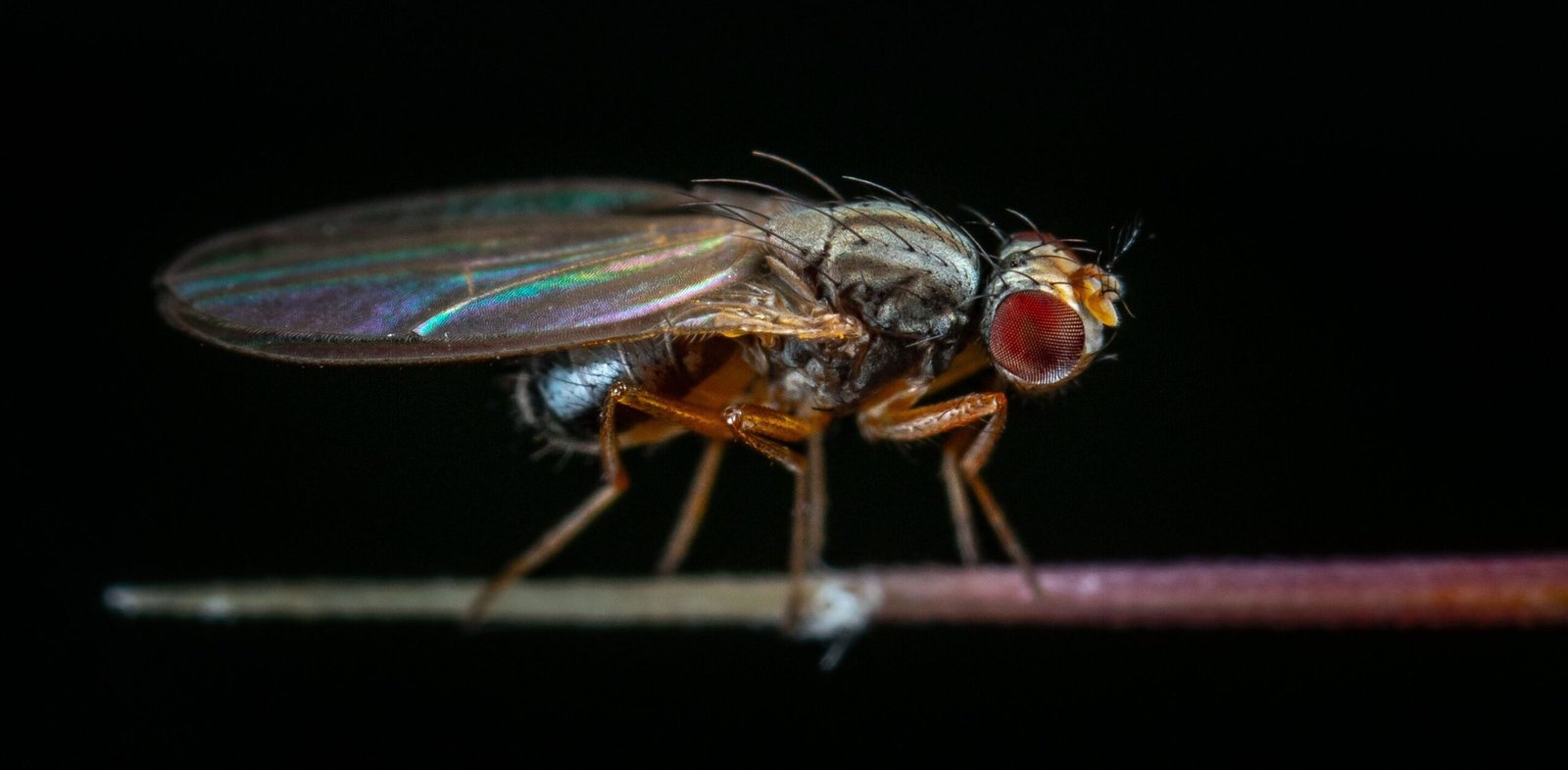
In the complex world of evolutionary biology, the rituals of courtship are rarely as simple as they appear. For Drosophila erecta, a species of fruit fly native to the rainforests of West Africa, the decision to choose a mate is governed by a sophisticated interplay between internal biology and environmental conditions. New research into these insects suggests that their mating success is dictated by a sensory landscape that mirrors the nuance of human social environments, where atmosphere—both chemical and physical—plays a definitive role in reproductive outcomes.
While human courtship often relies on visual cues and social signaling in crowded spaces, Drosophila rely heavily on a combination of pheromones and acoustic signals. However, recent studies highlight that these signals are not static; they are modulated by the density of the surrounding population and the ambient conditions of the forest floor. When a male Drosophila erecta detects a potential partner, he does not simply initiate a programmed behavior. Instead, he must navigate an environment saturated with the sensory “noise” of other flies, adjusting his courtship song and chemical output to ensure he is perceived by his chosen mate amidst the chaos.
This behavior draws an intriguing parallel to the “disco floor” analogy often used by biologists to describe high-density mating grounds. In the wild, Drosophila aggregate around fermenting fruit, which acts as both a food source and a meeting place. As the density of flies increases, the concentration of volatile organic compounds—the chemical signature of the fruit and the insects themselves—creates a sensory atmosphere that influences mate preference. Much like a human nightclub, where lighting, music, and proximity dictate social interaction, the fly’s mating arena is a high-stakes environment where the ability to stand out determines evolutionary fitness.
Crucially, the research emphasizes that Drosophila erecta are highly sensitive to “sensory saturation.” If the environment becomes too crowded or the pheromonal signals become too muddled, the flies exhibit increased levels of rejection. Females, in particular, appear to use the density of the environment as a proxy for the quality of potential mates. In thinner populations, the threshold for successful courtship is lower; in dense clusters, the female exercises more rigorous discernment, likely as an evolutionary strategy to ensure she selects the most robust partner capable of signaling effectively through the environmental “clutter.”
The implications of these findings extend beyond behavioral ecology. Understanding how environmental density affects mate selection provides insight into how species adapt to fragmented or changing habitats. As climate change alters the distribution and phenology of the forests that Drosophila erecta inhabit, the “dance floor” of the forest floor may shrink or shift. If these flies are unable to find the specific density or atmospheric conditions required to successfully identify mates, their reproductive success could plummet, leading to localized population declines.
Furthermore, this research serves as a reminder that sensory ecology is a vital component of biodiversity conservation. Many species rely on specific environmental conditions to facilitate communication; when those conditions are disrupted—by noise pollution, light pollution, or chemical changes in the air—the complex social fabric of the animal kingdom begins to unravel. For Drosophila erecta, the path to the next generation depends entirely on their ability to find a quiet frequency in a crowded, noisy room.
By mapping the neural and behavioral mechanisms behind these choices, scientists are gaining a clearer picture of the constraints that govern life in the wild. The courtship of a fruit fly may seem a world away from human concerns, but the fundamental challenge is the same: in a world of constant distraction, success depends on one’s ability to tune out the noise and connect with the right partner at the right time. As we continue to study these intricate biological dances, we gain a deeper appreciation for the delicate balance required to sustain life in an increasingly crowded and volatile world.
Disclaimer: This content is auto-generated for informational purposes only.
Source: Read Original News