








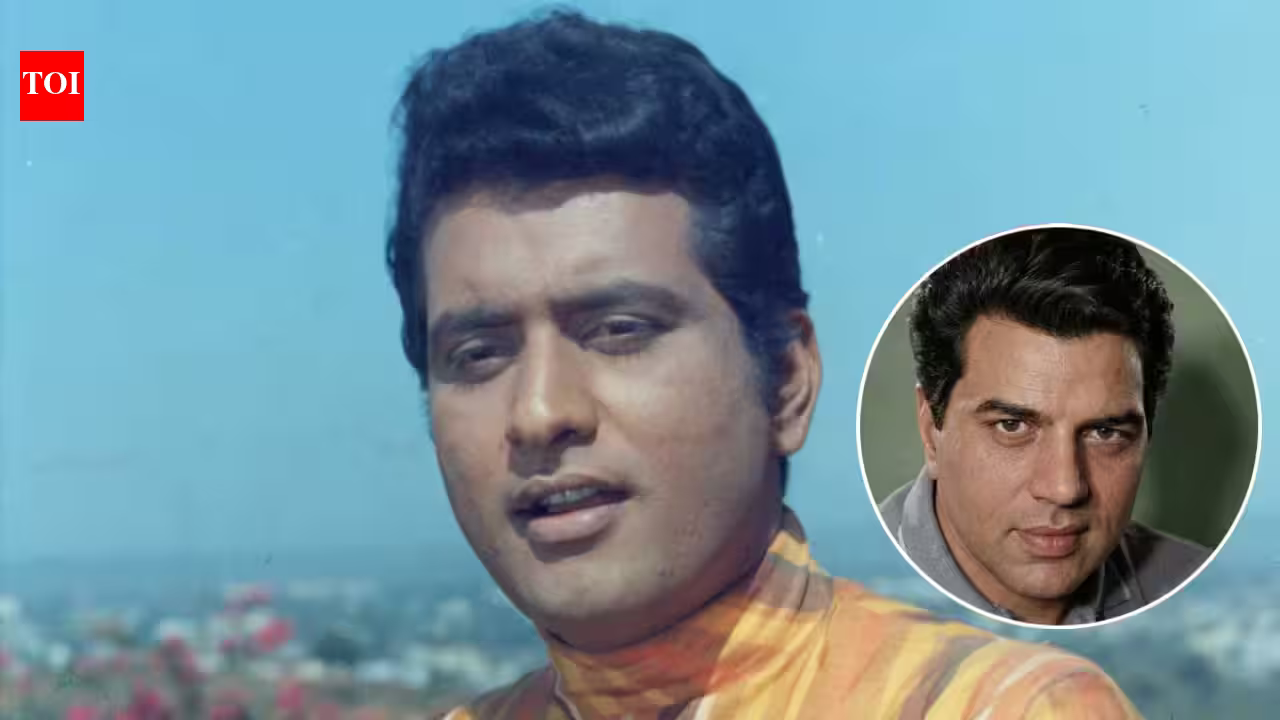
The golden era of Hindi cinema was defined by towering personalities, larger-than-life narratives, and, inevitably, the clashing of massive egos behind the scenes. While audiences saw legends like Dharmendra and Manoj Kumar gracing the screen with effortless charisma, the off-camera reality was often a complex web of professional rivalries and personal cold wars. Recently, filmmaker KC Bokadia pulled back the curtain on one such moment of friction, recalling a tense incident on the sets of his 1995 multi-starrer, Maidaan-E-Jung.
It is the kind of anecdote that cinema historians dream of—a micro-moment that captures the volatile atmosphere of a set where two industry titans were forced to share the frame despite their underlying grievances.
The High-Stakes Casting of ‘Maidaan-E-Jung’
When KC Bokadia set out to make Maidaan-E-Jung, he wasn’t just assembling a cast; he was engineering a collision of different schools of acting. The film was a mammoth production, boasting a lineup that included the “He-Man” of Bollywood, Dharmendra, the patriotic icon Manoj Kumar, and a young, rising star named Akshay Kumar, supported by luminaries like Jaya Prada and Karisma Kapoor.
Bokadia, known for his ability to pull off ambitious casting coups, admitted that bringing together Dharmendra and Manoj Kumar was a Herculean task. The two icons, who had dominated the industry for decades, shared a history that was far from harmonious. In a recent interview with ANI, Bokadia revealed that when he first approached Dharmendra with the script and the cast list, the veteran actor was initially hesitant, asking, “Boss, why?” with a clear air of skepticism regarding the prospect of working alongside Manoj Kumar. It took a significant amount of persuasion—and the inherent respect they held for Bokadia—to get the veterans on board.
The Collision: A Shoulder Bump That Sparked Tension
The production was a pressure cooker, and it was only a matter of time before the unspoken tension manifested physically. During the shoot of a song sequence, the set, which usually functioned like a well-oiled machine, hit a snag. As the cameras rolled, Manoj Kumar—perhaps distracted or simply navigating the chaotic choreography—accidentally bumped into Dharmendra with his shoulder.
In the high-stakes environment of a 90s Bollywood set, such an incident could easily have been dismissed as an innocent accident. However, given the pre-existing friction between the two, it was perceived as anything but. Bokadia recalls the immediate shift in atmosphere. Dharmendra, who was never one to suffer a perceived slight lightly, turned his gaze toward the director. It was a look that communicated volumes—a silent demand for mediation or, perhaps, an invitation for the director to intervene before the situation escalated.
Bokadia, recognizing the volatility of the moment, played the role of the ultimate peacemaker. He didn’t panic; he simply leaned into the silence and told his lead actor, “Leave him.” It was a moment of deft crisis management that saved the sequence, keeping the professional facade intact long enough to finish the day’s work.
Reflecting on the “Bharat Kumar” vs. “He-Man” Dynamic
Looking back at this incident, one cannot help but admire the starkly different personas that were sharing the frame. Manoj Kumar, the man who earned the moniker “Bharat Kumar” for his unwavering commitment to patriotic cinema, represented a specific brand of moralistic, deliberate acting. His films like Upkar and Purab Aur Paschim were deeply philosophical and often carried the weight of national identity.
Dharmendra, by contrast, was the quintessential romantic action hero. From the rugged intensity of Sholay to the comic brilliance of Chupke Chupke, he was a force of nature—intuitive, spontaneous, and undeniably masculine. That these two titans had professional differences is hardly surprising; they represented two different pillars of the Hindi film industry. That they were able to work together under Bokadia’s direction remains a testament to the iron-clad discipline that defined that generation of actors.
A Final Farewell to the Legends
The revelation of this anecdote arrives with a bittersweet poignancy, as both icons have since left us. Their passing in 2025 marked the end of an era that will likely never be replicated. Dharmendra, who passed away on November 24, 2025, left behind a legacy of unparalleled versatility. He was the rare actor who could make audiences weep with a tragic monologue one moment and roar with laughter the next.
Manoj Kumar, who passed away earlier that same year on April 4 at the age of 87, was more than just an actor; he was a filmmaker who defined the aesthetic of a nation. From his humble beginnings as Harikrishan Goswami to becoming a recipient of the Dadasaheb Phalke Award, his journey was the epitome of the “self-made” Bollywood story.
The Enduring Legacy of Set-Side Stories
Stories like Bokadia’s offer us more than just gossip; they offer a glimpse into the human side of our cinematic idols. When we watch Maidaan-E-Jung today, we don’t just see the characters on screen; we see the history, the egos, and the professional resilience required to make movies in a pre-digital, star-driven era.
It is a reminder that the magic of cinema is often conjured in spite of the personalities behind it, not because of them. While the “shoulder bump” may have been a minor blip in a long career for both men, it remains a fascinating footnote—a moment where the veneer of stardom cracked just enough to show the very human, and very spirited, men underneath. As time marches on, these behind-the-scenes glimpses will become the primary way we preserve the character and temperament of the stars who built the foundation of Indian cinema.
Disclaimer: This content is auto-generated for informational purposes only.
Source: Read Original News