








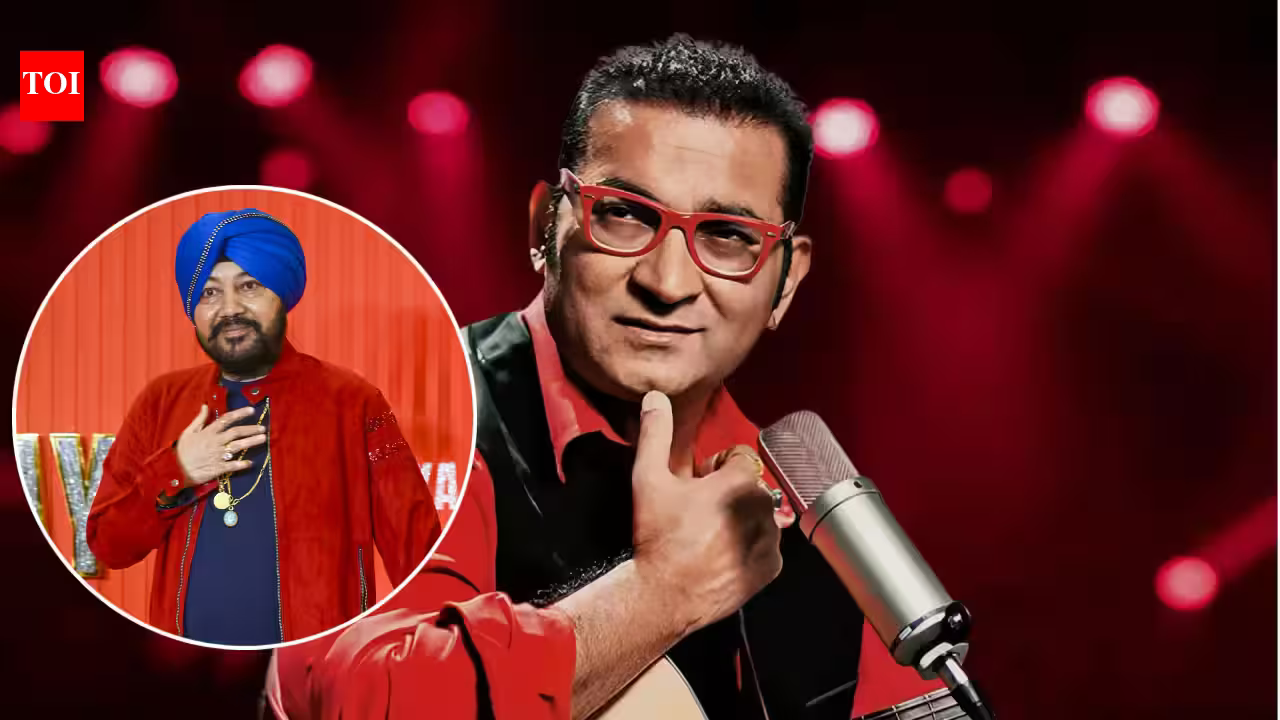
The age-old debate surrounding the authenticity of live performances in the Indian music industry has been reignited, and at the center of the storm is none other than the unapologetically candid playback legend, Abhijeet Bhattacharya. Known for his powerful voice that defined the sound of 90s Bollywood, Bhattacharya has stepped into the fray following the viral controversy involving Punjabi pop icon Daler Mehndi. While he stopped short of naming his peer, Bhattacharya’s message was loud, clear, and serves as a scathing indictment of the “lip-sync culture” that has increasingly plagued major stage events.
## The Integrity of the Microphone
During a recent performance at the Chhattisgarh Rajyotsava 2026, Bhattacharya took a momentary pause from his setlist to address the proverbial elephant in the room. In a candid interaction with the audience, he didn’t just discuss music; he discussed ethics.
“If someone is not actually singing live into the microphone, then don’t allow it,” he declared, his voice carrying the gravity of a veteran artist who has spent decades honing his craft. The sentiment stems from a desire to return to the roots of performance art—the raw, unedited, and vulnerable connection between a singer and their listeners. For Bhattacharya, the microphone is not a prop; it is an instrument of truth. His stance is a direct challenge to the industry standard where, increasingly, high-production value events favor pre-recorded tracks over the unpredictable beauty of a live human voice.
## When the Minister Took the Stage
The catalyst for Bhattacharya’s outburst was the highly publicized incident involving Daler Mehndi, who was interrupted mid-set by Uttarakhand Cabinet Minister Subodh Uniyal during a cultural event. The optics of the event were jarring: a government official, dissatisfied with the quality of the performance, took to the stage to reprimand the artist for what he perceived as a lack of effort and a failure to perform live.
The minister’s blunt critique—questioning Mehndi’s ability to speak, let alone sing—sparked a firestorm of debate. While figures like Mika Singh rallied to his brother’s defense, citing health issues as the primary reason for the subpar showing, the public remains divided. Was it a case of an artist being unfairly maligned, or a justified reaction to a paid professional failing to deliver the “live” experience the audience was promised? For Bhattacharya, the answer is simple: the minister was simply speaking the truth that the rest of the industry has been too afraid to acknowledge.
## A Promise to the Audience
Beyond the controversy, Bhattacharya’s address to the Chhattisgarh crowd was a deeply personal pledge. “No matter how I sing, whether I sing badly, whether my voice is strained, whether I get tired, or whether I sing off-key, whatever I do, I will sing live,” he promised.
In an era where digital pitch correction and pre-recorded backing tracks make every singer sound like a studio-perfect version of themselves, this is a radical statement. Bhattacharya frames his live singing as a matter of “respect.” He posits that fans who spend their hard-earned money and time to attend a concert deserve the reality of a human experience, flaws and all. He views the act of moving one’s lips to a pre-recorded track—commonly known as “ghost singing”—as a form of deception that undermines the hard work of the organizers, the administration, and, most importantly, the trust of the fans.
## The Culture of Performance vs. The Cult of Personality
The tension highlighted by the Mehndi incident points toward a broader evolution in the Indian entertainment sector. We are currently living in a landscape where the “show” often supersedes the “singing.” High-energy visuals, complex choreography, and intricate stage setups have turned concerts into spectacles. In such high-pressure environments, some artists feel that “playing it safe” with a backing track is the only way to avoid technical failure.
However, critics like Bhattacharya argue that this trend is eroding the soul of Indian music. By prioritizing safety over spontaneity, performers are losing the very essence that makes them legends. The audience, he argues, is not paying for a perfect, plastic version of an artist; they are paying to see a master at work, breathing and struggling and triumphing through the performance in real-time. By taking this stance, Bhattacharya is positioning himself not just as a singer, but as a guardian of traditional performance standards.
## An Industry at a Crossroads
As the fallout from the Uttarakhand event continues to echo through social media, it is clear that the patience of the public is wearing thin. We are entering an age of accountability where high ticket prices demand high-quality, authentic experiences.
Abhijeet Bhattacharya’s vocal opposition to lip-syncing may be a minority opinion among those who prefer the safety of the studio-recorded stage, but it resonates deeply with the purists. His intervention serves as a warning shot to other performers: the audience is listening, and they are becoming increasingly adept at distinguishing between a genuine performance and a manufactured one.
Ultimately, whether you side with the veterans like Mika Singh, who argue for grace during times of illness, or with the proponents of raw, unfiltered talent like Bhattacharya, one thing is certain: the conversation about live performances in India has shifted. The stage is no longer a place for hiding behind technology. As Bhattacharya so eloquently put it, the greatest respect an artist can offer their audience is their own voice—strained, off-key, or perfect—but always, undeniably, theirs.
Disclaimer: This content is auto-generated for informational purposes only.
Source: Read Original News