








Beavers could hold the key to bolstering the UK’s resilience against the growing threat of climate change, according to new research from the University of Liverpool. The four-year study, which tracked the impact of beaver reintroductions between 2020 and 2024, reveals that these industrious animals are playing a vital role in maintaining consistent water levels during periods of extreme drought.
In partnership with the Cheshire Wildlife Trust, researchers monitored the Cheshire Beaver Project, which saw beavers reintroduced to the main inflow of Hatch Mere in Frodsham. The findings suggest that the site remained significantly more resilient during the 2022 drought, a period that saw much of the UK struggle with historically low rainfall.
Dr. Melanie Baker, the lead researcher on the project, noted that the data carries urgent implications for the future. “The site remained more resilient during drought conditions, which may become increasingly significant as climate change increases the frequency of extreme weather events,” she explained. Dr. Baker further argued that the results provide a strong case for moving beyond enclosed reintroductions, advocating for the return of beavers to wild landscapes as a proven “nature-based solution” for ecosystem restoration.
The benefits extend far beyond water retention. Peatlands, which are among the UK’s most critical habitats, serve as massive carbon sinks. Before the arrival of the beavers, many of the peatlands in the study area had become degraded, losing their ability to store carbon efficiently and becoming increasingly vulnerable to drying out.
The arrival of the beavers triggered a dramatic ecological shift. Water levels in the area increased by up to 37 times, while the volume of water within the beaver-constructed ponds tripled. Crucially, these water levels remained stable throughout the 2022 drought—a period where neighboring areas without beaver populations suffered sharp declines.
Gareth Longden, a member of the Cheshire Wildlife Trust project, highlighted the double benefit of these changes. “Not only do we have this amazing pond that they have created, all of that water is also being soaked up by the peat body underneath, which helps lock up the carbon,” Longden said. “It helps keep water in the landscape. After the seemingly continuous drought that we have had all year, this is one of the few areas that has remained really wet.”
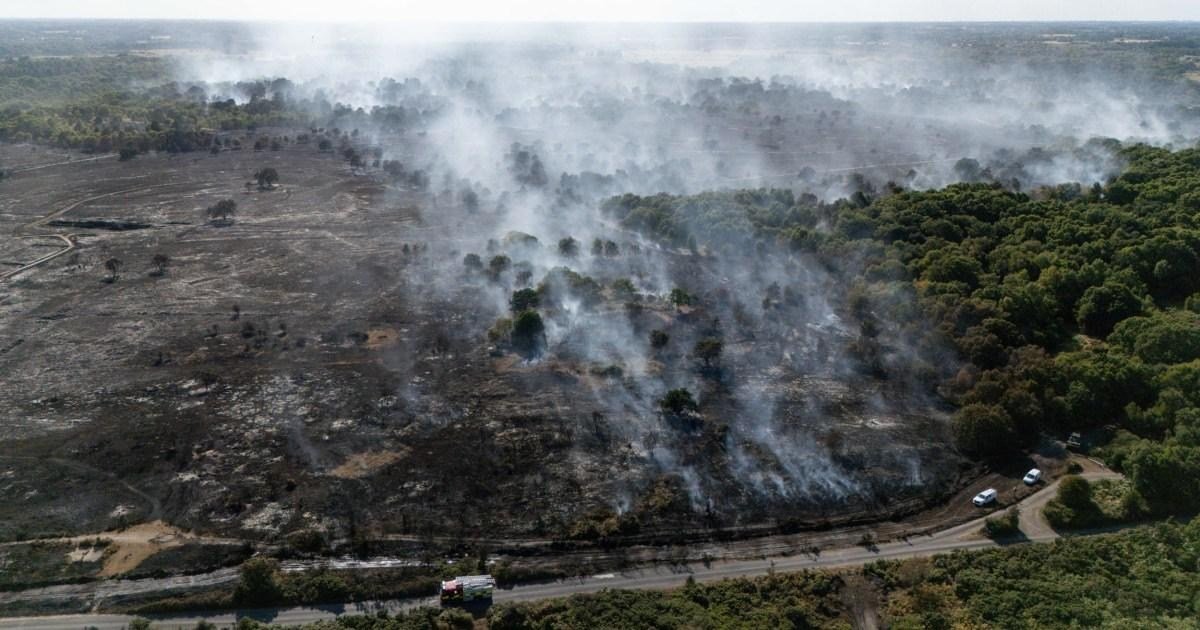
These findings arrive at a time of heightened climate anxiety in the UK. The summer of 2026 was recorded as the hottest in history, with the Met Office documenting 55 days where temperatures exceeded 28°C. This extreme heat led to widespread drought, with the Environment Agency declaring a drought in 82% of England by July 2026, eventually escalating to a severe drought by October.
While the prospect of large-scale reintroduction brings some challenges—such as the potential for local flooding or the felling of trees that some might find valuable—experts believe the long-term ecological gains outweigh the difficulties. Similar success stories have been recorded in London, where a family of Eurasian beavers released into Ealing’s Paradise Fields in 2023 has been credited with preventing flooding in the area for three consecutive years.
With the UK government having already opened the door for licensed wild releases of beavers across England, the University of Liverpool study provides a compelling argument that these “ecosystem engineers” are essential allies in adapting to a warmer, more volatile climate.
Disclaimer: This content is auto-generated for informational purposes only.
Source: Read Original News