








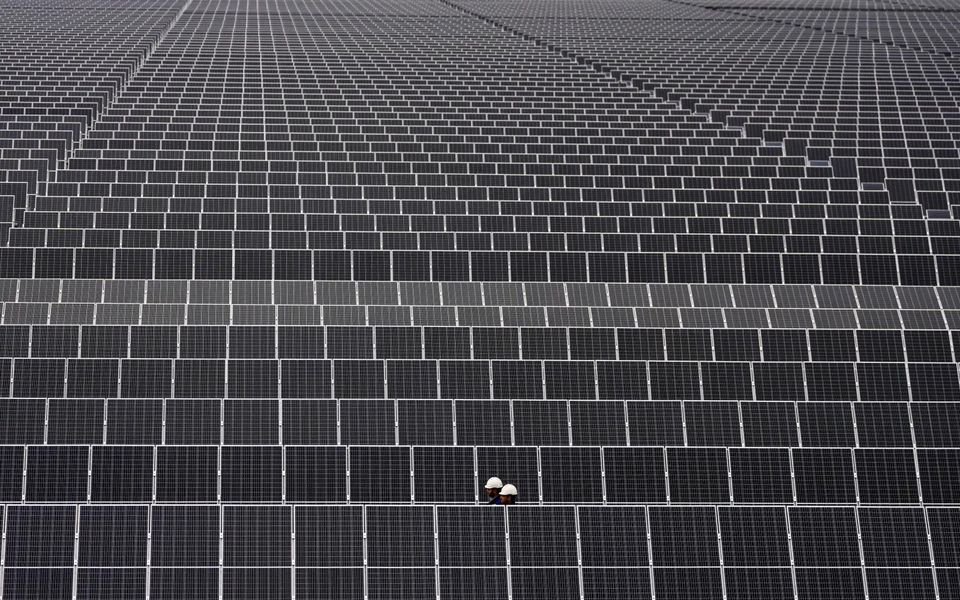
Rows of glimmering solar panels stretch across the central Turkish province of Konya, occupying a terrain equivalent to 2,600 soccer fields. The Kalyon Karapınar YEKA-1 Solar Power Plant, operational since 2023, stands as a symbol of Turkey’s renewable energy ambitions. Boasting over 3 million panels, the facility generates enough electricity to meet roughly 0.7% of the nation’s power demand.
“We prevent approximately 1.75 million metric tons of carbon emissions every year,” says plant director Burak Dogru. For the Turkish government, projects like Karapınar serve as primary evidence of a national pivot toward cleaner energy. As Turkey prepares to host the upcoming U.N. climate summit (COP31) in Antalya this November, officials are using these sites to showcase the country’s commitment to a greener future.
However, environmental advocates argue that these solar achievements exist in a precarious juxtaposition with Turkey’s enduring dependence on fossil fuels. According to the Turkish Energy Ministry, coal remained the country’s largest electricity source last year, accounting for 33% of total generation. While the combined share of wind and solar has reached approximately 23%, campaigners maintain that the lack of a clear, systemic transition strategy undermines Turkey’s 2053 net-zero pledge.
“These plans contain neither a roadmap for a coal phase-out, nor any planning for a phase-out of other fossil fuels, including gas,” says Duygu Kutluay, a campaigner with Beyond Fossil Fuels. Experts at the Climate Action Tracker have labeled Turkey’s current climate policies as “critically insufficient” to meet the 2015 Paris Agreement goal of limiting global temperature rise to 1.5 degrees Celsius.
The paradox of the COP31 host is not lost on observers. While the government highlights its “climate implementation bridge”—an initiative aimed at connecting countries with the technology and financing needed to realize their pledges—the country continues to pursue the expansion of coal-fired power plants. Recent developments include court-ordered cancellations of certain plant expansions, such as the one in Afsin-Elbistan, which environmentalists hailed as a victory. Yet, shortly after that ruling, new proposals emerged to expand another coal plant in the northwestern region of Canakkale.
The pressure to balance economic needs with climate imperatives is intensified by the volatile global energy landscape. The ongoing impacts of the war in Ukraine and rising fuel prices have led to a scramble for energy security, pushing some nations to prioritize reliability over sustainability. For Turkey, this has also included a significant investment in nuclear power, with its first plant under construction on the Mediterranean coast.
The summit in Antalya will face a difficult backdrop. With the United States—the world’s second-largest carbon emitter—remaining outside the negotiations following its withdrawal, and the previous two COP meetings failing to secure consensus on curbing fossil fuel usage, expectations are tempered. Turkish Environment Minister Murat Kurum has signaled that the focus for COP31 should shift from setting new targets to the pragmatic implementation of existing ones.
For Turkey, the urgency of climate action is becoming impossible to ignore. Like other Mediterranean nations, the country is increasingly vulnerable to extreme weather events, including persistent heat waves, droughts, and devastating wildfires. Last month, extreme rainfall led to severe flooding in Istanbul, resulting in eight deaths and highlighting the infrastructure risks posed by a changing climate.
Despite criticisms regarding its fossil fuel reliance, U.N. Climate Change Executive Secretary Simon Stiell has defended the decision to award the summit to Turkey, noting that a host nation’s energy mix does not dictate the potential success of global climate outcomes. As tens of thousands of delegates prepare to descend on Antalya this November, the world will be watching to see if the “climate implementation bridge” can move the needle, or if the disconnect between clean energy showcases and coal-fired reality remains the defining feature of the global response to the climate crisis.
Disclaimer: This content is auto-generated for informational purposes only.
Source: Read Original News