








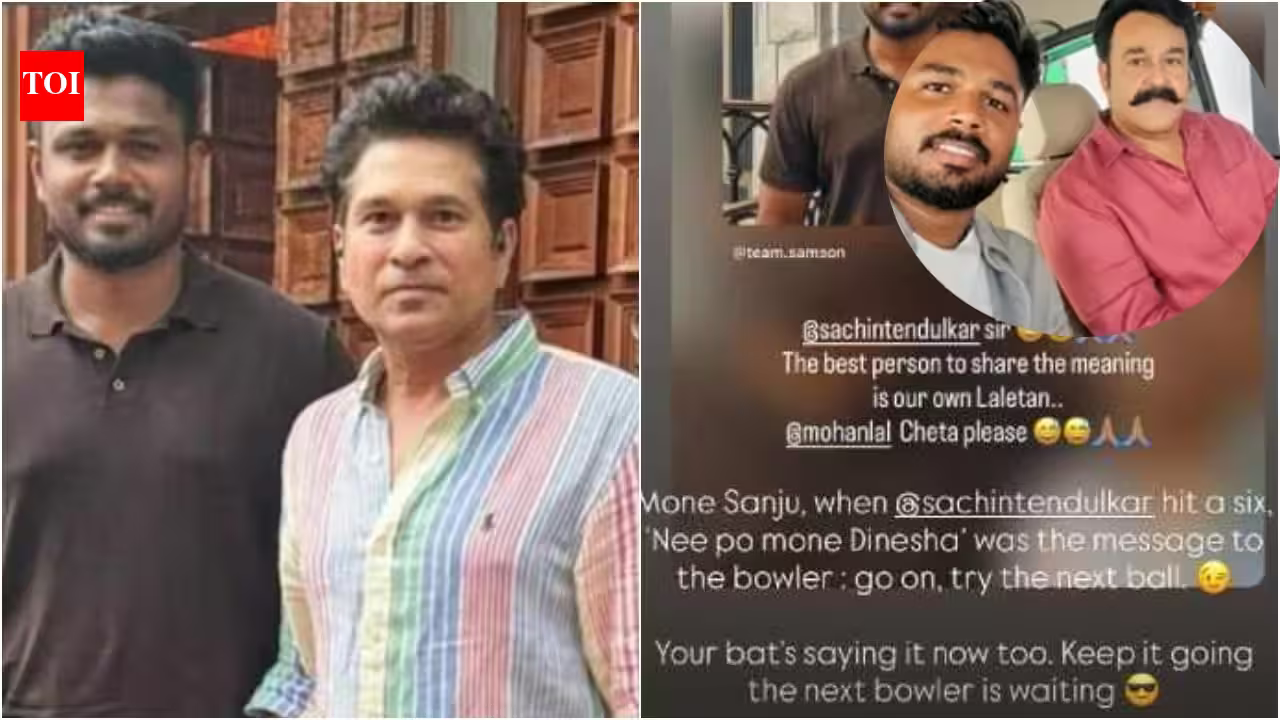
It isn’t every day that the “God of Cricket” and the “Complete Actor” of Indian cinema find themselves entangled in a digital comedy of errors, but that is exactly what happened this week. When Sachin Tendulkar decided to channel his inner Malayali, the internet collectively paused to witness a collision of two cultural behemoths. The result? A wholesome, viral moment that bridged the gap between the crease and the silver screen, proving that some iconic punchlines have a shelf life that extends well beyond their original cinematic release.
The spectacle began on X (formerly Twitter) when a fan, curious about the mentorship between Tendulkar and Kerala’s own cricket prince, Sanju Samson, asked for a behind-the-scenes update on their interactions during the recent T20 World Cup. Sachin, known for his subtle sense of humor, bypassed the standard “we discussed strategy” response. Instead, he posted a photo with the wicketkeeper-batter and dropped a line that sent the Malayalam-speaking internet into a frenzy: “Nee po mone Dinesha… That is what I told him. Sanju will explain what it means.”
The Weight of a Legendary Line
For the uninitiated, “Nee po mone Dinesha” isn’t just a sentence; it’s a cultural shorthand. Originating from the 2000 Shaji Kailas blockbuster Narasimham, the line is delivered by Mohanlal’s iconic character, Induchoodan. In its original context, the line is a biting, dismissive retort—a way of telling someone to know their place and go away. It is synonymous with the bravado and swagger that defined the peak of the Kerala action-cinema era.
To see the cricketing legend use it was, in itself, a surreal moment. But for Sanju Samson, being on the receiving end of such a cryptic, culturally charged jab required a bit of backup. Finding himself in the crosshairs of a linguistic puzzle he couldn’t easily explain to the master blaster, Sanju did the only logical thing: he tagged the man behind the myth.
Sanju Samson’s Digital SOS
Sanju quickly took to his Instagram Stories, screenshotting Sachin’s post and tagging Mohanlal. It was a charming display of the cricketer deferring to the master. “Sachin sir, the right person to explain the meaning of this is our own Lalettan,” Sanju wrote, effectively passing the hot potato to the superstar.
The internet waited. Would the actor play along? Or would he simply offer a polite, generic nod? What unfolded was a masterclass in engagement, turning what could have been a fleeting interaction into a delightful crossover episode between the world of sports and the world of arts.
A New Interpretation: The “Cricket Twist”
Mohanlal didn’t just explain the line; he re-authored it. In a move that showcased the agility of a true performer, he pivoted the meaning of the aggressive dialogue into a sophisticated cricket metaphor. He reshaped “Nee po mone Dinesha” from a dismissal of a person into a statement of athletic dominance.
“Mone Sanju,” Mohanlal wrote, addressing the cricketer with the warmth of a mentor, “when Sachin Tendulkar hits a six, ‘Nee po mone Dinesha’ is the message to the bowler. It means, ‘Go ahead, try bowling the next ball.’ Your bat is saying the same thing now. Keep moving forward; the next bowler is waiting.”
It was a stroke of genius. By framing the dialogue as the internal monologue of a batter who has just cleared the boundary ropes, Mohanlal stripped the line of its original, somewhat dismissive grit and replaced it with the confidence of an athlete in rhythm. He turned an insult into an invitation for the next challenge.
Why This Moment Resonated
This isn’t the first time an old Malayalam film dialogue has trended, but the context here matters. We live in an era where fan bases are often siloed. Yet, the mutual respect between these three figures—a legend of the bat, a modern-day talent, and a giant of Indian acting—created a rare, cohesive moment of joy.
For the fans of Narasimham, it was a reminder that the film’s legacy remains vibrant, etched into the public consciousness even two decades later. For cricket fans, it offered a rare peek into the off-field rapport that exists between generations of players. It also served as a testament to Mohanlal’s enduring relevance; even as he prepares for his upcoming projects, such as Tharun Moorthy’s Athimanoharam, he remains deeply plugged into the pulse of popular culture, capable of commanding attention with nothing more than a well-timed social media response.
A Legacy That Keeps Giving
As the digital chatter settles, the takeaway is clear: the bridge between Indian cinema and Indian sports has never been stronger. When icons interact with such ease, it reminds us that pop culture is a living, breathing ecosystem.
Mohanlal, who has played countless roles in his decades-long career, may have just added a new credit to his resume: Cricket commentator. And for Sanju Samson? He’s been given the ultimate seal of approval from both a legend of the field and a titan of the screen. As the fans continue to share, like, and dissect this exchange, one thing is certain: whenever a batter hits a massive six in the near future, at least one section of the crowd will be shouting, “Nee po mone Dinesha!”—and they’ll be saying it with a smile, thanks to this accidental collaboration.
Disclaimer: This content is auto-generated for informational purposes only.
Source: Read Original News