








Stalled Hydropower Ambitions: Nepal’s 4,700 MW Indian Portfolio Faces Execution Hurdles
The ambitious vision of transforming Nepal into a regional energy powerhouse through Indian investment is hitting a reality check. While India has secured a total of 4,700 MW in hydropower capacity across seven major projects in the Himalayan nation, the pace of on-ground implementation remains sluggish. As of now, only one project has successfully moved into the construction phase, raising concerns about the feasibility of long-term electricity export targets between the two neighbors.
This cooperation is critical to both nations. In January 2024, New Delhi and Kathmandu inked a landmark agreement aimed at exporting 10,000 MW of electricity from Nepal to India over the next decade. For Nepal, this is a strategic pillar intended to bolster its economy, generate consistent export revenue, and significantly narrow its chronic trade deficit with India, its largest trading partner and primary buyer of surplus energy.
The Arun-III Bottleneck
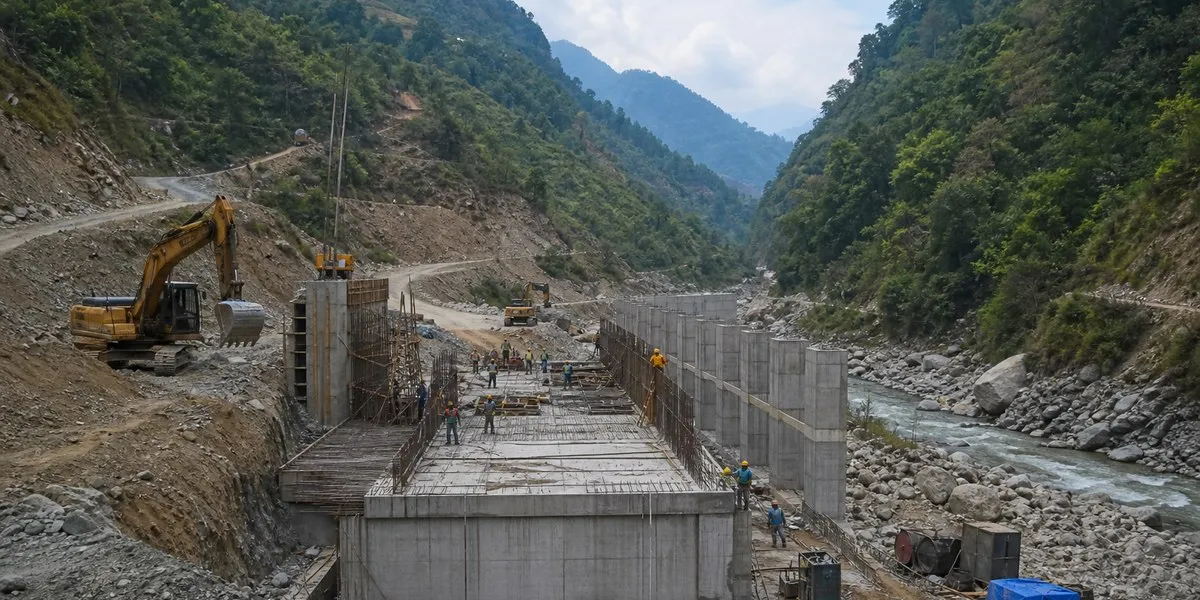
The sole active development among the seven ventures is the 900 MW Arun-III project, located in the Sankhuwasabha district. Led by SJVN Arun-3 Power Development Company, a subsidiary of the Indian state-owned entity SJVN Limited, the project has been under construction since 2018.
Despite the progress, the timeline has been plagued by repeated setbacks, ranging from supply chain disruptions caused by the COVID-19 pandemic to logistical complexities. While the generating component is roughly 77.5% complete and the associated transmission infrastructure sits at 60%, the finish line has been pushed back significantly. Originally slated for commercial operations by mid-April 2025, the new deadline is now set for March 2028. Once operational, the project will grant Nepal 21.9% of the generated power for free, in addition to standard royalty payments, and will export electricity through a dedicated 253-kilometer, 400 kV transmission line connecting to Sitamarhi in India.
A Portfolio in Limbo
Beyond Arun-III, the remaining portfolio of projects remains largely in the preliminary stages. High-profile ventures such as the 900 MW Upper Karnali, 679 MW Lower Arun, Arun-IV, West Seti, and the Seti River-6 projects have yet to break ground.
While the Investment Board of Nepal has approved the financing documents for the Upper Karnali project—signaling a potential shift toward development—others are still mired in administrative and contractual negotiations. For the West Seti and Seti River-6 projects, discussions regarding development agreements are ongoing, leaving a significant portion of the proposed 4,700 MW capacity locked in bureaucratic cycles rather than active construction.
Strengthening Cross-Border Grids
Despite the delays in generation capacity, there has been more tangible progress in expanding the physical infrastructure required to transport power. The existing Dhalkebar–Muzaffarpur high-voltage line serves as the primary artery for current electricity trade.
To support the anticipated increase in power flow, authorities are fast-tracking the Dhalkebar–Sitamarhi line, which is expected to facilitate exports of up to 1,650 MW. Additionally, the Butwal–Gorakhpur interconnection is positioned to add another 200 MW of export capacity to the grid.
However, as the deadline for the 10,000 MW export target approaches, stakeholders are increasingly focused on the disparity between grid readiness and generation output. Without a marked acceleration in project commencement, the ambitious target of turning Nepal into India’s primary green energy provider may prove difficult to realize within the set timeframe.
Disclaimer: This content is auto-generated for informational purposes only.
Source: Read Original News