






Asian markets delivered a split performance on Thursday as investors recalibrated their portfolios following the U.S. midterm elections. While regional indices in Hong Kong and Australia saw notable gains, a widespread sell-off in the artificial intelligence and semiconductor sectors cast a long shadow over tech-heavy markets in South Korea, Japan, and Taiwan.
The volatility follows a robust Wednesday on Wall Street, where the Dow Jones Industrial Average surged more than 1,500 points. Investors appear to be responding to the loss of sole Republican control in Washington, a shift that historically suggests a period of legislative gridlock—a scenario financial markets often view favorably as it limits the potential for radical economic policy changes.
Tech and AI Stocks Face a Harsh Reality Check
The most significant downward pressure in Asia was concentrated in the AI and computer chip sectors, which have been among the most aggressive drivers of market valuation over the past year. Analysts suggest that the shift in the U.S. political landscape has prompted a reassessment of whether the current AI-led rally had pushed valuations beyond sustainable levels.
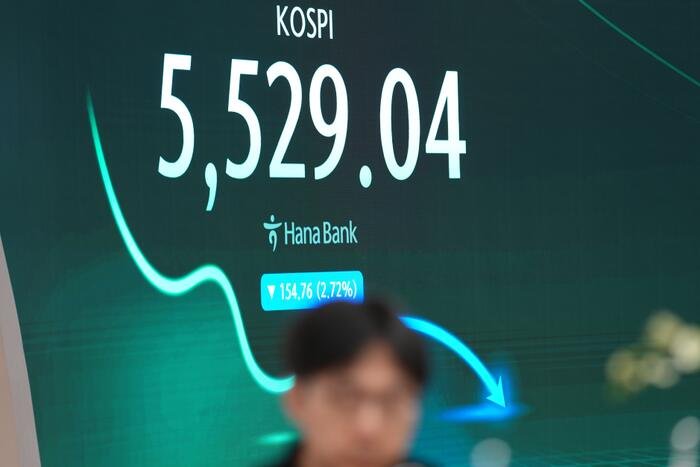
South Korea’s Kospi index bore the brunt of this sentiment, falling 3.5% in morning trading. Heavyweight Samsung Electronics dropped 5.7%, while SK Hynix saw a 7.4% decline as investors offloaded semiconductor holdings. In Tokyo, the Nikkei 225 fell 0.5%, driven lower by steep losses in tech-infrastructure firms. Tokyo Electron tumbled 7.7%, and Advantest saw a 9.4% slide.
These declines mirror the broader struggles of U.S.-based companies closely tied to former President Donald Trump’s agenda or the AI sector. The tech industry, which had relied on a specific regulatory and investment environment, now faces uncertainty regarding how a new Congressional balance will impact subsidies, trade policy, and domestic growth initiatives.
Energy and Defense Markets Pivot
Beyond the tech sector, the transition in Washington has triggered a notable ripple effect in energy and defense. Brent crude oil prices remained under pressure, hovering near $94 per barrel. This decline in oil prices, combined with a potential pivot toward a less aggressive stance on global conflicts, has rattled major military contractors. Defense stalwarts like Lockheed Martin, Northrop Grumman, and General Dynamics saw their shares retreat in U.S. trading, reflecting fears that legislative shifts could lead to a reduction in defense spending or an easing of international tensions.
Conversely, the energy sector is seeing a classic “see-saw” effect. While traditional oil giants like ExxonMobil and ConocoPhillips have faced headwinds, renewable energy firms are beginning to find favor. Companies like First Solar and Enphase Energy recorded gains, fueled by the expectation that a Democratic-aligned legislature may prioritize green energy subsidies and climate-conscious infrastructure projects.
Market Sentiment and the “Washington Factor”
While political outcomes make for dramatic headlines, market experts maintain that the long-term health of the global economy remains tethered to corporate earnings and interest rate trajectories rather than the specific party composition of the U.S. Congress.
However, the immediate aftermath of the midterms has highlighted significant “political risk” for companies with high exposure to partisan agendas. Businesses led by figures such as Elon Musk, as well as media entities like Trump Media & Technology Group, experienced sharp declines as investors weighed the likelihood of renewed oversight and potential investigations.
As Asian trading continues, the divergence between AI-exposed markets and those focused on broader industrial and consumer growth underscores a period of high sensitivity. Investors are currently prioritizing safety and hedging against legislative uncertainty, waiting for clearer signals on how the new balance of power in the United States will shape global trade, interest rates, and the future of the technology sector.
Disclaimer: This content is auto-generated for informational purposes only.
Source: Read Original News