









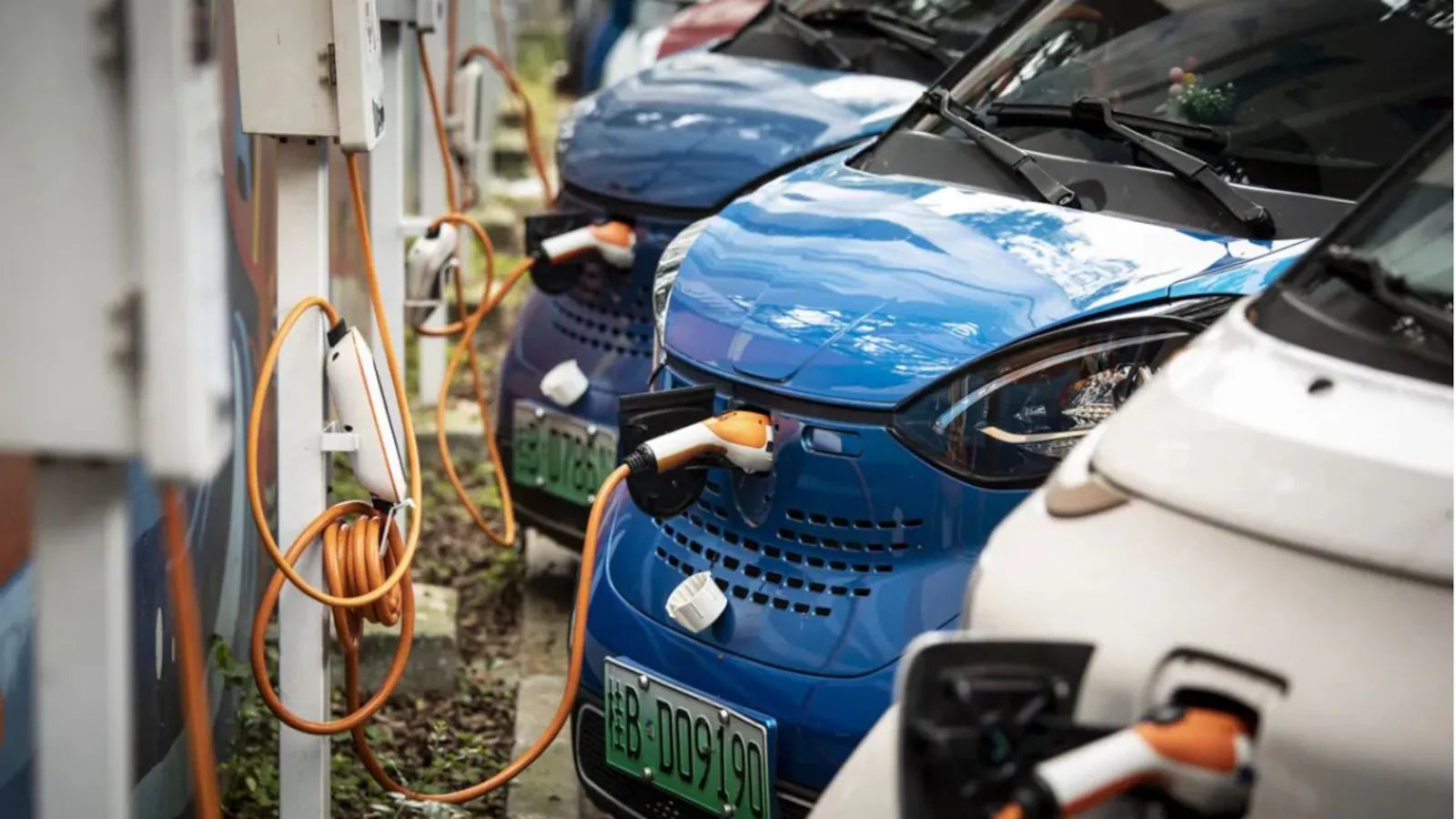
As temperatures across India continue to climb, a common habit among electric scooter riders is coming under fire from safety experts and engineers: immediate charging. While the convenience of plugging in the moment you arrive home is tempting, researchers from the Indian Institute of Technology (IIT) Madras are warning that this practice could be silently damaging the longevity and safety of your vehicle’s battery.
### The Thermal Threshold Challenge
The fundamental issue lies in the way lithium-ion batteries operate. Every charge and discharge cycle generates internal heat as a byproduct of chemical reactions. When a vehicle is pushed hard—such as during high-speed transit or in stop-and-go traffic—the battery temperature rises significantly.
Experimental data from IIT Madras highlights a critical “danger zone.” When ambient temperatures hit 35 degrees Celsius or higher, and a battery is under a heavy load, it can easily cross the 45-degree Celsius threshold. Once the temperature enters this range, the battery experiences significant thermal stress. If an owner plugs the vehicle into a charger while it is already in this overheated state, the charging process—which generates its own heat—exacerbates the situation, potentially leading to accelerated chemical degradation. Over time, this cumulative stress strips the battery of its ability to retain capacity, effectively shortening the lifespan of the vehicle’s most expensive component.
### Beyond Cooling: A Lifecycle Approach to Safety
Technology and AI-driven monitoring systems are becoming essential tools for the next generation of electric mobility. However, industry leaders argue that cooling hardware alone cannot solve the problem. According to Naveen Gupta, CEO of Trev Mobility, effective battery management requires a holistic approach that spans the entire lifecycle of the electric vehicle.
Gupta emphasizes that consumers should move away from a “set it and forget it” charging mentality. Instead, smart charging practices should be adopted, where the vehicle’s internal health monitoring systems influence when and how fast a charge occurs. Integrating AI and machine learning into battery management systems (BMS) allows vehicles to intelligently throttle charging speeds based on real-time temperature data. This not only preserves the cell integrity but also prevents the thermal runaway scenarios that have been a growing concern in the mass adoption of electric two-wheelers.
### The Role of Technology in Market Maturity
As the Indian EV market scales, the industry is looking toward digital innovation to bridge the gap between early adoption and reliable mass-market transit. Cloud-based vehicle diagnostics and predictive maintenance are at the forefront of this shift. By using IoT-enabled sensors, fleet operators can monitor the thermal profile of a vehicle in real-time, receiving alerts before a battery reaches a critical temperature.
For the individual consumer, this signifies a change in how we interact with hardware. Reliable EV performance in extreme weather is no longer just about the chemistry of the cell; it is about the “intelligence” surrounding it. Manufacturers are increasingly integrating software updates that guide users on optimal charging times, leveraging data to balance power grid loads with battery health.
Ultimately, the future of safe electric mobility lies in a combination of robust thermal management technologies and informed user habits. As researchers continue to refine cooling mechanisms and AI-driven thermal management, the burden remains on the user to allow their vehicle a “cooldown” period. By letting the battery return to a stable ambient temperature before plugging it into the wall, owners are not just practicing good maintenance—they are participating in the evolution of a safer, more sustainable transport ecosystem. As the industry matures, the bridge between high-end research and everyday mobility will continue to shrink, making EVs more dependable for every Indian commuter.
Disclaimer: This content is auto-generated for informational purposes only.
Source: Read Original News