






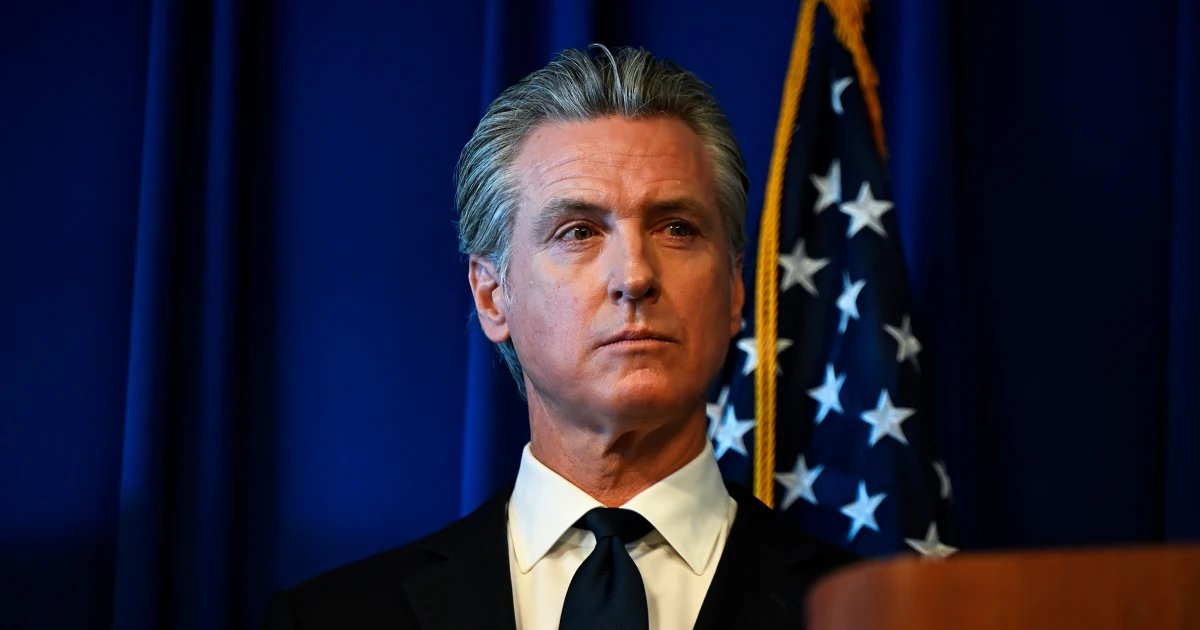
SACRAMENTO — Governor Gavin Newsom has issued an executive order commuting every death sentence in California, effectively emptying the largest death row in the Western Hemisphere. In an open letter to constituents, Newsom declared that “state-sanctioned killing is incompatible with” the fundamental values of the nation’s most populous state.
The sweeping move impacts 548 inmates who were previously awaiting execution. While describing the decision as “among the most difficult of my career,” the governor maintained that the capital punishment system is inherently flawed.
California has not executed a prisoner since January 17, 2006, when Clarence Ray Allen was put to death by lethal injection. Despite the long-standing functional moratorium, the state has maintained a massive death row population, which totaled 561 inmates as of Tuesday. Newsom’s decree, which now faces a mandatory review process by the California Supreme Court, marks a historic shift in the state’s approach to criminal justice.
The announcement has triggered a sharp divide between human rights advocates and victims’ rights groups. Amnesty International USA lauded the decision, with Executive Director Nadia Daar calling it a “significant moment for human rights” that will resonate globally. Robin Maher, executive director of the Death Penalty Information Center, noted that while other governors have granted clemencies, the sheer scale of Newsom’s action is unprecedented in American history.
However, the news has drawn immediate and fierce condemnation from families of victims. Among the most vocal is Marc Klaas, father of 12-year-old Polly Klaas, who was abducted and murdered in 1993 by Richard Allen Davis. Davis is among those whose sentence would be affected by the commutation.
“It’s unbelievably disappointing,” Klaas said, describing the governor’s action as a “knife in the back.” He expressed frustration that the state is effectively walking back sentences that families were assured were final. “I was told that when this guy was sentenced to death that this was a system we can trust. But here we are, 33 years later, and it’s a system we can’t trust.”
Klaas also questioned the political timing of the move, which comes just two days after the midterm elections. With Newsom frequently discussed as a potential presidential contender for 2028, critics are asking whether the decision was driven by political ambition rather than purely moral conviction.
“We’re talking about serial killers, we’re talking about spree killers, we’re talking about cop killers, we’re talking about child killers,” Klaas said. “Why does Gavin Newsom feel the need to commute these sentences? Who benefits from this?”
While the debate over the ethics and efficacy of capital punishment continues, Newsom’s action serves as a decisive turning point, setting California further apart from states like Texas, which has executed 603 people since the Supreme Court reinstated the death penalty in 1976.
Disclaimer: This content is auto-generated for informational purposes only.
Source: Read Original News