







Constitution Supreme: SC Rules Fundamental Rights Override Special Statutes
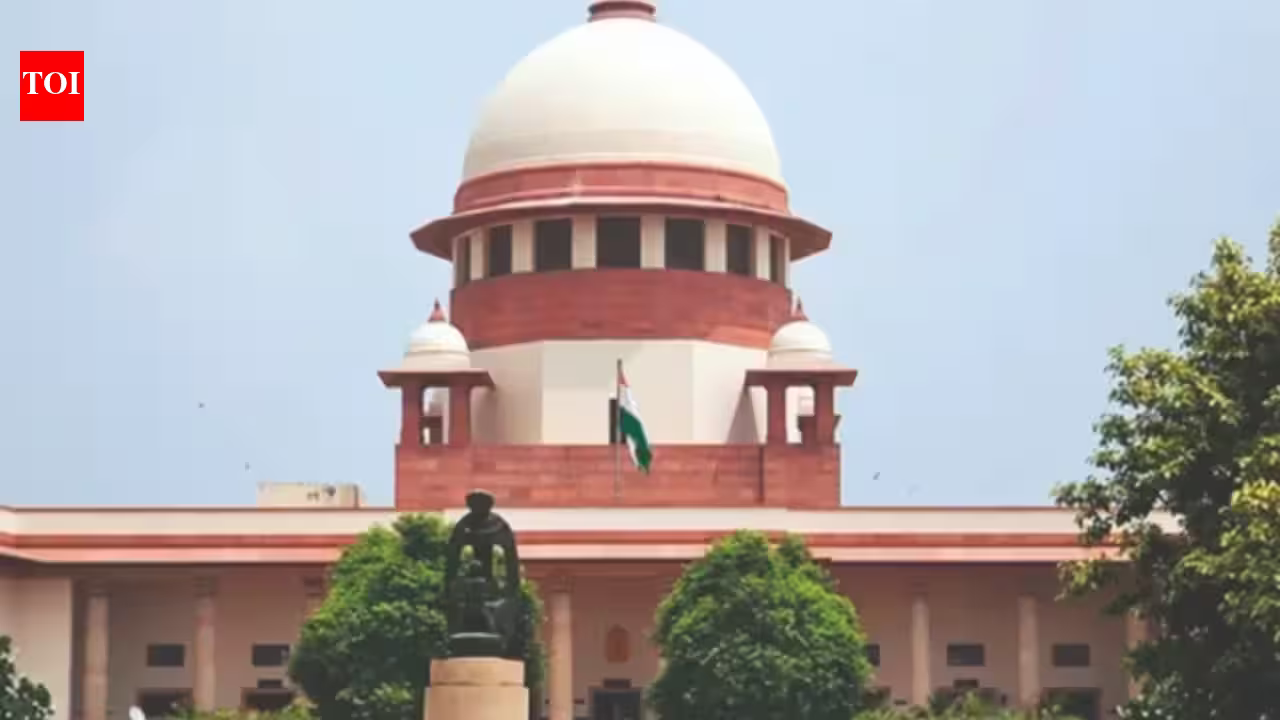
NEW DELHI: In a landmark assertion of judicial principle, the Supreme Court of India declared on Thursday that the Constitution maintains absolute primacy over all other legislative enactments. A bench comprising Justices Ujjal Bhuyan and A.S. Chandurkar underscored that in scenarios where a direct conflict arises between constitutional guarantees and provisions within special statutes—such as the Prevention of Money Laundering Act (PMLA), the Unlawful Activities (Prevention) Act (UAPA), or the Narcotic Drugs and Psychotropic Substances (NDPS) Act—the Constitution must invariably prevail.
The Constitutional Mandate of Speedy Trial
At the heart of the court’s observation is the fundamental right to a speedy trial, which the bench unequivocally classified as a core component of Article 21. The judges held that the right to an expeditious judicial process cannot be curtailed or rendered subservient to the stringent bail conditions often embedded within special laws.
This ruling serves as a significant course correction regarding how the judiciary approaches bail in cases involving complex statutes. The bench explicitly distanced itself from a previous judicial precedent that had suggested an accused person’s right to a speedy trial was tethered to the restrictive bail conditions of the NDPS Act. Previously, it had been argued that the rigors of Section 37 of the NDPS Act could prevent courts from granting bail solely on the basis of prolonged incarceration or trial delays. The current bench has now clarified that such a narrow interpretation is untenable if it infringes upon the constitutional liberty of an individual.
Addressing Judicial Divergence
The ruling arrives during a period of intense legal debate within the corridors of the Supreme Court. There has been a visible divide among various benches regarding the extent to which trial delays should influence bail decisions in cases prosecuted under special anti-terror or economic offense laws. While some past judgments emphasized the strict legislative intent behind these “special” acts, the recent order signals a shift toward safeguarding individual liberty against indefinite judicial detention.
The tension lies in the balance between the government’s intent to curb grave offenses through rigorous bail bars and the judiciary’s duty to ensure that the process does not become a form of punishment itself. By asserting that the Constitution is the ultimate touchstone for legal validity, the court has effectively signaled that legislative exceptions cannot act as a shield to bypass the fundamental right to liberty.
Implications for Future Litigation
This observation is expected to carry significant weight for thousands of undertrials currently languishing in jails under statutes like the PMLA or UAPA, where bail is notoriously difficult to secure. By prioritizing the Constitution, the Supreme Court has empowered lower courts to view prolonged incarceration as a legitimate ground for relief, irrespective of the stringent conditions outlined in special statutes.
Given the inconsistency in previous rulings, the matter of how trial delays interface with these specialized laws is currently pending before a larger bench. Until a definitive consensus is reached by a larger constitution bench, this latest pronouncement by Justices Bhuyan and Chandurkar provides a strong judicial mandate, reinforcing the principle that no law—no matter how stringent—can operate outside the protective umbrella of India’s constitutional framework.
Disclaimer: This content is auto-generated for informational purposes only.
Source: Read Original News