








Aerial Shadow Over the Himalayas: China’s Rapid Helicopter Expansion Challenges India’s Border Strategy
The strategic landscape along the Line of Actual Control (LAC) is undergoing a quiet yet profound transformation. While public discourse often centers on fighter jets, missile batteries, and massive infrastructure projects, a pivotal shift is occurring in the skies above the world’s most challenging terrain: the rapid modernization and expansion of the People’s Liberation Army’s (PLA) helicopter fleet.
Beijing’s Rotorcraft Revolution
The PLA is moving aggressively to address a long-standing reliance on foreign technology by pivoting toward a sophisticated, domestically manufactured arsenal. According to intelligence and defense reporting, Beijing is no longer content with merely adding numbers; it is systematically enhancing the quality and specialization of its aerial platforms.
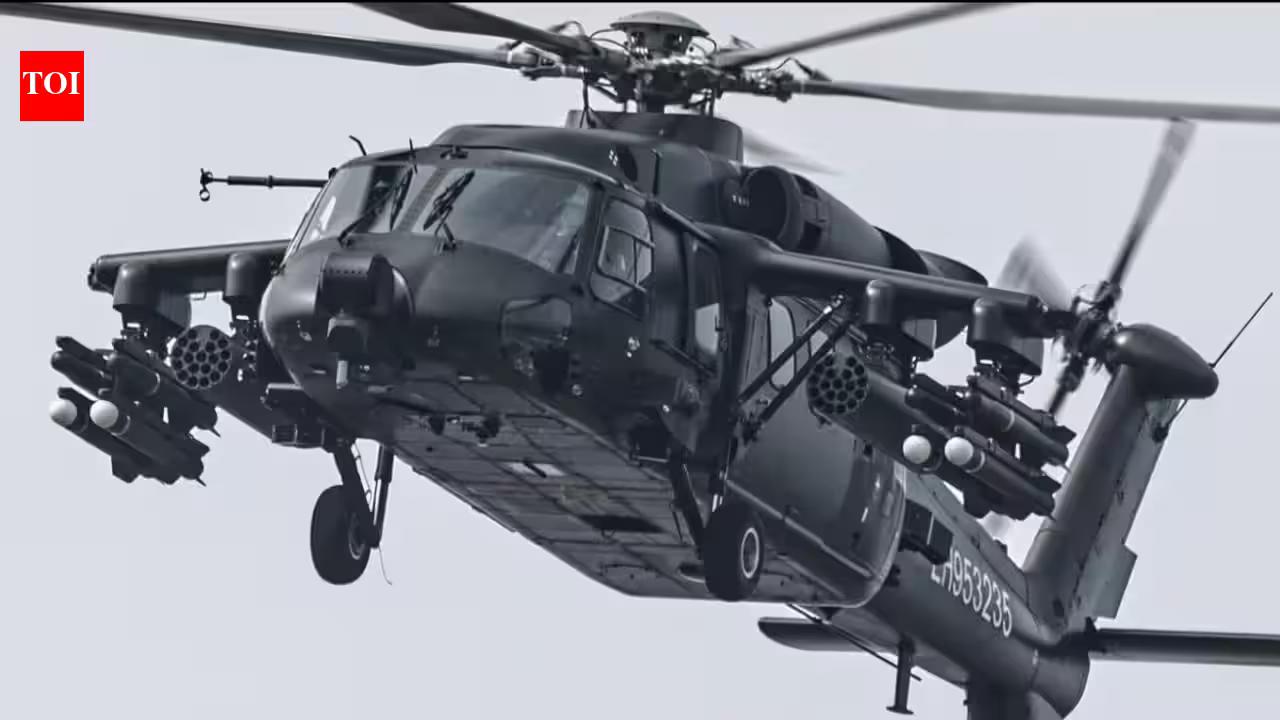
Central to this modernization drive is the Z-20 series, a versatile multi-role helicopter that has become the backbone of China’s air mobility efforts. Supplemented by the Z-10 and Z-19 attack platforms, the Chinese military is now capable of executing complex missions ranging from high-altitude reconnaissance and rapid troop deployment to precision fire support. The emergence of the tentatively identified Z-21, a heavy-duty attack helicopter, signals that Beijing intends to project sustained firepower into the thin, treacherous air of the Himalayan plateau. By integrating these indigenous assets with legacy Russian-origin platforms, the PLA is effectively building an “aerial bridge” that significantly reduces its logistical vulnerability in mountain warfare.
The Himalayan Operational Reality
For the Indian military, the terrain dictates the strategy. In the high-altitude reaches of Ladakh and the Eastern sector, ground movement is often restricted by geography and brutal weather. In such environments, helicopters are not merely auxiliary assets—they are a lifeline. They serve as the primary means for casualty evacuation, rapid reinforcement of forward-deployed infantry, and the critical “air maintenance” of remote outposts that cannot be accessed by road.
India’s historical mastery of these mountains—exemplified by the grit displayed during Operation Meghdoot—set the standard for high-altitude rotorcraft operations. However, as the PLA closes the technological and quantitative gap, the margin for error is shrinking.
India’s Multi-Tiered Counter Strategy
To address this evolving threat, India has moved to diversify its own fleet, blending proven international heavy-lifters with cutting-edge domestic innovations. The current Indian strategy relies on a formidable mix of assets:
- Heavy Lift and Logistics: The induction of American CH-47F Chinook helicopters has provided India with a heavy-lift capability unmatched in the region, allowing for the swift movement of artillery and engineering equipment to high-altitude transit points.
- Combat Versatility: The backbone of India’s utility and transport operations remains the robust Russian Mi-17 V5 fleet, which continues to provide reliable service in diverse conditions.
- Indigenous Might: The crown jewel of India’s push for self-reliance is the Prachand Light Combat Helicopter (LCH). Designed specifically for high-altitude warfare, the Prachand provides a localized answer to Chinese attack platforms, capable of operating from high-altitude airfields with lethal precision. Additionally, the Rudra and Dhruv platforms serve as essential workhorses for reconnaissance and armed support.
As the standoff between the two Asian giants persists, the helicopter has emerged as the most critical piece of the tactical puzzle. For New Delhi, the race to maintain an aerial edge in the Himalayas is now a race against time, requiring a continued commitment to both technological upgrades and the strategic deployment of its specialized rotorcraft squadrons.
Disclaimer: This content is auto-generated for informational purposes only.
Source: Read Original News