








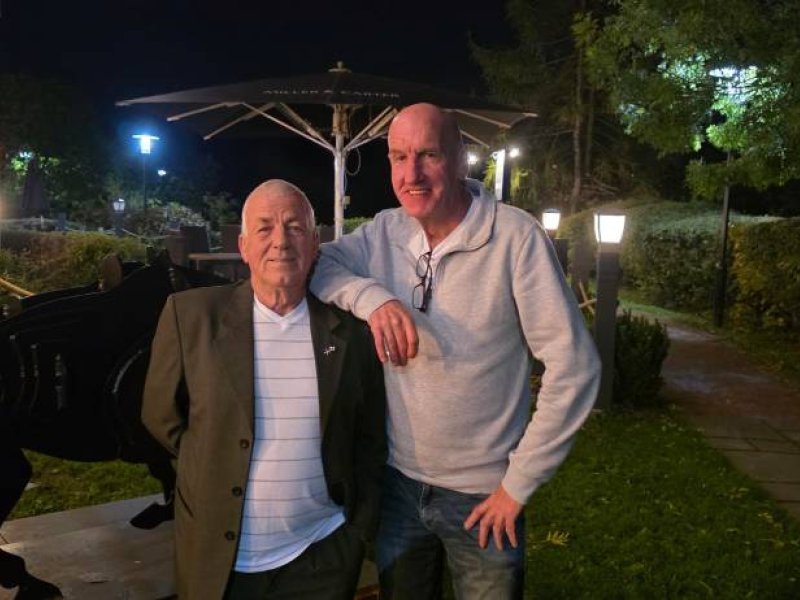
Two veterans of the Northamptonshire industrial sector have officially hung up their hard hats, marking a poignant end to a chapter for Desborough-based Specialist Remediation Solutions (SRS). John Lumsden, 66, and Allen Scott, 61, retired last week, leaving behind a legacy of operational excellence in the biohazard and asbestos removal industry that helped solidify the young company’s reputation since its inception in 2023.
## A Legacy Built on Human Connection
While the modern corporate world is increasingly obsessed with AI-driven efficiencies and algorithmic workforce management, the success of SRS serves as a reminder that the backbone of specialized field services remains human expertise. John Lumsden, a lifelong veteran of the asbestos removal trade, served as one of the company’s first employees when it launched in March 2023. His colleague, Allen Scott—a former mechanic who transitioned into asbestos remediation—joined shortly after in early 2024.
Their departure, celebrated at a team gathering on October 29th, highlights the importance of institutional knowledge. Managing Director Stephen Booth emphasized that the duo’s contribution went beyond technical compliance; they acted as crucial mentors, passing down skills to a younger generation in a field where safety and precision are non-negotiable. As companies look to integrate machine learning and sensor-based monitoring into environmental remediation, the departure of seasoned experts like John and Allen underscores the irreplaceable value of “boots-on-the-ground” experience.
## The Digital Evolution of Remediation
The environmental and hazard management sector is currently on the cusp of a technological shift. Much like the broader Google ecosystem—which has recently pivoted toward AI-integrated search and predictive cloud analytics—the remediation industry is starting to lean into advanced tech. From drone-based asbestos surveys to AI-powered predictive models that determine contaminant spread, the digital landscape of the sector is evolving rapidly.
However, as Stephen Booth noted, the “tight-knit” culture at SRS remains its primary engine for growth. While Google continues to refine its search algorithms to better prioritize localized business information—helping companies like SRS reach prospective clients more efficiently—the actual execution of specialized remediation remains a human-centric endeavor. The challenge for businesses in the late 2020s is finding the balance between adopting automated project management tools and maintaining the close, supportive workplace culture that John and Allen helped cultivate during their time at the firm.
## Looking Ahead: Mentorship in the Age of Automation
As John retires to focus on family life and Allen turns his attention to his son, the departure of such long-standing staff poses a common challenge for industrial SMEs: how to preserve the “human” element of business culture while the industry undergoes rapid modernization.
Recent advancements in Google’s workspace tools and project management software have made it easier for firms like SRS to document processes and maintain high standards of health and safety. Yet, as the industry moves toward automated compliance logs and remote monitoring, the mentorship roles previously held by the likes of Lumsden and Scott remain vital. Their ability to foster team camaraderie—described by John as a “second family”—is a quality that no amount of code or generative AI can replicate.
As SRS looks toward its future, the company faces the dual task of scaling its digital footprint to ensure continued visibility on the web, while ensuring that the technical expertise and interpersonal culture left by its two most recent retirees remain embedded in its operational DNA. For those following the evolution of the East Midlands industrial sector, the story of these two men serves as a testament to the fact that even in an era of rapid technological transformation, the quality of the workforce remains the most important metric of all.
Disclaimer: This content is auto-generated for informational purposes only.
Source: Read Original News