







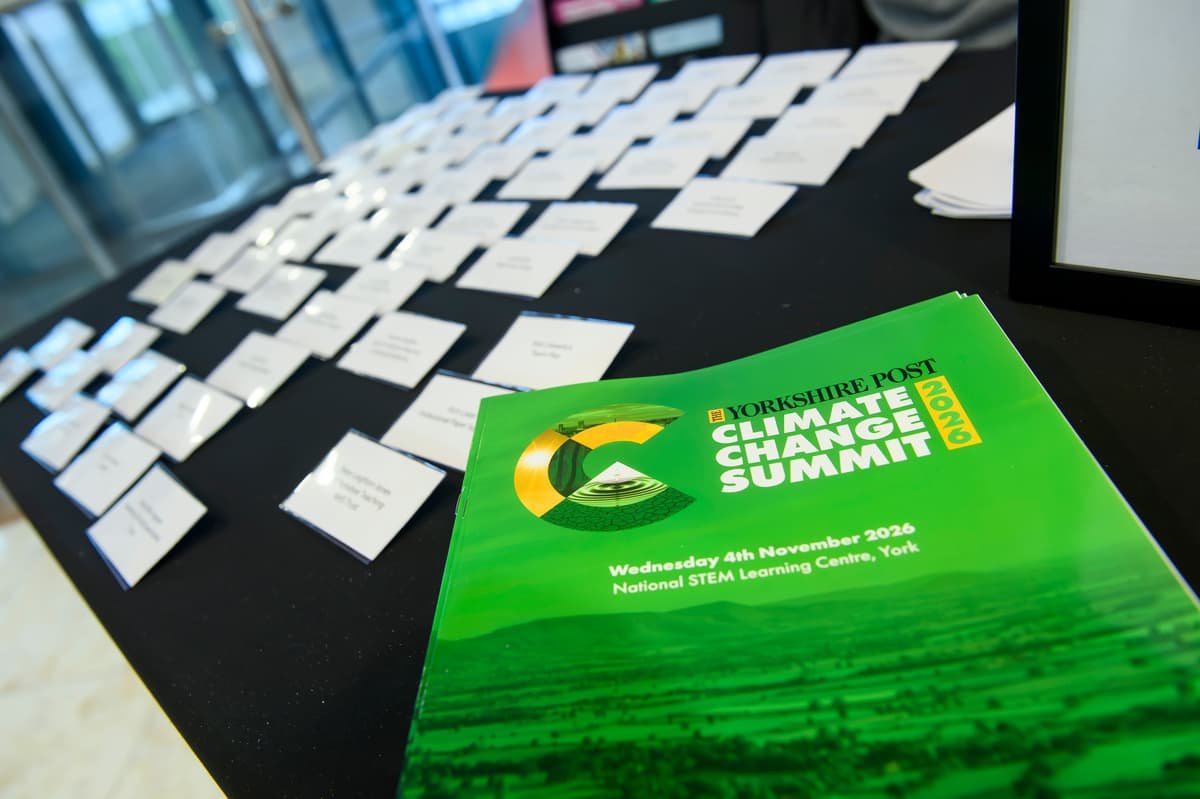
Yorkshire’s green business leaders, environmental researchers, and community advocates converged at the National STEM Learning Centre in York this week for the annual Yorkshire Post Climate Change Summit. While the event showcased the region’s commitment to sustainable innovation, the prevailing mood was one of urgent frustration regarding the current landscape of government support.
A central figure at the conference, Dr. Imogen Rattle, Senior Research Fellow in Low Carbon Industrial Strategy at the University of Leeds, delivered a sobering assessment of the industry’s trajectory. Addressing the assembly, Dr. Rattle warned that the lack of systemic government intervention would have far-reaching consequences for the sector’s health and the region’s ability to meet net-zero targets.
One of the most significant barriers identified by Dr. Rattle is the prohibitive cost of energy. She noted that industrial energy prices in the UK remain the highest among G7 nations, placing an immense, disproportionate burden on green businesses struggling to scale their operations. For firms attempting to transition toward sustainable manufacturing, these overheads often render them uncompetitive before they can gain any meaningful market traction.
“It’s going to take a lot of time, and time is not something we have a lot of,” Dr. Rattle remarked, highlighting the widening gap between the scientific necessity for rapid decarbonization and the pace of current policy implementation.
The urgency of the situation was underscored by other experts in attendance. Dr. Andrew Swift, CEO of Fera Science, used the platform to call for deeper collaboration and a more robust strategy for regional investment. Dr. Swift reminded attendees of the ecological limits the planet is currently testing, pointing to the July 30 arrival of ‘Earth Overshoot Day’—the date on which human consumption of natural resources surpasses the Earth’s capacity to regenerate them for the year.
The local context of these global issues was brought into sharp focus by recent regional developments. Last month, the Environment Agency officially declared a drought status for Yorkshire as low water levels in reservoirs and rivers threatened both agricultural output and utility supplies. For those at the summit, the drought served as a tangible reminder that climate change is no longer a future threat, but an immediate, disruptive reality.
The summit provided a rare forum for diverse stakeholders, ranging from community-led green energy initiatives to large-scale manufacturing firms, to voice their concerns. Paul Pearcy, representing the Yorkshire-based British Glass, articulated the frustration felt by many in the industrial sector. Pearcy argued that domestic manufacturers are operating at a disadvantage compared to their European counterparts, who benefit from significant funding and subsidies that ease the transition to green energy.
“We need a level playing field,” Pearcy stated, citing the “significant cost barriers” created by operating outside of the European trading bloc. According to industry leaders at the event, without similar state-backed support, the economic feasibility of local green manufacturing remains under constant threat.
The calls for action come amidst a backdrop of recent government pledges. In the most recent Autumn Budget, the government reaffirmed its commitment to “invest in renewable and low-carbon energy infrastructure across the UK,” aiming to unlock growth and catalyze a transition toward a low-carbon economy. However, as business leaders and scientists alike pointed out in York, there is a palpable disconnect between these high-level budgetary promises and the practical, daily realities of firms attempting to thrive in an increasingly volatile environmental and economic climate.
As the summit concluded, the message from the attendees was clear: while Yorkshire possesses the ingenuity and the drive to lead the green industrial revolution, the region’s progress is being throttled by a lack of competitive support. Without a more coherent and well-resourced national strategy, the window for meaningful change may continue to narrow, leaving the UK’s most ambitious green industries to struggle in the face of escalating global pressures.
Disclaimer: This content is auto-generated for informational purposes only.
Source: Read Original News