









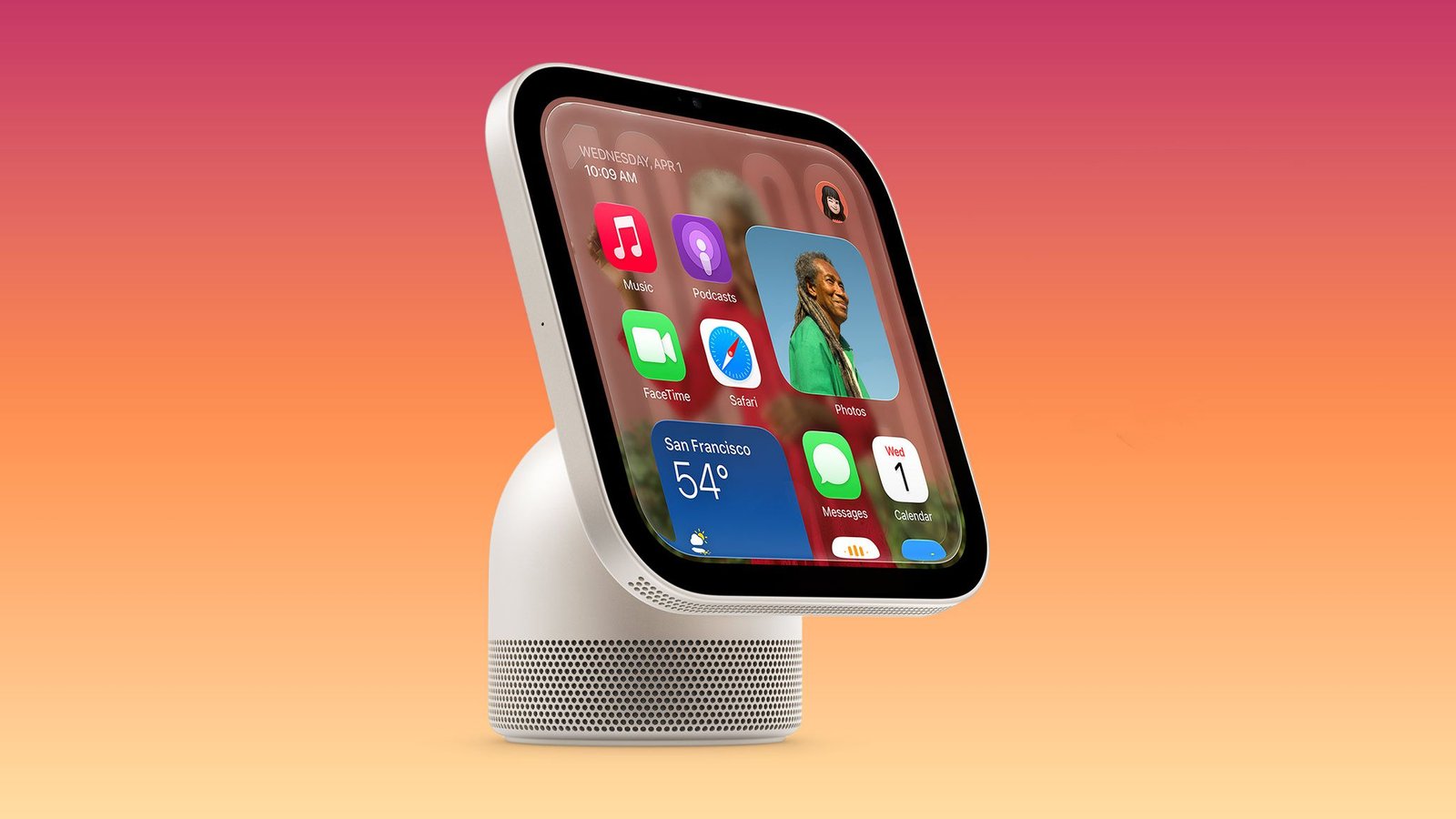
Under the Hood of the Apple HomeView
The recent release of the Apple HomeView smart home hub marks a significant shift in how the company approaches domestic automation. While much of the initial conversation surrounding the device centered on its 7-inch Liquid Retina display and the integration of advanced Siri AI, technical analysis has revealed that the hardware powering the device is just as robust as its software features. It has been confirmed that the HomeView utilizes the A18 chip, configured with 8GB of RAM.
This architectural decision places the HomeView on par with the iPhone 16 lineup and the MacBook Neo in terms of memory capacity. Although Apple traditionally omits specific RAM figures from its consumer-facing technical specifications, this high-performance configuration is critical for a device designed to serve as a persistent, always-on hub for a modern household. By providing 8GB of RAM, Apple ensures that the hub maintains the responsiveness required for multitasking between complex home automation tasks, local artificial intelligence processing, and high-fidelity media display.
Hardware Efficiency and Future-Proofing
The use of the A18 chip is a calculated move that ensures the HomeView remains relevant for several years of software updates. In the smart home category, hardware longevity is often the primary concern for consumers. Older hubs frequently struggle when developers push updates that demand more computational overhead, leading to sluggish interfaces and connectivity delays. By embedding the A18—a chip designed for high-end mobile computing—Apple has created a substantial buffer against future software bloat.
Furthermore, the 8GB of RAM allows for concurrent processing of visual data and local machine learning models. Because the device is intended to perform facial recognition to shift between user profiles, it must keep multiple neural network processes active in its volatile memory. Without this level of memory headroom, the device would be forced to constantly reload data from storage, which would result in visible latency that disrupts the seamless transition between a shared household dashboard and a private user experience.
The Role of AI in HomeView Performance
The integration of Siri AI is arguably the primary justification for the high-end silicon housed within the HomeView. Modern smart home systems are moving away from simple command-response protocols toward contextual awareness. The hub needs to parse natural language, analyze ambient sensor data from various smart home devices, and maintain a persistent state of the home’s current status.
The A18 architecture includes a sophisticated Neural Engine that works in tandem with the 8GB of RAM to handle these requests locally. By performing AI inference on-device rather than relying exclusively on cloud computing, the HomeView achieves lower latency and improved security. When a user requests a change in the home environment, the processing happens near-instantaneously because the relevant models are kept in active memory. This hardware foundation ensures that the “Siri AI” experience remains fast, even when multiple household members are interacting with the device throughout the day.
Display Integration and System Responsiveness
The HomeView’s 7-inch Liquid Retina display is designed to act as a dynamic portal for home control. High-resolution screens require significant resources to render fluid animations and transition effects. Whether the user is viewing a security camera feed in real-time or scrolling through a complex interface of smart light and climate controls, the A18’s GPU is tasked with maintaining a smooth frame rate.
The 8GB of RAM supports this by acting as a high-speed cache for visual assets and system processes. If the memory allocation were lower, the device would likely experience frame drops during transitions or slow load times for high-definition surveillance streams. By ensuring that the system has enough memory to buffer high-bandwidth data, Apple guarantees that the primary interface remains stable and reactive. This is crucial for a device that is meant to function as a household utility, as any interface lag can detract from the convenience that a smart home hub is intended to provide.
Strategic Implications for the Apple Ecosystem
The choice of internal hardware also signals how Apple intends to evolve its smart home strategy. By aligning the HomeView’s internal specifications with the iPhone and MacBook, Apple is establishing a unified computing environment across its product lines. This makes it easier for developers to build applications for the device, as they are working within a known performance bracket that is already well-supported by existing software development kits.
This uniformity reduces the barrier to entry for third-party smart home integrations. As more manufacturers develop accessories for the Apple ecosystem, the HomeView’s robust RAM and processing capacity provide a reliable host for these integrations. It essentially acts as a high-performance bridge, ensuring that complex third-party automation rules execute without issue. The 8GB RAM configuration demonstrates that Apple is positioning the HomeView not just as a static wall-mounted screen, but as a central nervous system for the home capable of scaling alongside the increasing complexity of smart technology.
Disclaimer: This content is auto-generated for informational purposes only.
Source: Read Original News