









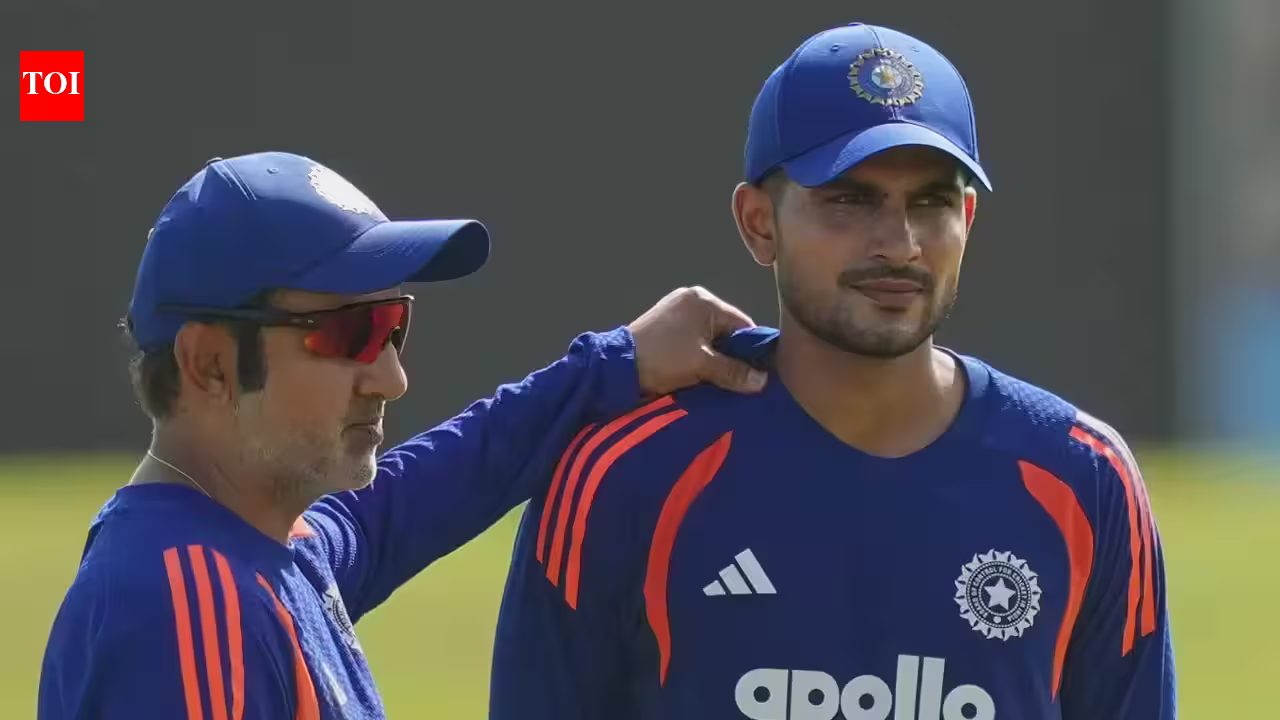
Wellington: The Indian cricket team finds itself at a defining crossroads. As the side navigates a significant transition in the Test arena, the ODI format remains a bastion of stability, anchored by the enduring presence of legends Virat Kohli and Rohit Sharma. With the 2027 World Cup looming on the horizon, head coach Gautam Gambhir is tasked with balancing the integration of youth with the wisdom of veterans, all while managing the immense expectations of a cricket-obsessed nation.
Former New Zealand pace spearhead Kyle Mills, observing the evolution of international cricket from the sidelines, believes that the burden resting on Gambhir’s shoulders is unlike anything else in the sporting world. In an exclusive conversation, the Kiwi great weighed in on the challenges of the Indian coaching hot seat and the inevitable changing of the guard.
The Gambhir Factor: A Tough Taskmaster
Reflecting on Gambhir’s appointment, Mills did not mince words regarding the temperament the former opener brings to the dressing room. Having played against him, Mills recalled a man who viewed cricket not as a game, but as a business venture where performance was the only currency.
“He’s always been a tough competitor on the field, without question,” Mills said. “No jokes were going around at all because he always meant business. Post-retirement, he entered politics and became a leader. A great tactician, a wonderful player, very professional across all facets of the game, and a tough taskmaster as well. He’s a tough guy.”
Mills suggested that Gambhir’s steely demeanor is exactly what is required to navigate the unprecedented scrutiny that follows the Indian team. While acknowledging the pressure on global sporting giants like the New York Yankees, Manchester United, and the All Blacks, Mills insists the Indian national team exists in a tier of its own. “I actually wouldn’t think of another sporting team that faces as much scrutiny as the Indian cricket team,” he added. “It’s not an easy task to be the coach, but Gambhir has the bit between his teeth.”
The Final Act for Indian Icons
As the Indian contingent tours New Zealand, the focus shifts to the veteran core. The presence of Rohit Sharma, Virat Kohli, KL Rahul, and Shreyas Iyer provides a safety net for captain Shubman Gill. For fans and contemporaries alike, seeing Kohli and Rohit on New Zealand soil carries a nostalgic weight, as the window for their combined brilliance begins to close.
“It’s going to be a joy to have them here because they’re two wonderful cricketers,” Mills noted. Speaking specifically on Rohit Sharma, Mills echoed the common sentiment regarding the opener’s deceptive ease at the crease. “I think it’s a term that often gets used about Rohit, that he has more time than others, but the reality is he has the same amount of time as everyone else; he just makes it look easy.”
The Shubman Gill Era
Transition is an inherent part of the sporting lifecycle, and Mills views the rise of Shubman Gill as the next natural step in India’s rich history of succession. The transition from Gavaskar and Tendulkar to Dravid, and later to the Kohli-Rohit era, is a cycle Mills respects immensely.
“Sport’s a funny game. You never own the shirt. You never own the cap,” Mills explained. “There are always people just passing through it. You think of Sachin Tendulkar. Go back to Gavaskar, Kapil Dev. Then you go to the likes of Laxman, Dravid… they all just travel through this team, and now we’re into a new generation.”
Mills credited the Indian Premier League (IPL) for ensuring that this transition is far smoother for India than for most other nations. By exposing second, third, and fourth-tier players to the rigors of international quality talent, India has built a robust pipeline that keeps the national side competitive regardless of who holds the captaincy.
New Zealand’s Sustained Ascent
While the spotlight often stays on India, the conversation naturally turned to the host nation’s own resurgence. The Black Caps have transformed from a side reliant on individual brilliance—like that of Sir Richard Hadlee and Martin Crowe—into a consistent, systematic powerhouse.
“New Zealand cricket teams are now very good, compared to where they used to be,” said Mills. He points to a professionalized contract system and significantly upgraded infrastructure as the catalysts for this change. Cricket has evolved from a past-time to a viable, stable career path for aspiring Kiwis, creating a depth of talent that was simply non-existent in the 1990s.
Despite the recent retirements of legends like Kane Williamson, Tim Southee, and Trent Boult, Mills is optimistic about the new wave of talent, highlighting the skills of players like Rachin Ravindra and the grit of Tom Latham. “There’s really good depth in the country now,” he concluded. “We’ve got players competing for spots, and that has added to the results we’ve seen.”
As the series continues, the narrative is clear: India is preparing for the future while honoring its past, and New Zealand is proving that through infrastructure and consistency, even the smallest nations can dominate the global stage.
Disclaimer: This content is auto-generated for informational purposes only.
Source: Read Original News