









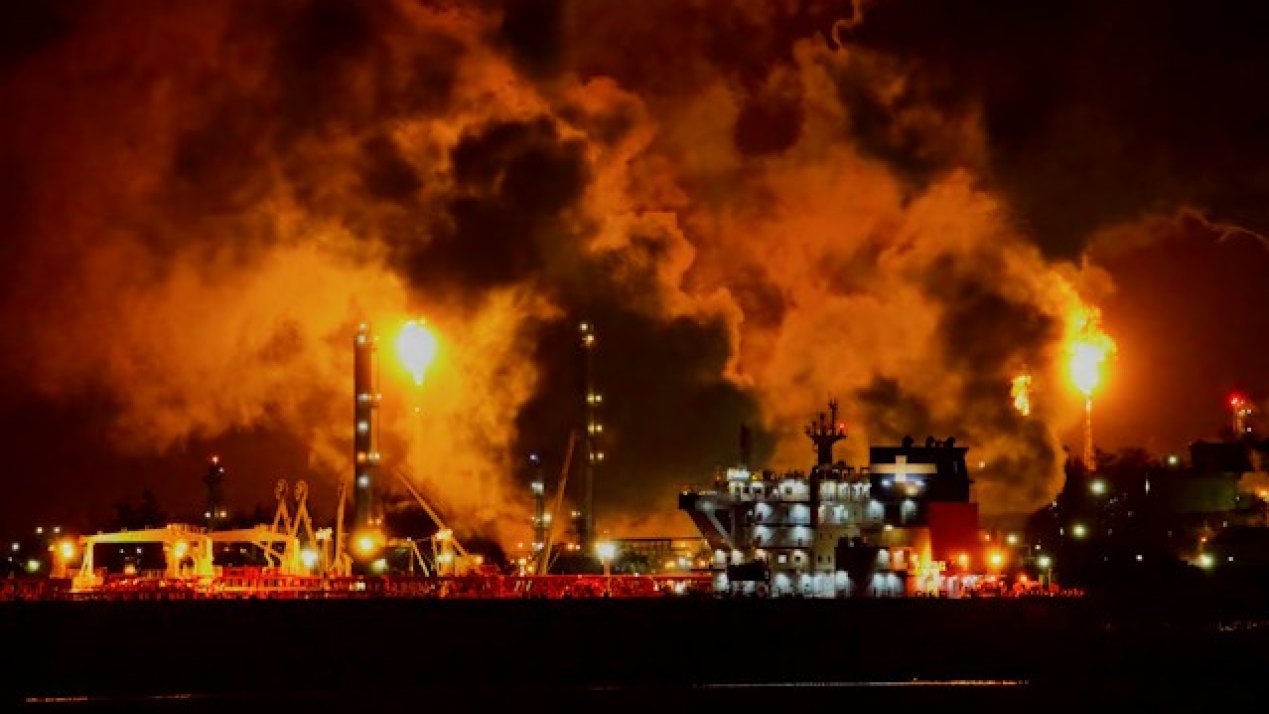
PEMEX is facing a significant operational crisis as the company’s inability to manage associated natural gas production has resulted in flaring rates reaching up to 6% during the first quarter of 2026. This performance significantly exceeds the 98% utilization mandate set by the National Agency for Industrial Safety and Environmental Protection of the Hydrocarbons Sector (ASEA). The failure to capture these volumes has created a US$3 billion infrastructure deficit, further intensifying Mexico’s dependency on U.S. natural gas imports, which currently account for 75% of the country’s domestic supply.
## The Infrastructure Bottleneck and Strategic Impacts
The core of the issue lies in the Southeast Basins, particularly within the Ixachi and Quesqui fields. These sites produce “wet sour gas,” which contains high levels of hydrogen sulfide and carbon dioxide. Because current midstream assets lack the necessary sweetening and compression technology to scrub these impurities, the gas cannot meet the stringent quality specifications required for entry into the SISTRANGAS national transport grid.
The economic fallout is substantial. Beyond the environmental impact of methane emissions—which run counter to Mexico’s commitments under the World Bank’s Zero Routine Flaring by 2030 initiative—PEMEX is essentially burning off hundreds of millions of dollars in potential revenue. This inefficiency complicates the company’s precarious financial position, as it navigates a massive debt load of US$77.6 billion and mounting supplier obligations. Institutional lenders are increasingly tying refinancing terms for the 2025–2033 period to strict environmental, social, and governance (ESG) benchmarks, making the elimination of routine flaring an urgent fiscal necessity.
## Leveraging Technology and Modular Solutions
To address these gaps without further burdening the public balance sheet, industry experts are advocating for decentralized, modular technology. Rather than relying on massive, centralized government projects, operators are looking toward mobile amine sweetening units and cryogenic extraction plants that can be deployed directly at gathering hubs.
By utilizing modular capture systems, companies can process high-pressure streams onsite, rendering them safe for pipeline injection. For isolated or mature offshore sites where pipeline connectivity is physically impossible or economically unviable, “virtual pipelines” are emerging as a viable alternative. This strategy involves capturing low-pressure gas at the wellhead and transporting it via specialized trailers to regional industrial consumers, effectively monetizing gas that would otherwise be vented.
## Offshore Electrification and Private Investment Models
Offshore operations in the Campeche Sound present a unique set of challenges, as legacy compressors often fail and nitrogen-heavy gas complicates secondary recovery. One of the most promising technological pathways is the transition to “Power-from-Shore.” By deploying high-voltage alternating current subsea cabling, operators can draw power from the mainland grid, allowing them to replace inefficient onsite gas turbines with electrified infrastructure.
To fund these ambitious upgrades, the sector is shifting toward mixed-contract and service-agreement models. Private engineering firms are increasingly invited to build and manage gas treatment and compression assets, operating under fee-per-volume structures. This mechanism allows for the modernization of midstream infrastructure using private capital rather than federal debt.
Furthermore, advanced digital monitoring—including satellite telemetry, optical gas imaging, and AI-driven leak detection protocols—is becoming critical to ensuring compliance. By integrating these tools with rigorous, independent third-party certification, Mexico can improve its overall destruction efficiency. These technological and financial strategies offer a clear roadmap to reduce import dependency and secure the investment capital required to align PEMEX with global sustainability standards.
Disclaimer: This content is auto-generated for informational purposes only.
Source: Read Original News