








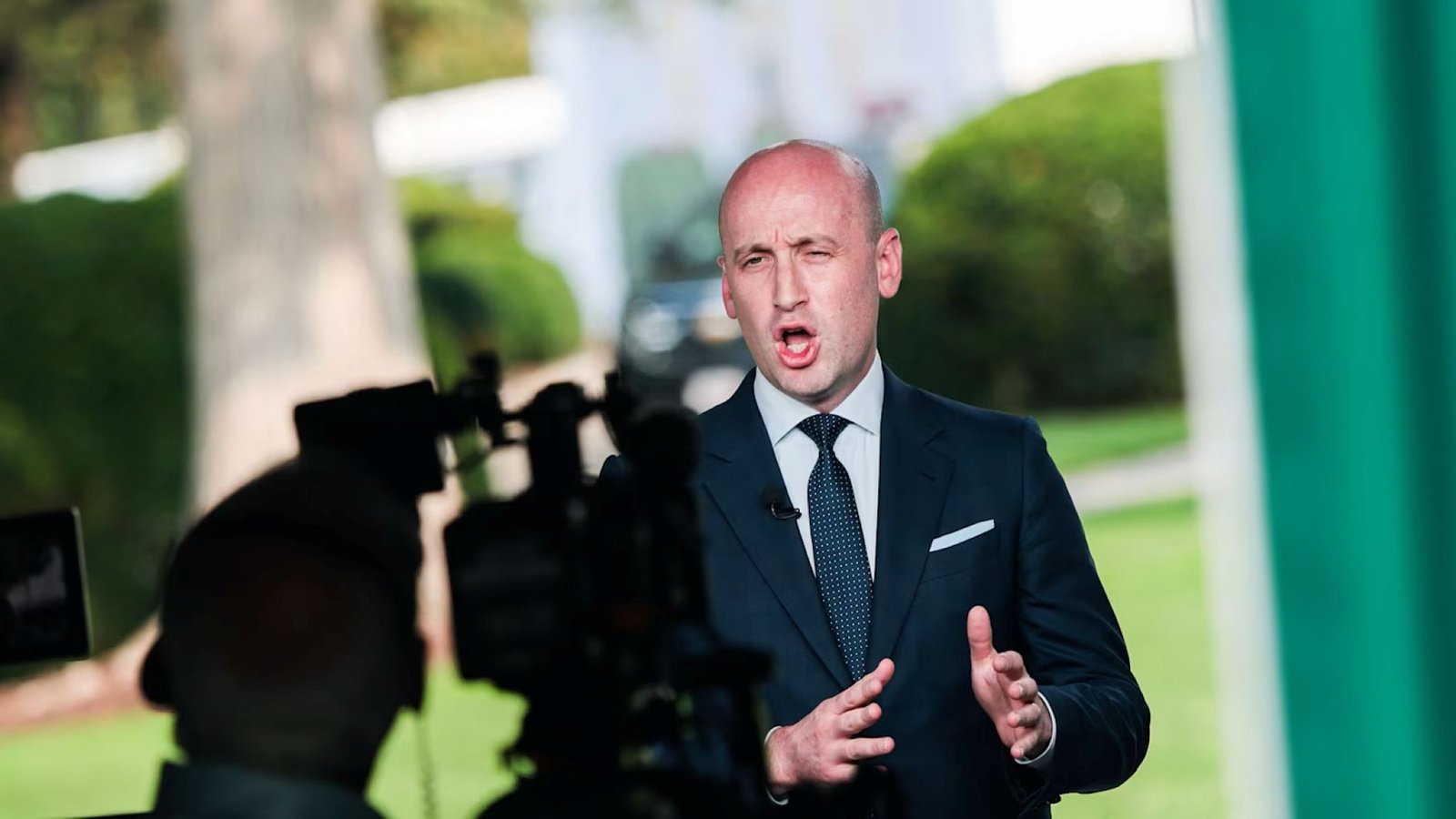
In a significant reshuffling of his inner circle following a series of bruising defeats in the midterm elections, Donald Trump announced late Wednesday that Susie Wiles will step down as White House Chief of Staff. She is set to be replaced by Stephen Miller, the president’s longtime advisor and the primary architect of his administration’s most aggressive immigration and border security policies.
The announcement, delivered via the social media platform Truth Social, marks the first major structural change to the administration since the political fallout of the midterms. Trump signaled that the transition will take effect on Monday, November 9, 2026.
“I am pleased to announce that Mr. Stephen Miller, the current Deputy Chief of Staff of the Trump Administration, and one of my most trusted advisors, will become the Chief of Staff starting Monday, November 9, 2026,” Trump wrote.
The move signals a pivot toward a more combative administrative approach as the president seeks to regain momentum following electoral losses that weakened his party’s position in Congress. Miller, who has served as a central figure in Trump’s political orbit for years, is widely regarded as a staunch ideologue whose influence has consistently shaped the administration’s hardline stance on national sovereignty, deportation initiatives, and border enforcement. His elevation to the role of Chief of Staff is expected to consolidate the influence of the president’s “America First” wing within the West Wing.
Susie Wiles, who is credited with maintaining operational discipline during her tenure as Chief of Staff, will not be leaving the president’s orbit entirely. Trump noted that she will be transitioning to oversee the “Trump Political Operation,” suggesting that the president is looking to utilize her organizational experience to recalibrate his party’s electoral strategy moving forward.
“Susie Wiles, who has done an outstanding job, will be moving over to the Trump Political Operation,” Trump wrote in his statement. “I want to thank her for her service as Chief of Staff — she has done a great job!”
The change comes at a precarious time for the administration. With the midterms having resulted in a difficult legislative landscape, political analysts suggest the appointment of Miller is an attempt by the president to energize his base and reassert control over his policy agenda. By placing a trusted, long-term loyalist at the helm of the White House staff, Trump is clearly signaling a preference for aggressive implementation of his policy goals over the more traditional management style that Wiles had prioritized.
As Washington prepares for the transition on November 9, observers are waiting to see how the change in leadership will impact pending legislation and the administration’s focus in the final years of the term.
Details regarding further staff adjustments remain forthcoming.
Disclaimer: This content is auto-generated for informational purposes only.
Source: Read Original News