





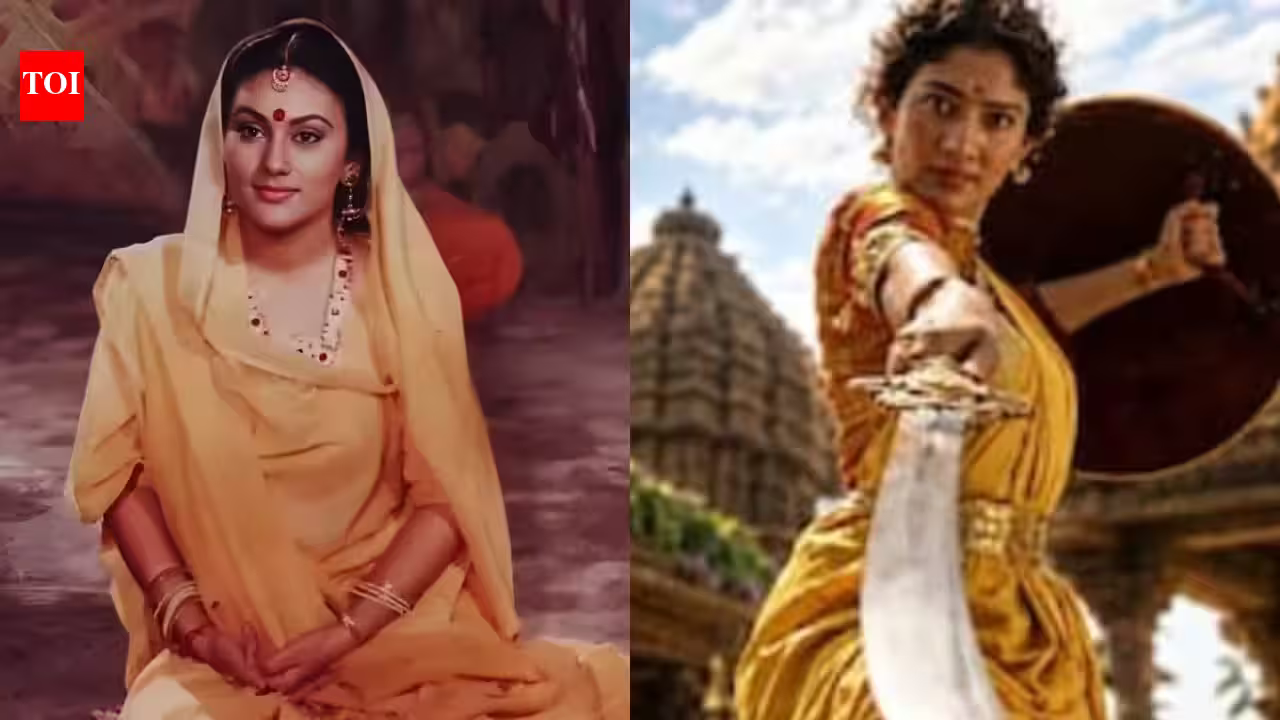
The cinematic landscape is currently vibrating with the tremors of a debate that transcends mere filmmaking. Nitesh Tiwari’s ambitious adaptation, Ramayana: Part One, has inadvertently become the epicenter of a cultural tug-of-war, and at the heart of it is Sai Pallavi’s depiction of Goddess Sita. Specifically, it is the sight of the beloved actress engaging in high-octane combat—a departure from the traditional, serene imagery of the deity—that has set social media and cinema circles ablaze.
For a generation that grew up associating the divine image of Sita with the graceful, poised demeanor of Dipika Chikhlia in Ramanand Sagar’s 1987 landmark series, seeing a weapon-wielding Sita is jarring. The discourse isn’t just about cinema; it is about the sanctity of memory and the boundaries of creative liberty in retelling a foundational text.
The Weight of an Iconic Legacy
It is impossible to discuss the character of Sita in the Indian consciousness without mentioning Dipika Chikhlia. When she stepped into the role in the late 80s, she didn’t just play a character; she became a cultural icon. To this day, many viewers cannot dissociate her performance from the text itself.
When asked to weigh in on the viral clips of Sai Pallavi’s combat sequences, Chikhlia maintained a tone of diplomatic grace. She didn’t launch an attack; instead, she provided a bridge between nostalgia and modernity. “The memory that I have of Valmiki’s Ramayana and Tulsidas’ Ramayana, which was majorly a part of our Ramayan, I don’t remember that anywhere we had those kinds of scenes,” she noted. Her words highlight the core of the controversy: the audience is measuring the new film against the yardstick of the 1987 television series, which prioritized the emotional and spiritual trials of Sita over martial prowess.
Navigating the 300 Ramayanas
The beauty—and perhaps the complexity—of the Ramayana lies in its sheer volume of iterations. As Chikhlia rightly pointed out, there are over 300 known versions of the epic across various cultures and languages. This fact is the primary defense for the creative team behind the new film.
“Every story, every Ramayana is a little different from the other one,” Chikhlia observed, acknowledging that her perspective is tethered to the source material that shaped Ramanand Sagar’s vision. By conceding that the makers may have drawn from a version of the text outside her own extensive knowledge, she effectively silenced the urge to create a “right vs. wrong” binary. She transformed the conversation from one of historical accuracy to one of interpretive choice, reminding us that the epic is a living, breathing entity that has always been subject to the lens of its storyteller.
The ‘Adbhuta Ramayana’ Connection
Nitesh Tiwari, the man at the helm of this massive project, was prepared for this friction. Long before the first trailer hit the screens, he hinted at the philosophy behind his casting and his narrative choices. His primary inspiration for a combat-ready Sita stems from the Adbhuta Ramayana.
In this specific, lesser-known text, Sita is not merely a bystander to the chaos of war; she is a formidable force, a divine manifestation of the feminine power (Shakti) required to dismantle evil. Tiwari’s choice to highlight this facet of her character isn’t a modern “re-imagining” intended to provoke; rather, it is an attempt to excavate a side of the narrative that has been buried under the weight of more popular versions. For the director, this version of Sita isn’t a departure from tradition, but a re-engagement with a specific, albeit rare, tradition.
When Tradition Meets Modern Spectacle
The tension here is a classic case of expectation versus experience. Audiences are conditioned to see Sita as the embodiment of dhairya (patience) and tyaga (sacrifice). Seeing her handle weaponry shifts the archetype toward veerya (valor). While some find this transition empowering—arguing that it brings the character into the 21st century—others feel it strips away the very essence of what makes the character sacred to them.
This is the challenge of adapting a mythological classic in the age of digital criticism. Every frame is scrutinized not just for its cinematography, but for its adherence to a viewer’s internal roadmap of the story. When the film arrives in full, the audience will decide whether this martial shift feels earned or performative.
The Verdict Awaits
Interestingly, Dipika Chikhlia herself is waiting for the full picture before casting judgment. By stating that she plans to watch the film after Diwali, she maintains a position of curiosity rather than condemnation. It is a humble admission that perhaps, even for the woman who defined the role, there is still room to learn.
As the industry watches to see how Ramayana: Part One performs, the conversation remains a poignant reminder of how deeply we hold our stories. Whether Sai Pallavi’s performance will be accepted as a valid interpretation or dismissed as an unnecessary deviation remains to be seen. However, one thing is clear: the discourse has succeeded in doing what every good adaptation should—it has sent people back to the texts, to the debates, and to the realization that our epics are not static monuments, but living myths that continue to grow, change, and sometimes, fight back.
As for the fans and critics, the wait is the hardest part. Until the full film is unveiled, the debate over the sword-wielding Sita will continue to be the loudest conversation in the room, reflecting as much about our modern values as it does about the ancient ones we seek to portray.
Disclaimer: This content is auto-generated for informational purposes only.
Source: Read Original News