









The World Test Championship as a Strategic Blueprint
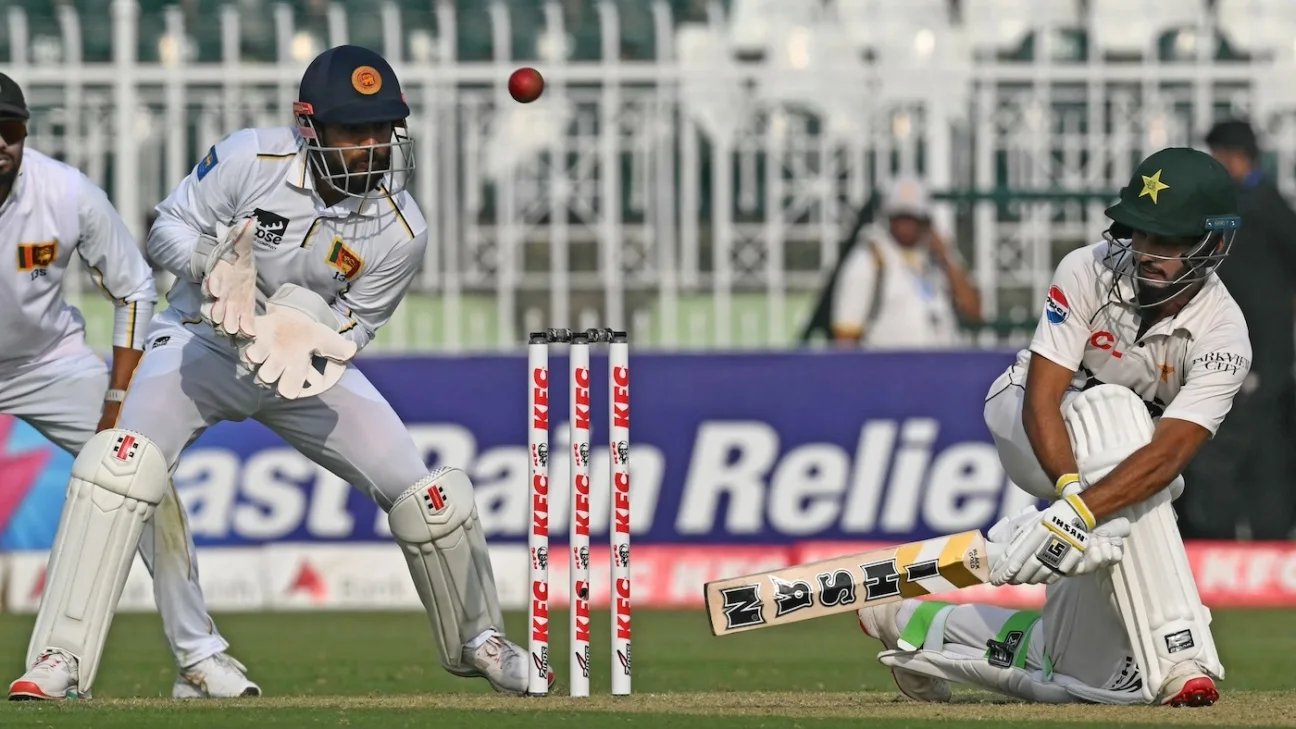
The landscape of Test cricket has undergone a profound transformation, moving away from isolated bilateral series toward a highly structured global competition. While the high-profile rivalries like the Ashes or the newly established Anderson-Tendulkar Trophy continue to capture the public imagination, the World Test Championship (WTC) has silently become the primary engine driving long-term administrative and tactical planning for nations outside the established elite. The current series between Pakistan and Sri Lanka in Rawalpindi serves as a definitive case study in how the WTC cycle mandates a shift toward generational regeneration.
For teams currently positioned in the lower tiers of the championship ladder, the immediate pursuit of a final spot has transitioned from a mathematical possibility into a logistical reality. With both Pakistan and Sri Lanka finding themselves mathematically sidelined from contention in the current cycle, they have pivoted toward a forward-looking strategy. This period of transition is no longer seen as a failure but as a necessary phase to build a squad capable of competing when the next cycle commences in 2026.
Tactical Evolution in Squad Composition
The selection decisions made by both Pakistan and Sri Lanka during the Rawalpindi Test demonstrate a departure from short-term reliance on veteran players in favor of long-term sustainability. Pakistan’s decision to field four debutants signifies a radical change in their approach to team composition. The inclusion of young talents such as Tayyab Arif and Mohammad Taha, both of whom performed commendably in their maiden outing, indicates a willingness to prioritize potential over immediate experience.
This organizational boldness is echoed within the Sri Lankan camp, which has recently undergone a leadership transition. By appointing Kusal Mendis as captain, Sri Lanka is attempting to synchronize their leadership structure with the projected longevity of their core players. Mendis, at 31, represents a focal point around which the team can build for the next several years. By shifting the captaincy responsibilities away from the 35-year-old Dhananjaya de Silva, the team management is effectively engineering a smooth handover that ensures stability through the 2029 WTC cycle.
Redefining Technical Performance Standards
The technical requirements for success in the WTC have begun to dictate the physical and tactical preparation of players. To win across diverse geographic conditions, teams can no longer rely solely on home-ground advantages, such as spin-friendly tracks. The Sri Lankan team’s recent tactical decision to prioritize a pace-heavy attack on an overseas green track reflects a broader understanding of the skill sets required to compete in the SENA (South Africa, England, New Zealand, Australia) nations.
Historically, teams like Sri Lanka relied heavily on singular spin bowling talents. However, modern analytical planning suggests that to be competitive in a tournament format, a team must develop a deep pool of battle-hardened seam bowlers. By fielding three specialist seamers and a seam-bowling allrounder, Sri Lanka is actively road-testing personnel for future environments where speed and bounce will be the primary determinants of match outcomes. This investment in pace is a direct consequence of the data-driven framework provided by the WTC.
The Impact of Structural Planning on Selection
The administrative influence of the WTC is increasingly transparent in how teams communicate their selection criteria. When senior players or leadership figures like Babar Azam acknowledge that personnel shifts are driven specifically by WTC scheduling, it highlights the integration of strategic planning into the professional environment. The frequency of introducing new talent—exemplified by Pakistan fielding twelve debutants in a single calendar year—is a departure from traditional selection methods that favored historical continuity.
This institutional flux suggests that the WTC has established a rigorous feedback loop. Teams are now forced to assess their depth charts against a two-year performance horizon rather than a match-by-match basis. The introduction of players selected on limited-overs performance data demonstrates that selectors are looking for versatility and high-ceiling talent that can be refined through the crucible of the five-day format, ensuring that the team is not just filling slots but actively developing assets for future cycles.
Shifting the Contours of Global Test Cricket
While the WTC has historically faced skepticism regarding its ability to improve the popularity of Test cricket, its influence on the competitive structure of the game is undeniable. It has effectively created a baseline that forces teams to optimize their resources. For teams that have effectively “tanked” their current cycle to reset their squad, the championship provides a clear justification for taking risks that might otherwise have been deemed too aggressive.
Ultimately, the WTC has provided a framework that gives life to the second tier of Test nations. By turning what was once a series of disjointed matches into a cohesive competition with clear objectives, it has forced boards and coaching staffs to think beyond the immediate scoreboard. As the sport continues to refine its competitive structure, the impact of these strategic shifts will likely define the next decade of Test cricket, moving the sport toward a more calculated and intentional era of development.
Disclaimer: This content is auto-generated for informational purposes only.
Source: Read Original News