








The Nvidia Crisis: Corporate Governance and Global Technology Implications
The global technology landscape is currently grappling with a significant upheaval following the announcement that Nvidia, a cornerstone of the artificial intelligence (AI) infrastructure boom, has initiated an internal probe into its chief executive, Jensen Huang. This investigation stems from revelations regarding Huang’s association with a business executive linked by intelligence agencies to foreign espionage efforts. As one of the world’s most valuable companies, Nvidia’s stability is a prerequisite for the broader AI sector. When a firm of this magnitude faces a leadership crisis, the ripples are felt far beyond Silicon Valley.
For stakeholders, the primary concern is not merely the personal conduct of an executive, but the potential exposure of strategically sensitive information. The core question is whether confidential data regarding semiconductor architecture or export compliance strategies was compromised. Because Nvidia chips are essential to global data centers and national security infrastructure, any uncertainty regarding the integrity of its leadership creates a risk premium that investors are currently struggling to price. The company’s board has stated that they have no reason to believe national security was breached, but in the world of high-stakes technology, the mere perception of vulnerability can trigger volatility.
Geopolitical Tensions and the Semiconductor Export Landscape
The probe into Nvidia takes place against a backdrop of intense US-China technology friction. Nvidia has been the primary engine driving the AI revolution, yet it has had to navigate a complex regulatory environment where Washington restricts the sale of high-end chips to China. These export controls are intended to prevent Beijing from gaining a decisive advantage in military-grade AI applications.
Jensen Huang has spent considerable time lobbying for greater flexibility in these restrictions, arguing that the global competitiveness of the US semiconductor industry depends on open markets. The revelation that the executive involved in the probe was affiliated with a Singapore-based firm that partnered with Nvidia highlights the precarious nature of international supply chains. If the investigation reveals that sensitive design parameters or compliance loopholes were exploited, it is almost certain that US lawmakers will call for even stricter export curbs. This would place Nvidia in a difficult position, potentially losing its foothold in the Chinese market entirely while facing more aggressive domestic regulation from a newly empowered Congress.
The “Central Banker of AI” and Market Volatility
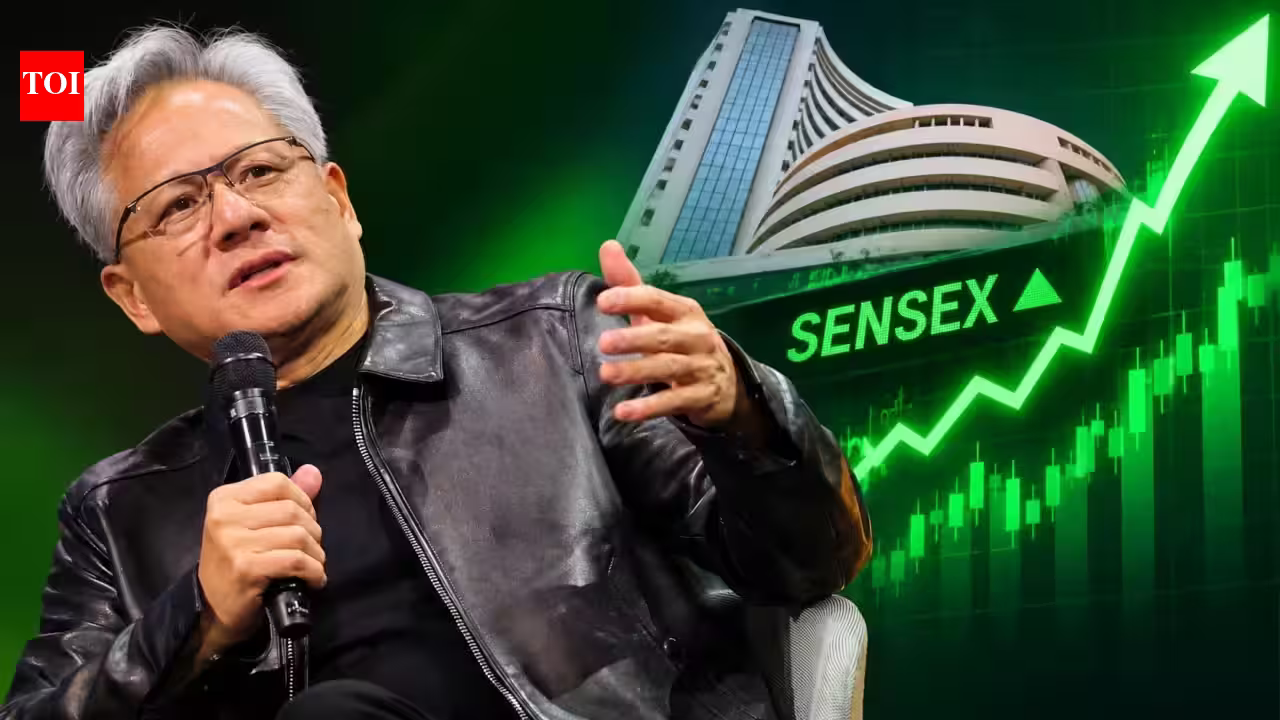
Shuli Ren’s description of Jensen Huang as the “central banker of AI” is particularly poignant in the current environment. Just as central bankers manage the flow of liquidity to stabilize economies, Huang has been instrumental in steering the capital-intensive surge toward AI infrastructure. His leadership has inspired profound confidence among institutional investors, fueling a multi-year rally in AI-linked stocks. An 8% drop in Nvidia shares following the announcement signals that the market is beginning to question the sustainability of the AI trade when the face of the industry is suddenly compromised.
This correction reflects a broader realization: the “AI trade” has been heavily concentrated, often ignoring traditional valuation metrics in favor of growth promises tied to GPU proliferation. When the primary architect of that growth is distracted by an existential corporate governance crisis, the concentration risk becomes glaringly apparent. If the investigation into Huang drags on or uncovers evidence of systemic security failures, the cost of capital for AI-heavy firms could rise, as risk-averse investors seek stability elsewhere.
The Indirect Advantage for Emerging Markets
While the immediate impact of the Nvidia crisis has been negative for US tech indices, the long-term implications for emerging markets like India are increasingly complex. For much of the past two years, India has been viewed as a laggard in the global equity rally, primarily because its benchmark indices are dominated by financials, energy, and consumption sectors rather than high-growth AI companies. However, this lack of exposure to the AI bubble is now emerging as an unexpected hedge.
As investors grow wary of the valuations in the US technology sector, there is a clear trend toward portfolio rebalancing. India, with its robust domestic earnings growth and a macroeconomic environment benefiting from moderating crude oil prices, is appearing as a stable defensive destination. The recent upgrades by global financial institutions such as HSBC—moving Indian stocks to “overweight”—underscore this shift. Investors are moving away from the expensive, concentrated bets on AI infrastructure and toward markets where growth is tethered to tangible consumer demand and domestic industrial strength.
Shifting Sentiment: From AI Mania to Defensive Value
The Indian stock market has historically been sensitive to global liquidity flows. When money flowed aggressively into US tech, Indian equities faced foreign institutional investor (FII) outflows. Conversely, when uncertainty hits the US tech sector, Indian markets often benefit from the “anti-AI trade” phenomenon. The shift in sentiment is not just about moving away from Nvidia; it is about a fundamental reassessment of where risk resides in a global portfolio.
The current political transition in the US, with Congress moving toward stricter oversight of AI, suggests that the “easy money” phase for chipmakers is coming to an end. Regulatory headwinds, combined with the leadership crisis at Nvidia, create a scenario where international capital is looking for markets with lower correlation to the volatile semiconductor cycle. In this environment, India’s absence of a massive, expensive, and government-scrutinized AI sector is a point of stability. The resilience of Indian corporate earnings, particularly in the banking and service sectors, provides a buffer that tech-heavy portfolios currently lack.
Conclusion: Managing Corporate and Geopolitical Risk
The investigation into Jensen Huang is a reminder of the fragility inherent in technology-led market cycles. A single point of failure—whether it is a leadership crisis or a geopolitical security breach—can unravel years of market confidence. For investors, this event underscores the necessity of diversification.
While Nvidia remains a titan of industry, the controversy serves as a cooling mechanism for the unchecked enthusiasm that has defined the tech sector since the emergence of large-scale AI. As market participants navigate the fallout, the focus will likely shift from pure growth to governance, security, and market sustainability. For economies like India, the challenge and opportunity lie in maintaining this newfound status as a defensive haven. While not immune to global shocks, India’s fundamental focus on domestic consumption and physical infrastructure provides a stark contrast to the speculative fervor that has recently dominated global equity markets. The coming months will determine whether this pivot to traditional value is a temporary reaction to a headline-grabbing scandal or a long-term shift in the global investment mandate.
Disclaimer: This content is auto-generated for informational purposes only.
Source: Read Original News