







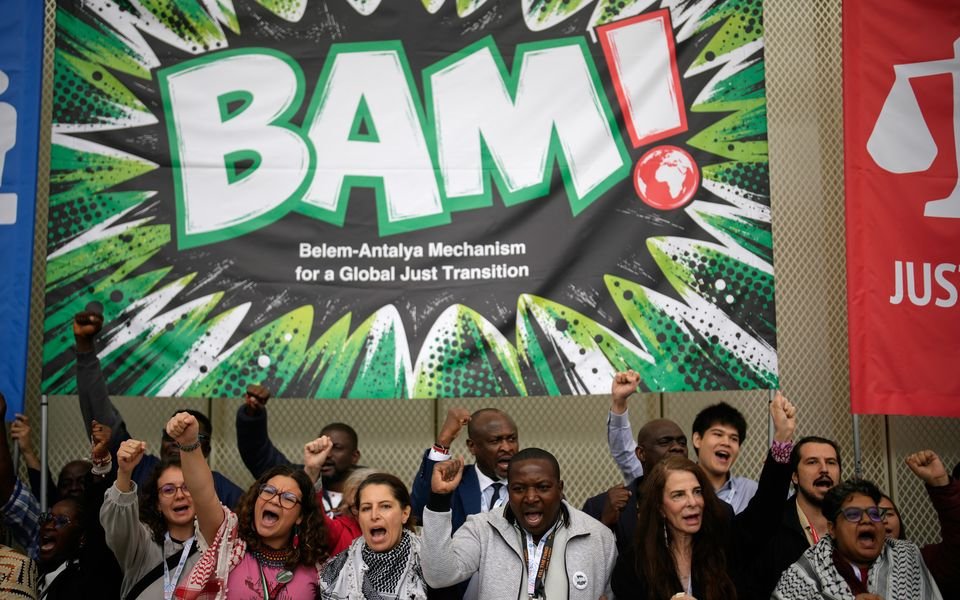
ANTALYA, Turkey — As the COP31 United Nations Climate Summit enters its second day, the host nation, Turkey, is spearheading a contentious push to place “electrification” at the center of the conference’s final agreement. The Turkish presidency is lobbying for a global commitment to electrify 35% of the global economy by 2035, a significant jump from the current level of approximately 20%.
Murat Kurum, the COP31 President, framed the initiative as a historic turning point. “The age of electricity is taking shape—and COP31 will be remembered as the moment we flicked the switch,” Kurum stated in a press release on Tuesday. He argued that the goal is essential for boosting energy security, fostering economic growth, and cutting greenhouse gas emissions by transitioning away from fossil fuel-powered vehicles, furnaces, and industrial boilers.
However, the proposal has encountered stiff resistance from climate advocates and a coalition of nations who argue that the plan is fundamentally flawed. The primary point of contention is the absence of a mandate requiring that the expanded electricity supply be derived from low-carbon sources. Critics warn that without a strict requirement for green energy, the pledge could inadvertently incentivize a shift to electricity generated by coal or natural gas, doing little to address the root causes of global warming.
This skepticism is underscored by the dual roles of the summit’s leadership. Both Turkey and Australia—the latter of which is leading the negotiations—remain heavily dependent on fossil fuels. According to recent government data, coal accounts for approximately one-third of Turkey’s electricity and over 40% of Australia’s.
The messaging from the Turkish government has appeared contradictory to many observers. Even as Turkish President Tayyip Erdogan hosted the global climate gathering, he celebrated the expansion of domestic fossil fuel production. Following a cabinet meeting on Monday, Erdogan touted the success of oil exploration in the Gabar mountains, announcing that production there would exceed 100,000 barrels per day by the second half of 2027.
The debate over the electrification goal occurs against a backdrop of sobering climate data. A recent report from the United Nations Environment Programme (UNEP) confirmed that the world is on track to overshoot the 1.5 degrees Celsius warming threshold established in the 2015 Paris Agreement. Scientists continue to emphasize that immediate, deep emissions cuts are the only viable path to mitigating the most catastrophic impacts of climate change.
In response to the current deadlock, nations such as Portugal are pushing for a more rigorous framework. Portuguese Environment Minister Maria da Graca Carvalho told reporters in Lisbon on Monday that her delegation intends to advocate for “clean electrification.”
“Our proposal is not simply electrification, but clean electrification,” Carvalho said. “That means electricity from renewable sources rather than fossil fuels.”
Meanwhile, international researchers have warned against misinterpreting recent data showing a potential dip in fossil fuel emissions. A new analysis from a consortium of scientists, led by Professor Corinne Le Quere of the University of East Anglia, suggests that current reductions are largely a result of high energy prices and economic volatility rather than a structural shift toward sustainability.
“This is not sustainable,” Le Quere noted, cautioning that relying on market fluctuations to suppress fossil fuel demand is a dangerous substitute for policy-driven climate action.
As negotiations continue through the week, the challenge for COP31 leaders remains clear: bridging the gap between a high-level, industry-friendly electrification goal and the urgent, science-backed necessity for a total transition away from fossil fuels. Whether the summit results in a binding, green commitment or a diluted agreement remains a point of significant uncertainty among the nearly 200 represented nations.
Disclaimer: This content is auto-generated for informational purposes only.
Source: Read Original News