








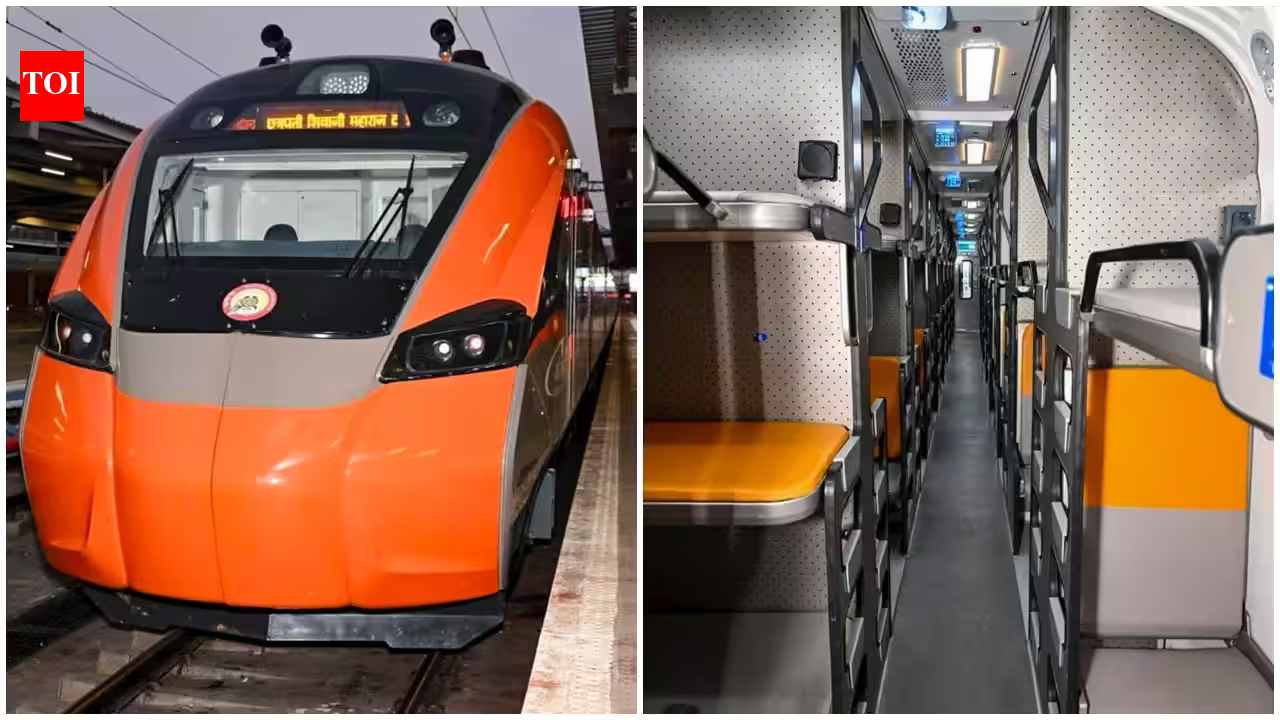
Transforming Indian Rail Logistics: The Strategic Evolution of Vande Bharat
The Indian railway network, often described as the lifeline of the nation’s economy, is currently undergoing a structural transformation. By 2026, the deployment of Vande Bharat sleeper trains on critical arterial routes such as Delhi-Varanasi, Mumbai-Bengaluru, and Guwahati-Howrah represents more than just a technological upgrade. It marks a shift in how Indian Railways approaches passenger logistics, balancing high-speed operational efficiency with premium comfort standards that were previously reserved for elite segments.
These sleeper variants are engineered to replace or augment existing premier services like the Rajdhani Express. By integrating advanced aerodynamics, superior material science, and safety protocols that meet international standards, the Vande Bharat platform is setting a new benchmark for rail travel. For the Indian business sector, this evolution signals a commitment to reducing transit times and enhancing the productivity of long-distance travelers, effectively treating the train carriage as a mobile extension of the office or home.
Manufacturing Resilience and Supply Chain Scalability
The production trajectory of these sleeper rakes demonstrates a robust industrial strategy led by BEML, which has been entrusted with the initial development phase. With 10 rakes identified in the primary production mandate, the steady rollout schedule—where multiple rakes are brought into operational rotation in quick succession—highlights a maturing manufacturing ecosystem within the domestic public sector.
Beyond BEML, the diversification of the manufacturing base is crucial. By engaging Integral Coach Factory (ICF) for a massive order of 50 sleeper trains, and partnering with industry players like Kinet and Titagarh Wagons for an additional 200 rakes, Indian Railways is decentralizing its production risk. This supply chain diversification ensures that the national rail operator can maintain a consistent rollout pace, preventing bottlenecks while fostering a competitive environment for specialized railway components. This large-scale manufacturing strategy provides a long-term roadmap for economic growth, as it demands high-end engineering components, advanced electronics, and sophisticated metallurgical supplies, stimulating the domestic manufacturing sector at large.
Technological Superiority and Operational Efficiency
At the core of the Vande Bharat sleeper’s value proposition is its technical prowess. Capable of operating at speeds of 180 kmph and cleared for 160 kmph, these trains are designed to navigate the constraints of existing track infrastructure while pushing the boundaries of what is possible within those limitations. The incorporation of under-slung propulsion systems and regenerative braking technology underscores a focus on energy efficiency—a critical factor for a state-run utility aiming to reduce its carbon footprint and operational costs.
Safety is arguably the most significant technological integration. The use of austenitic stainless steel bodies meeting EN15227 crash standards indicates a design philosophy that prioritizes passenger security in the event of structural impact. Furthermore, the inclusion of the Train Collision Avoidance System (TCAS) serves as a mandatory technological safeguard, aligning Indian rail safety with modern global standards. For stakeholders, these investments are essential to minimize risk and ensure high reliability, which is paramount for a nation that relies on rail as its primary mode of long-distance mass transportation.
Redefining the Passenger Experience for the Modern Economy
The design of the Vande Bharat sleeper is explicitly aimed at a demographic that values efficiency, hygiene, and connectivity. By moving away from legacy carriage designs toward modern amenities like vacuum-evacuated, odour-free toilets, ergonomic berths, and sensor-based intercommunication, Indian Railways is addressing long-standing criticisms regarding hygiene and comfort in overnight travel.
The business-centric approach extends to the cabin environment. Integrated BRL units, USB charging ports (Type A and Type C), and robust Wi-Fi routers acknowledge that the modern passenger requires constant connectivity. For the professional traveler, the ability to work, charge devices, and access high-speed internet while moving between major metros—such as the Mumbai-Bengaluru corridor—transforms a long journey from dead time into productive hours. The provision of showers in First AC class further signals an effort to capture the premium segment of the market, competing directly with domestic aviation on routes where train travel offers better city-center to city-center accessibility.
Market Impact and Future Outlook
The transition toward Vande Bharat sleeper trains is part of a broader infrastructure master plan that includes the ambitious Mumbai-Ahmedabad high-speed corridor. While Vande Bharat trains operate on existing tracks, the synergy between these sleeper units and the upcoming high-speed rail projects is clear. As sections of the high-speed corridor become operational in late 2027, India will possess a two-tiered high-speed network: a fast, modernized conventional network (Vande Bharat) and a true high-speed bullet train network.
This duality creates a comprehensive travel ecosystem. The Vande Bharat sleeper trains act as a mid-tier solution that bridges the gap between conventional slow-moving trains and the high-capital-intensive bullet train projects. For the Indian investor and the general public, this signifies a period of consistent capital expenditure in infrastructure. By focusing on passenger-oriented features and high-speed efficiency, Indian Railways is positioning itself to be more competitive in an era where time is an increasingly scarce commodity. As the rollout continues across 2026 and beyond, the success of these rakes will likely dictate the pace at which the remaining legacy fleet is retired, ultimately defining the future of Indian rail transportation for the next several decades.
Disclaimer: This content is auto-generated for informational purposes only.
Source: Read Original News