







New Delhi Raises Alarm Over Pakistan’s ‘Backsliding’ on Terror Financing at FATF Plenary
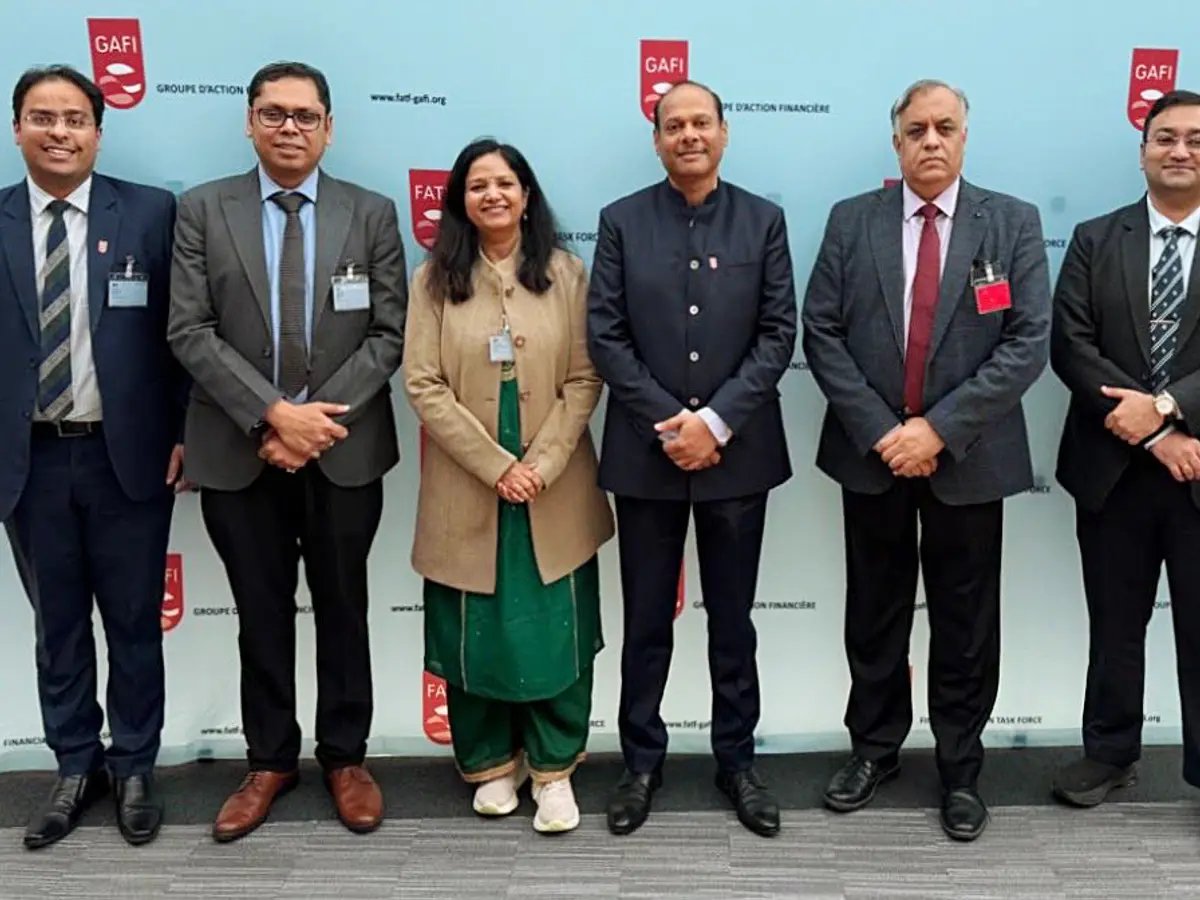
New Delhi: During the recent Financial Action Task Force (FATF) plenary session held in Paris, India took a proactive stance, highlighting significant concerns regarding Pakistan’s failure to maintain its commitments toward dismantling terror financing networks. The three-day summit, which concluded on October 30, 2026, under the leadership of FATF President Giles Thomson, served as a platform for New Delhi to challenge the efficacy of Islamabad’s current counter-terrorism measures.
Indian officials presented a compelling case to the delegates from over 200 jurisdictions, pointing toward a clear pattern of “backsliding” by Pakistan. Despite previous assurances, the Indian delegation underscored that the state machinery in Islamabad continues to allow UN-designated terrorists to operate with relative impunity.
Targeting UN-Listed Individuals
Central to India’s argument were the activities of notorious figures such as Lashkar-e-Taiba (LeT) founder Hafiz Saeed and Jaish-e-Mohammed (JeM) leader Masood Azhar. New Delhi has long maintained that Pakistan’s actions against these individuals remain largely performative rather than substantive.
In a direct critique of Islamabad’s recent attempts to signal compliance, Indian authorities dismissed the placement of a seven-million-rupee bounty on Masood Azhar as a superficial gesture. India argued that such measures fail to meet the threshold of meaningful enforcement required by international anti-money laundering and counter-terror financing standards. Instead, India maintains that these individuals continue to pose a persistent threat to regional security, having been the masterminds behind numerous high-profile terror attacks on Indian soil.
The FATF Perspective and Future Oversight
Pakistan’s presence at the FATF has been a contentious issue since it was removed from the “grey list” in October 2022. This exit followed the completion of a rigorous 34-point action plan designed to curb illicit financial flows. Addressing inquiries regarding Pakistan’s current status, FATF President Giles Thomson emphasized that the country remains within the ambit of the global watchdog’s broader monitoring framework.
“Pakistan was subject to a robust action plan from the FATF when it was on the grey list,” Thomson stated during the wrap-up of the plenary. He clarified that while Pakistan has officially exited the grey list, its financial system remains under the purview of the Asia Pacific Group (APG) on Money Laundering. According to the FATF leadership, the APG is tasked with conducting a future mutual evaluation to ensure that Islamabad’s improvements in domestic financial oversight are both sustainable and permanent.
India’s Sustained Diplomatic Push
The Indian delegation, which comprised senior representatives from the Ministry of External Affairs, the National Investigation Agency (NIA), and various financial intelligence units, found strong resonance among several partner nations. These countries expressed support for India’s call for sustained scrutiny of Pakistan’s financial architecture.
By raising these issues in an international forum, New Delhi aims to prevent complacency regarding the risks posed by terror financing in South Asia. As the APG prepares for its forthcoming evaluation, the pressure remains on Pakistan to demonstrate that it has moved beyond mere procedural compliance toward a genuine, irreversible dismantling of terror infrastructure. For India, the message is clear: international oversight must continue until the threat posed by designated terrorist entities is permanently neutralized.
Disclaimer: This content is auto-generated for informational purposes only.
Source: Read Original News