






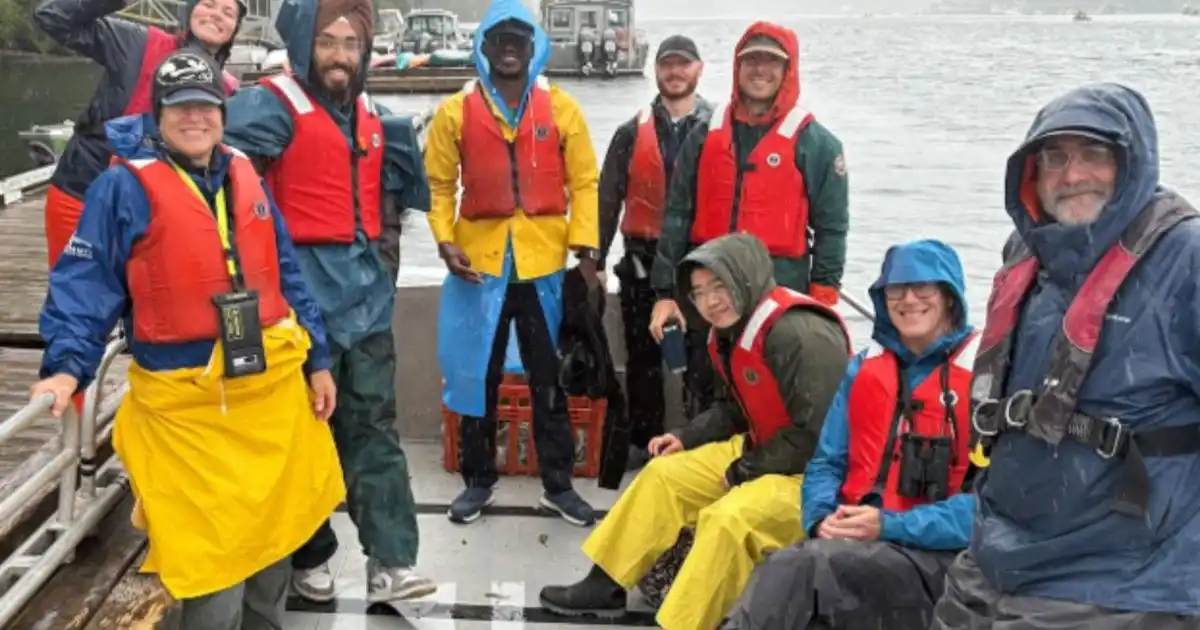
The digital revolution is fundamentally reshaping how we understand the world’s oceans, transforming vast, complex datasets into actionable insights. To bridge the gap between marine science and advanced data analytics, OceanHackWeek has emerged as a premier collaborative platform. Since its inception in 2018, the program has fostered a community dedicated to open science, reproducible computing, and responsible data stewardship, recently bringing its unique model to Canada for the first time.
The initiative to host the program in Canada was spearheaded by Julek Chawarski of ASL Environmental Sciences, who participated in the inaugural Seattle event. “One of the greatest strengths of programs like OceanHackWeek is that they bring together expertise across subdisciplines of oceanography and fisheries, build a vibrant community, and rally participants around a central and vital component of research: collaborative and open science,” Chawarski said. He noted that the primary goal is not necessarily to turn every participant into a master programmer, but to bridge communication gaps and illustrate how open computing tools can elevate individual research projects.
The event was the result of a cross-border effort, organized by a committee of scientists representing NOAA Fisheries, the Gulf of Maine Research Institute, the University of Washington’s Applied Physics Laboratory and eScience Institute, Ocean Networks Canada (ONC), and the Canadian Integrated Ocean Observing System (CIOOS) Pacific. This collaborative spirit translated into a diverse cohort of 22 participants from across North America and beyond, spanning professional backgrounds from academic research and defense to resource management and industry sales.
Unlike traditional hackathons that often foster intense competition, OceanHackWeek is intentionally designed as an environment of shared learning. The week-long program guides participants from intensive tutorials into collaborative project work. The curriculum is broad, covering technical essentials such as data visualization, AI-assisted programming, and deep-learning approaches for image analysis, while also providing space for discussions on professional development and mental health within the scientific community.
The setting of the Bamfield Marine Sciences Centre (BMSC) played a pivotal role in grounding the computational work in physical reality. By placing participants on the rugged coastline, organizers were able to connect abstract code to the marine ecosystems it aims to protect. Guided tours led by the BMSC foreshore team provided attendees with a tangible look at the research infrastructure that makes modern oceanography possible.
Key highlights included hands-on engagement with major research assets, such as ONC’s NEPTUNE observatory—a sophisticated network supported by 400 kilometers of subsea fiber-optic cable—and the recently completed Pacific Ecosystem Autonomous Research Laboratory (PEARL). Both initiatives are supported by the Canada Foundation for Innovation and represent the cutting edge of real-time marine monitoring.
Working alongside local experts, participants utilized data from these systems to develop projects that tackled complex challenges, such as data interpolation and the integration of large, disparate datasets. These projects incorporated information from various platforms, including CIOOS Pacific, Fisheries and Oceans Canada (DFO), the Copernicus Climate Data Store, and the European Space Agency.
For the attendees, the combination of high-level data analysis and immediate proximity to the Pacific Ocean proved transformative. As one participant remarked, the experience was “one of the most interestingly diverse groups of folks I’ve ever gotten to interact with,” noting the profound sense of inclusion that characterized the event. By fostering these connections—between scientists and data, and between researchers and their global peers—OceanHackWeek continues to build the human and technical capacity necessary to navigate the pressing environmental challenges facing our oceans today.
Disclaimer: This content is auto-generated for informational purposes only.
Source: Read Original News