






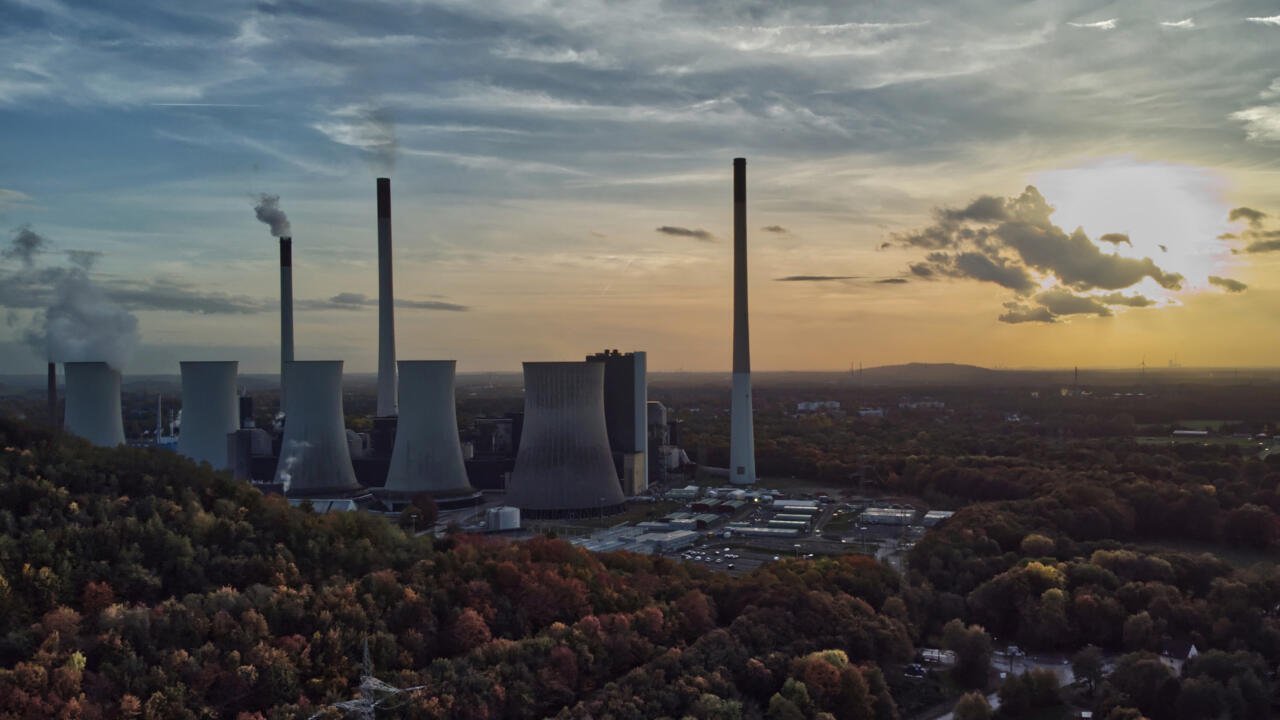
The German chemical industry has launched a fierce critique of Chancellor Friedrich Merz following his recent push for the European Commission to accelerate the implementation of the European Union’s expanded carbon-pricing scheme, known as ETS2. While the Chancellor advocates for regulatory stability, industry leaders warn that the policy could trigger a wave of deindustrialization across the continent.
The ETS2 scheme is designed to impose an EU-wide price on carbon emissions stemming from heating fuels and road transport. Originally slated for a 2027 launch, the program was postponed to 2028 due to concerns over socioeconomic impacts. However, in a letter to European Commission President Ursula von der Leyen, Chancellor Merz explicitly urged the Commission to reject any further delays or structural revisions.
“I am counting on the European Commission to stay the course on emissions trading and thereby give European companies and households planning certainty,” Merz wrote. The Chancellor framed his stance as a defense of the European industrial future, arguing that a predictable market-based mechanism is essential for companies to navigate the long-term energy transition.
This position has met with immediate and harsh condemnation from the Association of the German Chemical Industry (VCI). Wolfgang Grosse Entrup, CEO of the VCI, labeled the proposed system the “gravedigger of industry in Europe.” According to the VCI, the additional financial burden imposed by the EU-wide levy would be unsustainable for German firms already struggling under a national carbon price that has been in effect since 2021.
Currently, German companies pay between €55 and €65 per tonne of CO2. While this national levy is scheduled to be frozen in 2027 ahead of the transition to the EU-wide ETS2, the industry fears that the harmonized European system will erode their competitive edge. Unlike Germany, several other EU member states have no comparable national carbon price, meaning the transition to a uniform system could represent a disproportionate shock for German manufacturers.
Major industrial players, such as chemical giant BASF, have long argued that the EU’s increasingly stringent climate regulations are creating a widening gap between European production costs and those of global competitors in the United States and China. The VCI’s rhetoric reflects a deepening anxiety that the ETS2, if implemented without significant relief measures, will accelerate the trend of plant closures, slashed investment budgets, and the relocation of critical manufacturing capacity outside the European Union.
The debate is further complicated by the European Commission’s proposed reforms to the existing ETS1 system, which covers power plants and heavy industry. The Commission has suggested slowing the reduction of the emissions cap after 2030 and extending free allowances to companies that demonstrate commitment to decarbonization investments.
These proposals have drawn fire from both sides of the spectrum. Climate advocacy groups, including the Climate Action Network and Carbon Market Watch, argue that such reforms dilute the incentive for industry to pursue rapid emission cuts. Conversely, European industry representatives maintain that without these “safety valves” and support mechanisms, the European market remains fundamentally uncompetitive in a globalized economy.
Chancellor Merz, however, remains steadfast, defending the original ETS1 as a “well-functioning, market-based system” that must remain untouchable to preserve the credibility of industrial investment plans. As various EU governments lobby for further delays to protect citizens from rising fuel and heating costs, the standoff between the German Chancellor and the nation’s chemical sector highlights the intensifying pressure to balance climate ambitions with industrial viability at a critical juncture for the European economy.
Disclaimer: This content is auto-generated for informational purposes only.
Source: Read Original News