








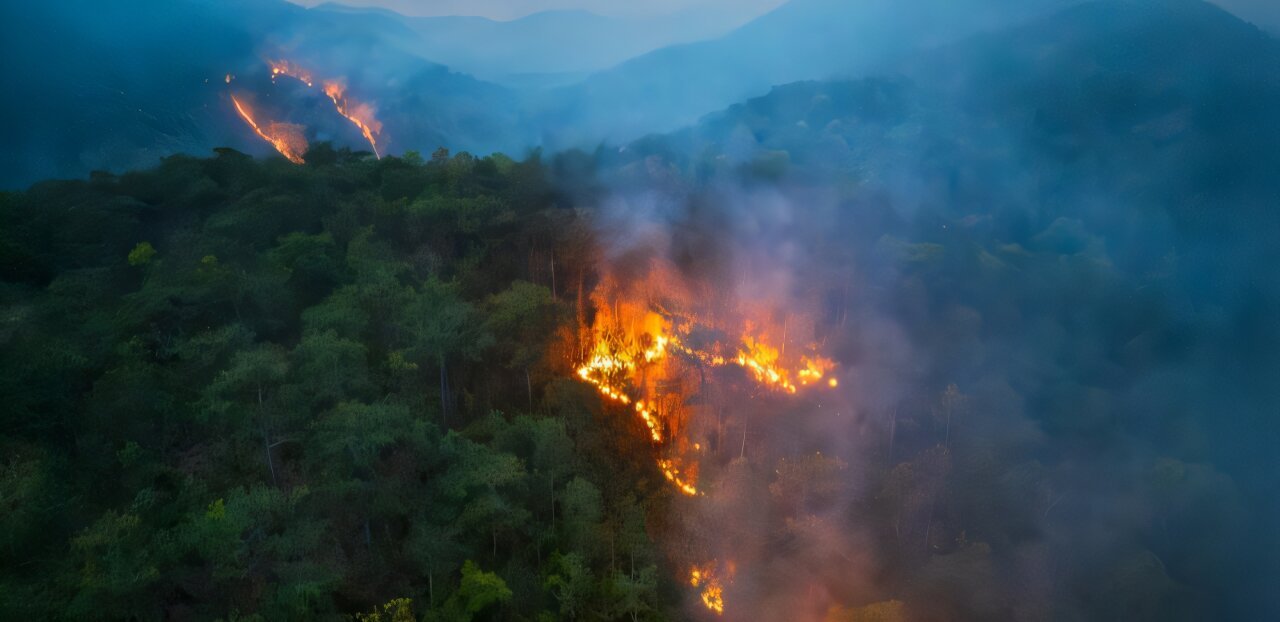
The 2025 wildfire season in the Iberian Peninsula was not a random meteorological fluke, but a direct consequence of human-induced climate change, according to the latest “State of Wildfires” report. The comprehensive study, co-led by the University of East Anglia, reveals that the extreme fire-prone conditions experienced by Spain and Portugal last year were three times more likely to occur due to rising global temperatures.
The report, which serves as a definitive audit of global fire activity, highlights that 2025 marked a catastrophic departure from historical norms. For both Spain and Portugal, a lethal combination of persistent heatwaves, record-low soil moisture, and erratic, high-velocity winds created an environment where wildfires could ignite and spread with unprecedented speed. Researchers utilized advanced attribution modeling to isolate the influence of climate change, concluding that the atmospheric conditions necessary for such intense fire outbreaks have become significantly more frequent in the modern era.
“What we witnessed in 2025 is a clear preview of the ‘new normal’ for Southern Europe,” said Dr. Elena Vance, a lead climate scientist involved in the study. “The window for fire season has expanded dramatically. When you combine prolonged periods of drought with the heat anomalies we observed last year, you are essentially looking at a landscape primed for disaster. The data confirms that human activity has tripled the probability of these extreme fire-weather events.”
The environmental and economic toll of the 2025 season was staggering. Millions of hectares of forest and agricultural land were scorched, threatening biodiversity hotspots and destabilizing local economies that rely on forestry and eco-tourism. Furthermore, the report notes that the massive plumes of smoke generated by these fires contributed to significant air quality degradation, posing severe health risks to millions of residents in urban centers like Lisbon and Madrid.
While the report acknowledges that proactive forest management and emergency response infrastructure played a vital role in preventing even greater loss of life, the findings serve as a stark warning to policymakers. The research team emphasizes that traditional firefighting methods are becoming increasingly insufficient against the backdrop of a rapidly warming planet.
“We cannot simply fight our way out of this crisis,” Dr. Vance added. “The frequency of these extreme events means that adaptation is no longer an option—it is a necessity. This includes rethinking urban planning in wildland-urban interfaces, investing in long-term landscape restoration, and, most crucially, accelerating the transition away from the fossil fuels that are driving this instability.”
As global leaders digest the findings, the 2025 wildfire report stands as a sobering indicator of the mounting pressures facing Southern Europe. With fire-prone weather patterns intensifying, the message from the scientific community is unequivocal: the environment is shifting, and the time for reactive measures has long since passed.
Disclaimer: This content is auto-generated for informational purposes only.
Source: Read Original News