






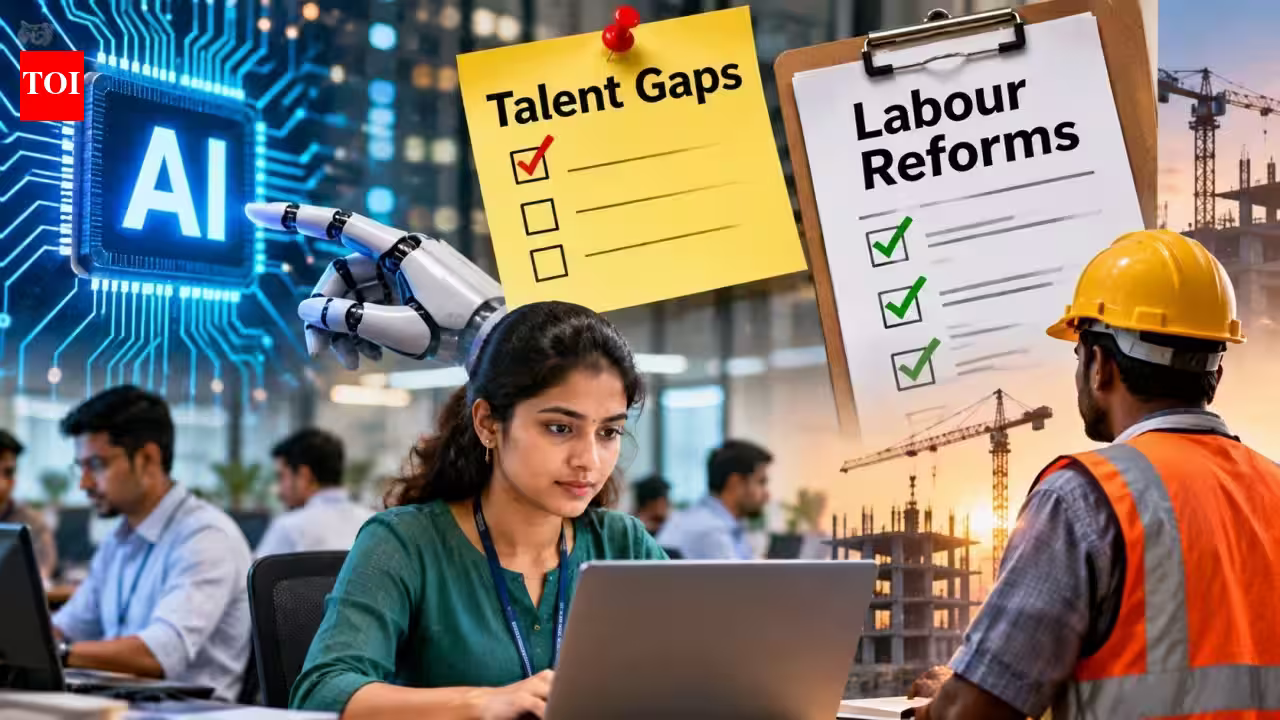
The employment landscape in India is currently undergoing a structural transformation, shifting the discourse from simple job volume to the qualitative aspects of labor. The nation is navigating a pivotal transition influenced by the rapid integration of Artificial Intelligence, a widening mismatch between available skills and organizational requirements, and the recent implementation of comprehensive labor reforms. These forces are collectively redefining how businesses operate, how talent is sourced, and how the workforce sustains its professional trajectory.
AI as a Catalyst for Operational Evolution
Artificial Intelligence is no longer a futuristic concept but a functional reality across India’s corporate sector. The integration of AI tools—ranging from generative models to predictive analytics—is fundamentally altering business workflows. According to recent data from the TeamLease Employment Outlook Report, 85% of businesses surveyed have integrated some level of AI or generative tools into their workforce operations. However, a nuanced look at the data reveals that adoption is largely targeted rather than systemic; a majority of companies limit AI deployment to fewer than 25% of their employees.
This suggests that AI is currently functioning as a layer that enhances existing roles rather than replacing them entirely. In logistics, for example, AI-driven routing and scheduling are supporting warehouse operators; in customer service, intelligent query handling is augmenting human responses. For the Indian professional, this transition necessitates a shift in mindset. Success in the modern workplace requires employees to possess the capability to collaborate with autonomous systems, interpret AI-generated insights, and manage the processes that technology facilitates. The objective for employers is to transition from viewing AI as a cost-cutting tool to treating it as a capacity-building asset that elevates the output of their existing human capital.
Navigating the Persistent Skills Gap
Perhaps the most daunting hurdle in India’s labor market is the persistent disconnect between the talent pool’s current proficiencies and the evolving needs of industry leaders. The requirement for a multi-disciplinary skill set has become the new baseline for both white-collar and blue-collar employment. Digital literacy is now the most critical competency, with 59% of employers citing it as a top priority. This is followed closely by customer experience management, communication, and adaptability.
The challenge is that these skills are no longer siloed within the IT sector. A retail worker today must manage digital payment interfaces and data-driven inventory reporting, while manufacturing roles increasingly require an understanding of automated supply chain software. The data confirms the severity of this issue: approximately 72% of employers planning to expand their workforces report significant difficulty in finding candidates who possess the requisite blend of domain knowledge and digital fluency. This hiring friction is most pronounced in the IT, sales, marketing, and engineering sectors. To mitigate this, India must pivot away from traditional, static education models toward a framework of continuous professional development. Reskilling must be treated as a permanent feature of a career, not a one-time activity, ensuring that the workforce can adapt to new demands without being displaced by technology.
Labour Reforms and the Quest for Formalization
The introduction of the four new Labour Codes in late 2025 marked a watershed moment in India’s regulatory history, consolidating 29 central laws into a more streamlined framework. While the primary intent of these reforms is to enhance the ease of doing business and improve the formalization of the labor market, the transition period is complex. Employers are currently tasked with navigating higher compliance requirements and adjusting to changes in statutory contribution costs.
For the employee, these reforms present both challenges and long-term benefits. The restructuring of salary components to align with statutory wage definitions often leads to changes in take-home pay, which can be an immediate concern for the workforce. However, this adjustment is intended to bolster social security contributions, thereby enhancing long-term financial stability. Transparency is essential during this phase; organizations must prioritize communicating these changes effectively to ensure that employees understand the trade-offs between immediate liquid income and long-term safety nets. As the gig and platform economy continues to expand, these reforms provide the necessary legal scaffolding to extend protection, health coverage, and retirement benefits to a broader segment of the population, including those in non-traditional employment arrangements.
Sectoral Trends and the Expansion of Opportunity
Despite the challenges of skill shortages and regulatory transitions, the overall hiring sentiment in India remains robust. The latest employment projections indicate a Net Employment Change of 5.4%, suggesting a healthy appetite for talent, particularly in sectors that are consumer-facing and digitally integrated. E-commerce, technology start-ups, and the hospitality sector are leading the charge, recording high growth projections. Additionally, the automotive sector—buoyed by the transition to electric vehicle infrastructure—is emerging as a significant driver of high-quality job creation.
This growth is not merely a reflection of economic expansion but also an indication of the shifting priorities of the Indian workforce. The modern employee is increasingly drawn to sectors that offer dynamism and technological advancement. However, there is a risk of regional disparity. To truly capitalize on the nation’s demographic advantage, employment opportunities must be distributed beyond the traditional metropolitan hubs. Emerging industrial clusters and Tier-2 cities hold the potential to become the next engines of employment, provided they are supported by the right digital and physical infrastructure.
The Human-Centric Future of Work
The future of India’s employment landscape hinges on a collective commitment to human capital. It is insufficient to simply increase the number of jobs; the focus must remain on the quality, security, and sustainability of those roles. As AI continues to change the nature of tasks, and as labor reforms standardize the relationship between employers and employees, the focus must shift to building a workforce that is empowered rather than merely occupied.
Creating a more resilient employment ecosystem requires a tripartite effort. Governments must ensure that policies continue to evolve in lockstep with technological and economic shifts. Educational institutions must bridge the gap between academic curricula and industrial reality. Finally, employers must evolve their value proposition to include holistic development, providing their teams with the tools and the time necessary for lifelong learning. By addressing these factors in an integrated manner, India can ensure that its demographic dividend transforms into a sustained competitive advantage, securing the nation’s position as a global leader in the evolving world of work.
Disclaimer: This content is auto-generated for informational purposes only.
Source: Read Original News