









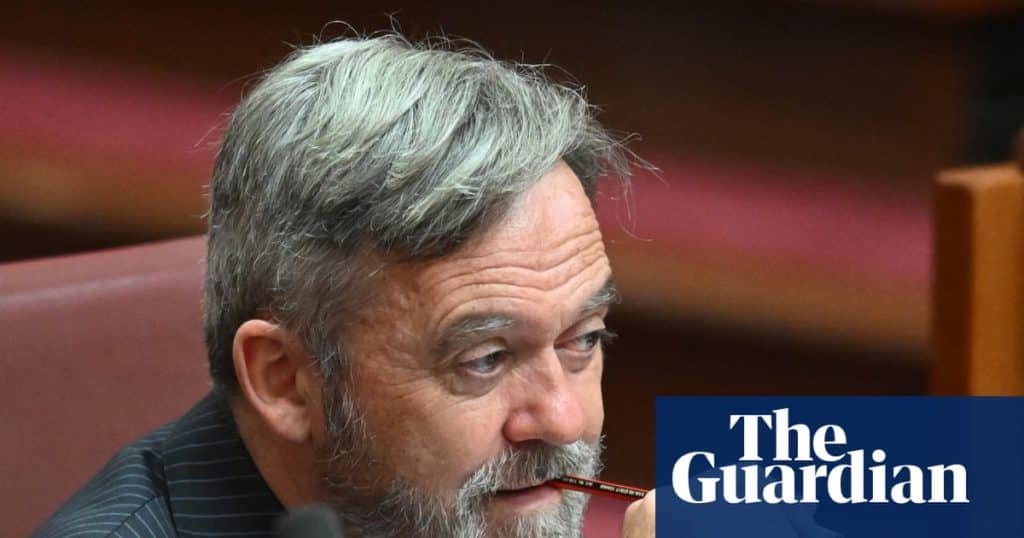
Liberal senator Andrew McLachlan has called on the federal government to take urgent action regarding the regulation of generative artificial intelligence, emphasizing the dual necessity of protecting the intellectual property of Australian artists and mitigating the significant environmental footprint of large-scale data processing.
In a recent parliamentary intervention, McLachlan highlighted the growing tension between rapid technological advancement and the ethical, economic, and ecological realities that accompany the development of massive AI models. His comments, reported by The Guardian, underscore a burgeoning cross-party concern that current policy frameworks have failed to keep pace with the energy-intensive nature of the AI revolution.
The core of the debate centers on the “training” phase of generative AI, which requires colossal amounts of data and equally massive amounts of computational power. Data centers—the physical infrastructure that sustains the internet and AI services—are increasingly under scrutiny for their soaring energy and water consumption. As AI models become more complex, the demand for high-performance computing clusters has surged, placing unprecedented strain on national power grids and water resources used for cooling these facilities.
“We are witnessing a technological shift that, while innovative, carries hidden costs that we can no longer afford to ignore,” McLachlan noted. The senator argued that the government’s approach to the AI sector must shift from a “laissez-faire” stance to one of rigorous oversight. This includes establishing accountability for the environmental impact of technology companies, which are currently seeing their emissions rise despite corporate sustainability pledges.
Beyond the environmental externalities, McLachlan’s appeal brings the issue of copyright infringement to the forefront of the legislative agenda. Many artists and content creators have long contended that AI companies are scraping copyrighted works to train their models without permission, compensation, or attribution. This “data mining” process is viewed by the creative community as a form of intellectual property theft that threatens the viability of professional artistic careers.
For the Australian government, the challenge lies in balancing the desire to foster a domestic tech innovation hub with the imperative to protect the rights of its citizens. McLachlan suggests that the federal government should explore legislative avenues that force transparency from AI firms. This would include mandating disclosure of the datasets used in model training, allowing artists to opt-out, and requiring firms to report on the energy efficiency and carbon intensity of their operations.
The link between environmental and intellectual property concerns is not merely coincidental. Both represent a “resource extraction” model of AI development: one extracts creative capital from the human workforce, while the other extracts natural resources from the environment. Critics of the current AI trajectory argue that both forms of extraction are being conducted with minimal regulatory friction.
As Australia navigates its transition to a net-zero economy, the rapid expansion of AI-related infrastructure poses a significant hurdle to meeting climate targets. If data centers continue to be powered by legacy fossil fuel sources rather than renewables, the carbon footprint of generating AI-produced images or text could negate gains made in other sectors.
Senator McLachlan’s intervention serves as a formal signal that the Australian Parliament is preparing to confront the industry’s titans. The call for a comprehensive regulatory framework suggests that the era of self-regulation for AI companies may be nearing its end. Whether the Labor government will adopt these recommendations remains to be seen, but the pressure to ensure that the “AI age” is both equitable for creators and sustainable for the planet is mounting.
Ultimately, the debate reflects a broader global sentiment: that progress cannot be defined solely by the speed of computation or the sophistication of algorithms. It must also be measured by how well a society protects its intellectual heritage and preserves the physical environment for future generations. As the legislative session continues, the intersection of copyright law and climate policy is set to become one of the most critical battlegrounds in Australian technology law.
Disclaimer: This content is auto-generated for informational purposes only.
Source: Read Original News