







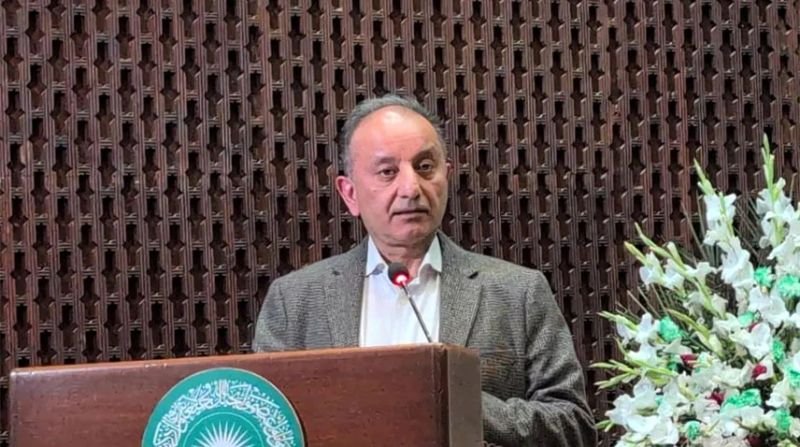
The confirmation that Pakistan’s Minister for Climate Change and Environmental Coordination, Musadik Malik, will lead his country’s delegation to the Shanghai Cooperation Organisation (SCO) ‘Civilisational Dialogue Forum’ in New Delhi later this month marks a significant diplomatic development. The visit, scheduled for November 20–22, represents the first time a Pakistani minister has set foot on Indian soil since 2023, signaling a rare moment of engagement between the two nations following the intense military clashes that occurred in May of last year.
The participation of Minister Malik, whose portfolio encompasses one of the most pressing transnational challenges in South Asia, carries particular weight. While the SCO forum, proposed by New Delhi, is primarily structured to address cultural expression, art, architecture, and religious traditions, the selection of the climate change minister as the representative underscores the growing necessity for regional environmental cooperation. In the context of the Indus River basin and the shared ecological vulnerabilities of the subcontinent, the presence of a minister focused on environmental policy offers a quiet, albeit unofficial, channel for addressing common climate-related risks that transcend borders.
For Islamabad, the decision to send a ministerial-level delegation serves as an affirmation of its commitment to the SCO framework. In a statement released on November 14, the Pakistani foreign office emphasized that the country “remains committed to promoting dialogue among civilisations and fostering people-to-people contacts within the SCO framework in a spirit of mutual respect.” This move is seen by regional analysts as a cautious step toward maintaining functional diplomatic ties despite the underlying geopolitical friction that has defined the India-Pakistan relationship for over a decade.
The SCO, a 25-year-old grouping that includes China, Russia, Iran, and several Central Asian states, has increasingly become a theater for regional power balancing. India and Pakistan, both admitted as full members in 2017, have historically used the multilateral platform to engage under the umbrella of broader regional stability, even as bilateral relations remained frozen. The upcoming forum in New Delhi was initially slated for Kolkata this past July but was deferred to the current November timeline.
This ministerial visit also sets a complex backdrop for next year’s SCO heads of state summit, which is set to be hosted by Pakistan. The upcoming summit will test the limits of diplomatic pragmatism, particularly regarding whether Prime Minister Narendra Modi—who has not traveled across the border in 11 years—will represent India. While New Delhi has remained reticent about its participation levels for the 2027 summit, the current exchange of delegations at the ministerial level provides a potential, if limited, testing ground for future high-level engagements.
The forum will bring together representatives from ten full member states, including Belarus, Kazakhstan, Kyrgyzstan, Tajikistan, and Uzbekistan. By focusing on “civilisational dialogue,” the summit aims to pivot toward soft power and shared historical identities. However, for observers tracking the climate and security trajectory of South Asia, the presence of Pakistan’s climate minister in New Delhi remains the most notable aspect of the gathering. As extreme weather events become more frequent across the region, the ability of both nations to navigate their diplomatic impasse long enough to coordinate on environmental disaster resilience remains a critical, albeit elusive, objective.
The event concludes on November 22, with all eyes on whether this visit can serve as a template for further ministerial exchanges, or if it will remain a singular instance of engagement within the structured, neutral confines of the SCO.
Disclaimer: This content is auto-generated for informational purposes only.
Source: Read Original News