








The Strategic Imperative of India-Egypt Economic Integration
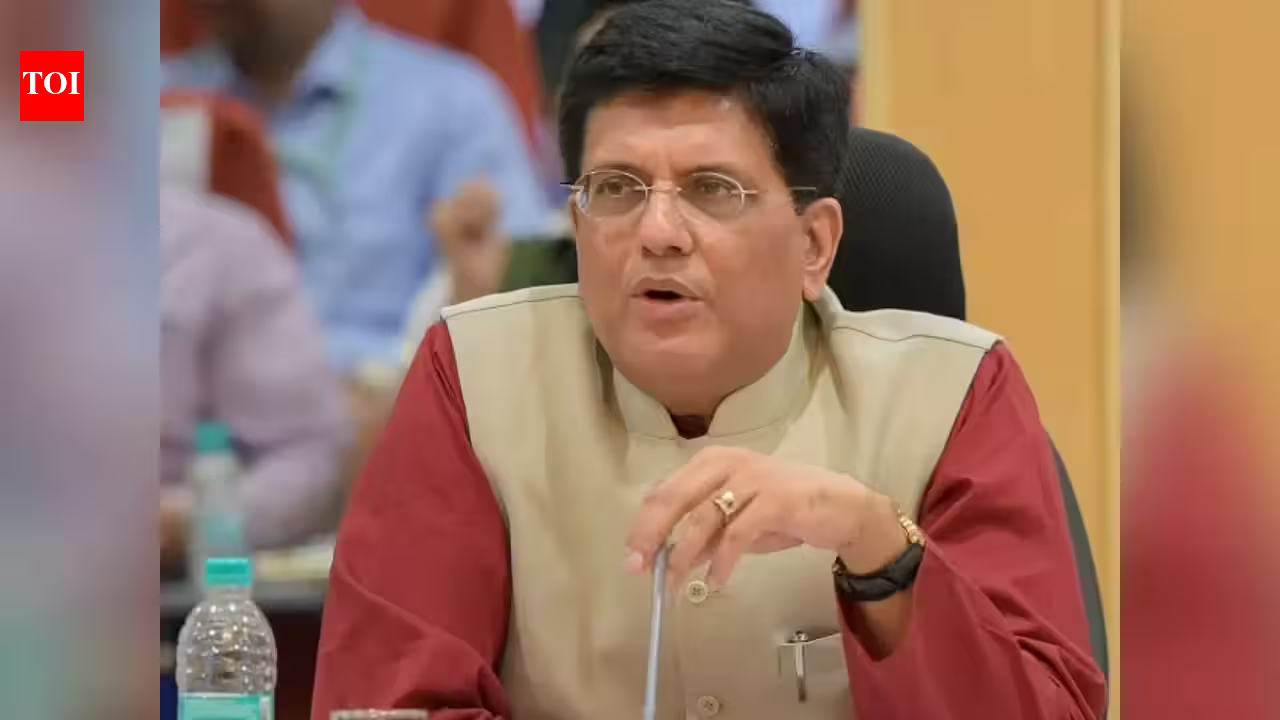
The recent diplomatic and trade mission led by India’s Minister of Commerce and Industry, Piyush Goyal, to Egypt serves as a pivotal marker in India’s ongoing effort to diversify its global trade footprint. With bilateral trade currently hovering around the $6.5 billion threshold, the consensus among policymakers in both New Delhi and Cairo is that this figure represents a mere fraction of the true economic capacity inherent in these two ancient, yet rapidly modernizing, civilizations. As India continues to integrate itself into the global value chain, the partnership with Egypt—a gateway to Africa and a vital node for Mediterranean trade—has transitioned from a peripheral relationship to a strategic priority.
The current trade data paints a picture of a relationship in its nascent, transactional phase. India’s exports to Egypt, valued at approximately $3.87 billion, are largely characterized by a mix of essential commodities, including meat, poultry, petroleum products, and machinery. Conversely, imports from Egypt, totaling roughly $2.60 billion, lean heavily on crude oil, fertilizers, and raw materials. While this exchange is beneficial, it lacks the depth required for long-term economic resilience. The vision articulated by the Indian government is to move beyond the simple movement of goods toward a sophisticated framework of mutual investment, technology transfer, and sectoral synergy. By encouraging Egyptian capital to flow into the Indian market and, simultaneously, fostering an environment for Indian enterprises to establish localized operations within Egypt, both nations aim to create a mutually reinforcing economic ecosystem.
Leveraging Geopolitics for Trade Expansion
Egypt’s geographical position at the nexus of the Suez Canal and the African Continental Free Trade Area (AfCFTA) makes it an invaluable partner for India. As Indian firms seek to diversify their manufacturing bases and reduce reliance on singular markets, Egypt offers a platform that provides streamlined access to European, African, and Middle Eastern markets. For Egypt, India represents a vast, growing consumer base and a source of high-quality, cost-effective technology and agricultural expertise.
The recent delegation, consisting of over 130 business representatives, underscores the transition from rhetoric to action. This is not merely a diplomatic excursion but a deliberate effort to overcome the stagnation in foreign direct investment (FDI). Historical data shows that FDI flows from Egypt to India remain strikingly low, falling below $12 million over the past two decades. This deficiency is a primary target for the current government. By facilitating direct engagement between Egyptian private equity firms and Indian industrial conglomerates, the aim is to catalyze a shift toward joint ventures that prioritize sustainable energy, logistics, and digital infrastructure. These sectors are critical for both nations, as they strive to modernize their domestic economies while grappling with the demands of an increasingly digital global marketplace.
Broadening India’s Global Trade Architecture
The outreach to Egypt is consistent with India’s broader, aggressive trade policy. Under the current economic administration, India has prioritized the dismantling of protectionist barriers and the securing of preferential market access across the globe. By actively pursuing and finalizing free trade agreements (FTAs) with Australia, the United Arab Emirates, Mauritius, and the EFTA bloc, India is repositioning itself as a central player in the $115 trillion global GDP landscape.
The goal for India is to ensure that by the end of the current decade, a significant percentage of its trade is conducted with nations that offer preferential tariff regimes. The upcoming agreement with the European Union is expected to be a landmark achievement in this strategy. By anchoring these bilateral deals with consistent, predictable legal frameworks, India is creating a “business-friendly” environment that attracts multinational corporations looking for a “China-plus-one” strategy. For the Indian business community, this means that expanding into Egypt is not an isolated effort but a logical step in a global expansion strategy supported by the government’s comprehensive trade architecture.
Modernizing the Framework for Business Engagement
One of the most innovative suggestions from the recent Cairo dialogue was the proposal to develop a modern-day “Periplus.” In antiquity, the Periplus served as a vital document that provided traders with essential information regarding navigation routes, market demand, and customs in foreign ports. Today, as digital trade and complex regulatory environments create friction, a modernized business guide could bridge the information asymmetry that currently hinders mid-sized enterprises in both countries.
For an Indian firm, the challenge of entering the Egyptian market often lies in navigating local labor laws, unique taxation regimes, and regional business etiquette. Conversely, Egyptian firms face hurdles in understanding the complex landscape of Indian state-level regulations and supply chain logistics. A collaborative guide, developed by the Indian Community Association in Egypt (ICAE) in partnership with trade bodies, would serve as a roadmap to demystify these administrative challenges. By codifying best practices, legal nuances, and high-growth sectors for mutual investment, the two nations can lower the barrier to entry for smaller, agile companies, ensuring that the partnership is not dominated solely by large conglomerates.
Future Outlook and Economic Sustainability
The success of the India-Egypt economic pivot will ultimately depend on the ability of the private sector to identify and exploit areas where the two economies complement rather than compete. India possesses significant advantages in IT services, pharmaceuticals, and agricultural technology, while Egypt offers vast potential for industrial manufacturing and infrastructure development. The integration of Indian technical expertise with Egyptian operational capacity could lead to the emergence of regional hubs that service the wider Mediterranean and African markets.
The emphasis on a “win-win” model is not just a diplomatic platitude; it is an economic necessity. Trade sustainability requires that both nations derive value that persists beyond short-term commodity price fluctuations. As both countries navigate the volatility of the global economy, the diversification of their respective supply chains remains paramount. By strengthening ties with Egypt, India is effectively securing a strategic foothold in a key region, while Egypt gains a long-term partner capable of providing the technological and investment stimulus required for its internal development. Looking ahead, if the current pace of high-level engagement is maintained, the “sky is the limit” sentiment may well transform into a tangible, robust economic reality that sets a benchmark for South-South cooperation.
Disclaimer: This content is auto-generated for informational purposes only.
Source: Read Original News