








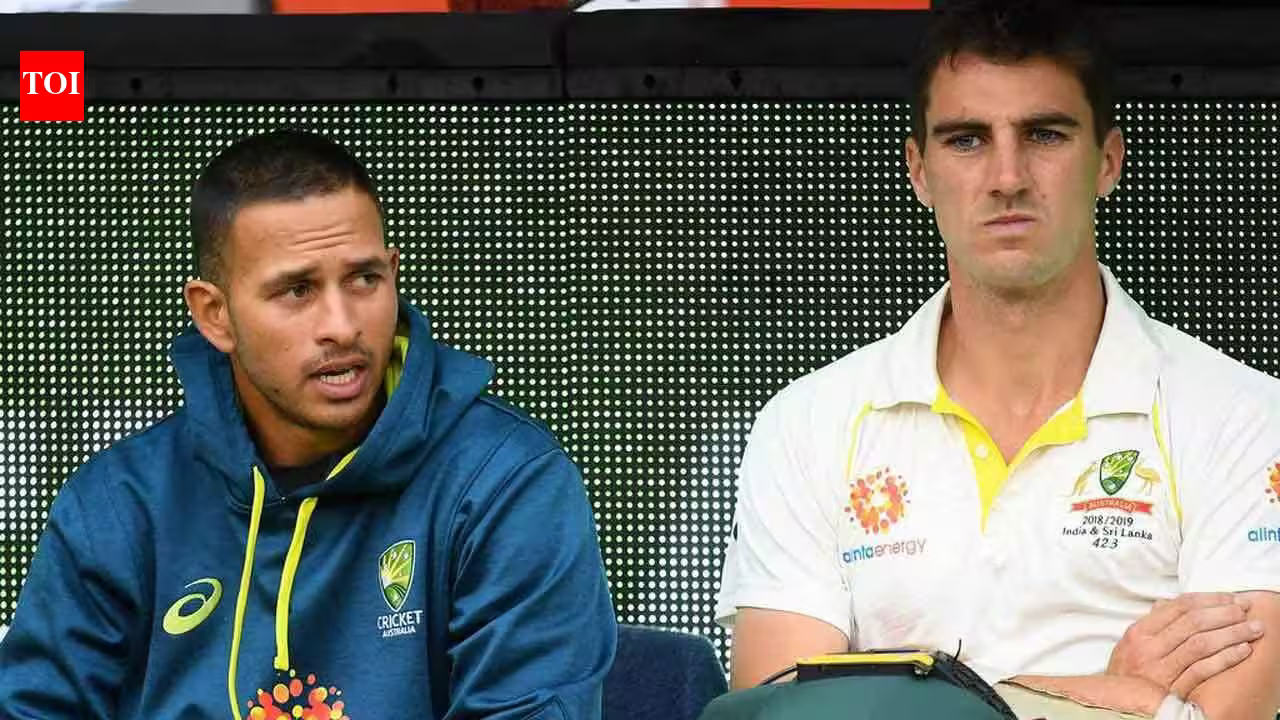
CONTROVERSY continues to swirl around the 2018 “Sandpaper-gate” scandal, as explosive claims from Usman Khawaja’s new autobiography have reignited one of the most painful chapters in Australian cricket history. Former Indian spin maestro Ravichandran Ashwin has joined a growing chorus of voices questioning the official narrative, specifically taking aim at how current Test captain Pat Cummins handled the fallout of Khawaja’s recent revelations.
The debate stems from Khawaja’s book, ‘Sabr: Finding My Way in Cricket and Life’, in which he alleges that knowledge of the ball-tampering plot during the 2018 Cape Town Test against South Africa was far more widespread than the official Cricket Australia investigation suggested. While the board’s original findings laid the blame solely on the shoulders of Steve Smith, David Warner, and Cameron Bancroft, Khawaja argues that the entire squad was aware of the illicit activities.
Ashwin Decries “Discrediting the Man”
Pat Cummins, who was part of the Australian squad during that fateful 2018 tour, responded to the allegations with sharp defiance, labeling them “100% wrong” and “complete and utter nonsense.”
Ashwin, speaking on JioStar, expressed genuine shock at the nature of the Australian skipper’s rebuttal. The veteran spinner argued that rather than simply contesting the facts presented by Khawaja, Cummins opted for a personal strike that undermined the integrity of a teammate.
“Firstly, when Usman Khawaja has mentioned certain things in his book, those are his accounts of the story and we need to respect that,” Ashwin noted. “But what happened at Pat Cummins’s press conference is that he didn’t discredit Usman Khawaja’s account of the story; he discredited the man himself. And that is the problem for me.”
Ashwin, who has crossed paths with Khawaja numerous times on the international stage, defended the opener’s character. “I know Usman Khawaja; I’ve played a lot of cricket with him… He is a man of high integrity and a really honest and straightforward person.”
The Indian star further pointed out that it would have been a far more constructive path for Cummins to distance himself from the scandal by admitting he wasn’t part of the core leadership group at the time. Instead, the aggressive nature of the denial has left observers like Ashwin convinced that the scars of 2018 have not yet healed.
Cracks in the Dressing Room
The scandal has long been seen as the catalyst for a total rebranding of Australian cricket under the leadership of Cummins and Tim Paine. However, Ashwin believes the recent back-and-forth proves that the dressing room is still grappling with internal discord regarding the event.
“Pat Cummins, who I really admire as a cricketer, is the captain of Australia and, alongside Tim Paine, took on the new regime of trying to rebrand Australian cricket,” Ashwin said. “David Warner has continued on his own thread of saying what he believes is right. So one thing is crystal clear: there were cracks in that Australian dressing room in terms of views and opinions on this, and I don’t think it is crackless even now.”
The narrative has gained further traction due to corroborating accounts from other figures within the Australian game. Former pacer Chadd Sayers recently backed Khawaja’s claims, suggesting that the team was well aware of the tampering culture and recalling his own experience as the 12th man during the Port Elizabeth Test, where he allegedly removed sandpaper from the field.
A Growing Call for Accountability
Ashwin is not the only high-profile voice demanding a deeper look at the past. Former Australian opener Matthew Hayden has argued that the cricket-loving public deserves absolute clarity, suggesting that the passage of time—eight years since the incident—has failed to soothe the underlying resentment.
“The fundamental question here is: what was damaged, and why is it relevant?” Hayden stated. “It’s because when integrity is broken, trust then gets damaged, and all of these new accounts have just reopened the questions of accountability.”
Meanwhile, former Indian pacer Irfan Pathan has approached the issue from a technical standpoint, dismissing the notion that the bowlers could have been oblivious to the condition of the ball. Given the mechanics of reverse swing, Pathan suggests that any player actively manipulating the leather would be instantly spotted by the bowlers.
“It’s not possible that, if the ball is reverse swinging and as a bowler, I won’t know if something has been done to the ball,” Pathan asserted. He echoed the sentiments of many by suggesting that if the Australian public and media remain unsatisfied with the official record, a new investigation might be the only way to finally put the matter to rest.
As it stands, Khawaja’s push for “collective accountability” has challenged the status quo, transforming a historical footnote back into a contemporary crisis for Australian cricket. Whether Cricket Australia chooses to address these persistent questions or continue to treat the chapter as closed remains to be seen. One thing, however, is certain: the consensus of 2018 is rapidly dissolving under the weight of these new, uncomfortable truths.
Disclaimer: This content is auto-generated for informational purposes only.
Source: Read Original News