








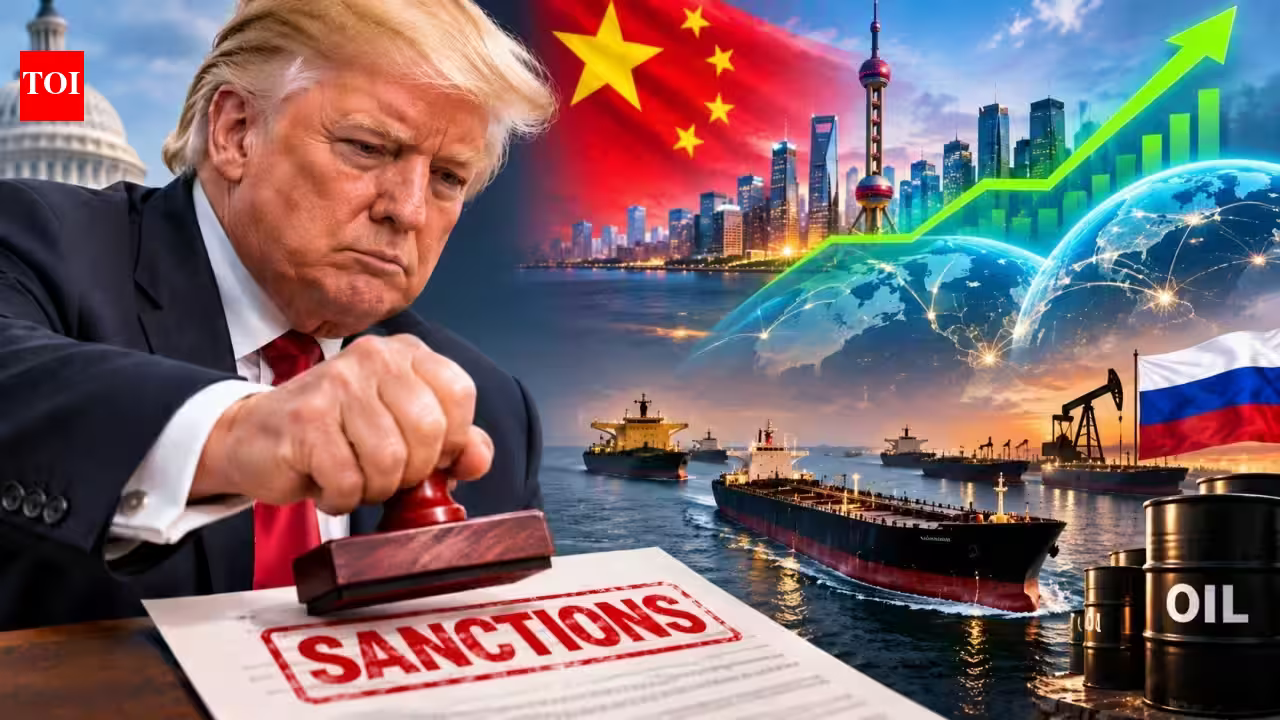
The efficacy of United States secondary sanctions, once considered an almost insurmountable tool of geopolitical influence, is currently facing a significant reality check. For decades, the US successfully leveraged its central role in the global financial system to enforce foreign policy goals, effectively coercing international entities to comply with its directives or face exclusion from the dollar-denominated market. However, a growing body of evidence suggests that the era of uncontested American economic hegemony is shifting, as adversaries and allies alike develop sophisticated mechanisms to bypass these restrictions.
The Architecture of US Sanctions Power
For much of the late 20th and early 21st centuries, the US wielded economic sanctions as a strategic substitute for direct military intervention. By anchoring global trade in the US dollar, Washington could essentially “weaponize” the plumbing of international finance. If a country or corporation failed to adhere to US foreign policy, the threat of being cut off from dollar clearing and liquidity proved devastating.
This dominance was built upon four pillars. First, the rapid expansion of global trade—which saw traded goods grow from 36% of global GDP in 1979 to 55% in 2015—solidified the dollar as the primary medium for invoicing, borrowing, and reserve holding. Second, the absence of viable alternatives forced foreign banks to prioritize compliance with US directives over sovereign autonomy. Third, a period of relative macroeconomic stability allowed the US to impose these costs without triggering a systemic collapse of its own financial networks. Finally, the emergence of the domestic shale oil boom in the 2010s transformed the US into a net exporter of fossil fuels, granting it the capacity to regulate the supply side of global energy markets while using sanctions to target the commodity exports of its rivals.
The Rise of Shadow Markets and Retaliatory Leverage
The diminishing returns of these sanctions have become apparent as targeted nations evolve. The most prominent example is the creation of a “shadow” oil market. Despite the coordinated G7 efforts to isolate Russian energy, the global oil market has effectively bifurcated. A massive ecosystem of tankers, insurance providers, and shipping companies has emerged to facilitate trade between sanctioned nations like Russia, Iran, and Venezuela and major importers such as China, India, and Indonesia. These gray-market networks have proven remarkably resilient; even when the US identifies and designates specific vessels or facilitators, the underlying infrastructure continues to operate, bypassing the Western financial architecture.
Simultaneously, countries like China have moved beyond passive adaptation to active retaliation. By securing dominance over critical supply chains—particularly in rare earth minerals essential for defense and high-tech manufacturing—Beijing has created a credible counter-threat. The October 2025 standoff, in which a Chinese embargo on rare earth exports forced a tariff truce with the US, demonstrates that Washington’s ability to impose economic pain is no longer a one-way street. These nations are now capable of imposing immediate, tangible costs on the American domestic economy, thereby constraining Washington’s future willingness to deploy aggressive secondary sanctions.
Shifting Treasury Market Dynamics
The reach of US sanctions is also creating structural friction within the US Treasury market. As foreign governments perceive higher risks associated with dollar dependency, they have begun to reduce their exposure to American debt. Official foreign holdings of US Treasuries have seen a notable decline over the past decade, with China significantly slashing its holdings.
This move is not merely a financial diversification strategy; it is a calculated effort to insulate sovereign assets from future seizure or restrictive action. When overseas public-sector holdings drop—including a marked reduction in short-term Treasury bills—it impacts the liquidity and stability of the debt markets that fund the US government. This trend underscores a broader transition in global capital flows, where the “risk-free” status of the dollar is being reassessed by central banks globally.
Strategic Implications for the Indian Economy
For India, the current climate presents a complex set of challenges and calculated risks. India occupies a unique position; it maintains deep economic ties with the US while simultaneously needing to secure affordable energy imports from countries like Russia. Unlike Russia or Iran, India remains highly integrated into the dollar-clearing system, making its financial institutions and exporters vulnerable to secondary sanctions.
However, India’s approach has been one of careful calibration. By diversifying its trade partners and energy suppliers, and by promoting rupee-based settlements where possible, New Delhi is attempting to create a buffer against global shocks. While India did face pressure during the initial rounds of sanctions—leading to a pivot away from Iranian crude and a recalibration of oil procurement strategies—the current reality is that the US also requires India as a strategic partner.
There are also potential advantages for India in this shifting landscape. As capital and trade flows are diverted away from sanctioned territories or restricted US-China corridors, financial hubs like GIFT City are positioned to attract new flows. Furthermore, the availability of discounted energy provides a competitive edge to India’s domestic manufacturing sector, provided that the government can navigate the volatile “waver-based” diplomacy that currently dictates the enforcement of US laws.
The Long-Term Geoeconomic Outlook
Ultimately, the effectiveness of the US sanctions regime is being eroded by the very actors it seeks to suppress. The development of alternative financial networks, the growth of shadow commodity markets, and the buildup of retaliatory economic leverage by major powers represent a fundamental change in the global order. For the US, the era of absolute economic coercion is coming to an end.
While the US Treasury continues to hold immense power, it is now constrained by the risk of triggering retaliatory supply shocks in energy or critical minerals, and by the potential for a long-term erosion of confidence in the dollar-based financial system. Businesses globally—including those in India—must now plan for a world where sanctions are a persistent but increasingly inconsistent tool, requiring a higher degree of agility, diversified supply chains, and a robust understanding of the evolving global financial plumbing. The future belongs to economies that can successfully navigate these competing power centers without becoming overly reliant on a single, potentially volatile, financial ecosystem.
Disclaimer: This content is auto-generated for informational purposes only.
Source: Read Original News