







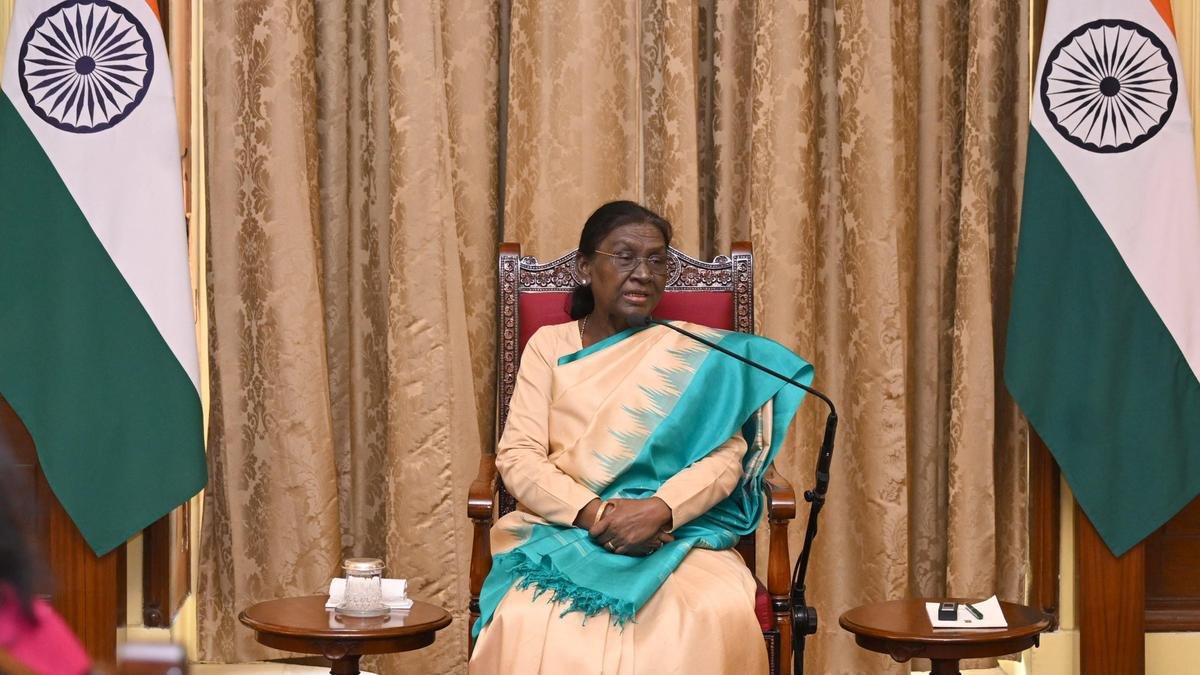
President Murmu Marks 50 Years of Malaria Research, Hails India’s Sharp Decline in Cases
NEW DELHI – President Droupadi Murmu presided over the Golden Jubilee celebrations of the Indian Council of Medical Research-National Institute of Malaria Research (ICMR-NIMR) on Tuesday, marking five decades of the institution’s pivotal role in safeguarding public health. During the ceremony in the national capital, the President lauded the nation’s transformative progress in curbing malaria, citing significant reductions in both morbidity and mortality over the past decade.
A Decade of Decisive Progress
Reflecting on the country’s health trajectory between 2015 and 2025, President Murmu noted that malaria-related deaths and recorded cases have plummeted by nearly 80%. This substantial decline is mirrored in the geography of the disease, with the number of high-burden districts across India shrinking from 155 to just 33. Perhaps most significantly, 160 districts achieved a landmark milestone between 2022 and 2025 by reporting zero indigenous cases of the vector-borne disease.
The President attributed these gains to a unified national effort, crediting the dedication of healthcare professionals, scientific researchers, and the active participation of the citizenry. She highlighted India’s formal exit from the World Health Organization’s “High Burden to High Impact” (HBHI) group in 2024 as a testament to the success of evidence-based interventions and strategic policy implementation.
Scientific Innovation and Future Vigilance
While celebrating the milestones achieved, President Murmu emphasized that the battle against malaria is far from over. She urged stakeholders to remain vigilant, calling for a intensified focus on surveillance, rapid diagnostics, and the development of next-generation vaccines and therapeutics.
“Scientific research must transcend the confines of laboratories to reach the grassroots level, particularly in the rural communities where the risk remains most acute,” the President stated. She also highlighted the ICMR-NIMR’s promising involvement in the development of an indigenous malaria vaccine in Bhubaneswar, expressing optimism that such innovations would be the final pieces in the puzzle of total malaria elimination.
Emerging Challenges
Addressing the complexities of the current era, the President pointed to climate change and unplanned urbanization as significant hurdles that threaten to undo past successes. Rising insecticide resistance in mosquito populations, she warned, necessitates a more robust environmental management strategy. She called for a renewed commitment to eradicating mosquito breeding grounds and addressing waterlogging, urging a systemic approach to vector control that keeps pace with a changing climate.
The commemorative event also served as a moment to honor the legacy of the institute. President Murmu released a special postage stamp sheet to mark the Golden Jubilee. Simultaneously, Union Minister of Health and Family Welfare J.P. Nadda unveiled a coffee table book documenting the institute’s history, alongside a comprehensive report titled ICMR-NIMR Research Journey: Five Decades of Science, Service and Impact.
The celebration concluded with a presentation by ICMR-NIMR Director Anup Anvikar, who showcased the institute’s evolution over the last 50 years, reiterating the center’s commitment to eradicating malaria through rigorous science and community-centric service.
Disclaimer: This content is auto-generated for informational purposes only.
Source: Read Original News