








In an industry often defined by high-octane stunts and exaggerated portrayals of law enforcement, Sai Pallavi has always carved a niche for herself by leaning into the raw, the grounded, and the authentic. As anticipation builds for her upcoming action-thriller O.M, all eyes are on the actress’s dramatic shift from the girl-next-door to a formidable IPS officer. Behind this transformation lies a meticulous process of character building, guided by director Rajkumar Periasamy, who sought to strip away the “star” persona to reveal something far more clinical and commanding.
The Art of Becoming the Badge
Transformation in cinema is rarely just about a costume change or a new hairstyle; it is about the internal migration an actor must make to inhabit a new reality. For Sai Pallavi, who has built a career on characters that feel deeply lived-in and emotionally resonant, the challenge was to shed her established cinematic identity.
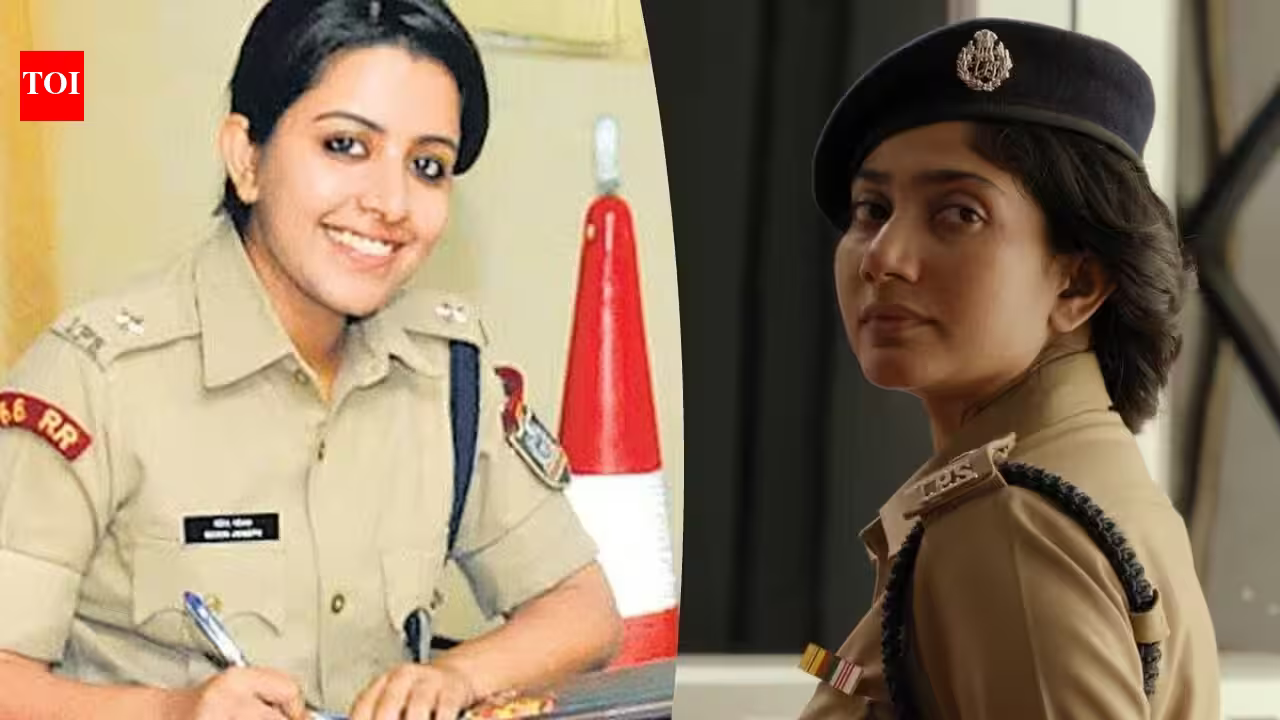
Director Rajkumar Periasamy recently offered a rare glimpse into this transition during a conversation with Galatta Plus. He confessed that his primary goal was to reset the audience’s perception of the actress. “Sai Pallavi has her own distinctive skin complexion, personality, and the baggage of her previous roles,” Periasamy noted. To break those expectations, he knew he needed a touchstone—a living, breathing embodiment of what a modern officer actually looks like in the field. Enter Merin Joseph, the Kerala-cadre IPS officer whose presence has often commanded media attention not just for her efficacy, but for the stark reality she brings to a male-dominated profession.
Merin Joseph as the Aesthetic North Star
It is crucial to note that while the visuals of Merin Joseph were a cornerstone of the preparation, the character in O.M is not a biopic. Periasamy was quick to clear the air: “Merin Joseph is a fantastic police officer, and her story is amazing, but that is not the character we are portraying in this film. It is a completely different character. I only showed Sai some of her pictures as a reference for the look.”
The intent behind showing these photos was psychological. By presenting a real-world officer who defies the tropes of “masala” cinema—where police officers are often caricatures of authority—the director gave Pallavi a visual anchor. He wanted her to believe in her own authority on screen. By stepping into the shoes of a woman who walks the walk in the real world, Pallavi could adopt a posture and a stillness that a script alone couldn’t provide.
Beyond the Script: Methodical Immersion
Sai Pallavi is known for her diligence, and she didn’t stop at merely looking at snapshots of an IPS officer. Recognizing that the screen is a vacuum that demands truth, the actress reached out to Joseph directly. She spent time observing the officer in her day-to-day environment, soaking in the cadence of her speech, the way she commands a room, and the subtle shift in demeanor that occurs when someone wears a uniform.
This commitment to the role extended to her physical appearance as well. In a bold move that signals her dedication to the film’s vision, Pallavi opted for a short hairstyle. It’s a small, practical choice that echoes the utilitarian nature of the profession, stripping away the vanity often associated with lead actresses in mainstream Indian cinema to focus squarely on the character’s duty.
The Weight of the “O.M” Narrative
While the character study is a highlight of the pre-production, the film itself is poised to be a heavy hitter in the pan-Indian circuit. O.M isn’t just a character piece; it’s an ambitious action thriller set against the atmospheric, rugged backdrops of Tirupati and Tiruvannamalai. The plot, which reportedly delves into the tense conflicts involving forest woodcutters and the external forces they clash with, suggests a gritty, grounded narrative that aligns perfectly with the director’s focus on realism.
The casting is, frankly, electric. Having a heavy-hitting ensemble that includes Dhanush and the legendary Mammootty alongside Pallavi, Sreeleela, and the iconic Naseeruddin Shah, places O.M in a league of its own. When you have actors of this caliber, the “star power” becomes secondary to the ensemble’s collective weight, ensuring that the film feels more like a cinematic event than a standard commercial release.
A New Chapter in November 2026
With production values helmed by a team that includes music composer Sai Abhyankkar and cinematographer K Ezhil Arasu, the aesthetic of O.M is shaping up to be as sharp as its writing. As we count down the days to the November 20, 2026, release, the focus remains on whether this rigorous, reality-based preparation will pay off.
In an era where “getting into character” often implies dramatic weight loss or prosthetic makeup, Sai Pallavi’s approach feels refreshingly intellectual. She didn’t just want to “play” a cop; she wanted to understand the woman behind the uniform. If the director’s insights are any indication, the audience is in for a performance that eschews the usual cinematic flair for something much sharper, colder, and infinitely more compelling.
Whether it is the haunting landscapes of the temple towns or the simmering tensions of the forest, all pieces of the puzzle for O.M seem to be locking into place. And at the center of it all is an actress who, once again, refuses to take the easy path, choosing instead to find the human truth behind the uniform.
Disclaimer: This content is auto-generated for informational purposes only.
Source: Read Original News