








In the high-stakes, hyper-scrutinized landscape of Indian cinema, few voices carry as much weight as Javed Akhtar. As a man who has mastered the art of the written word for over half a century, his critiques aren’t just opinions—they are examinations of the cultural marrow of the nation. Recently, during an event for the Indian Performing Right Society (IPRS), the legendary screenwriter and lyricist found himself navigating the intersection of faith, filmmaking, and the formulaic trap that continues to define Bollywood.
The Mythos of Ram: Beyond the Screen
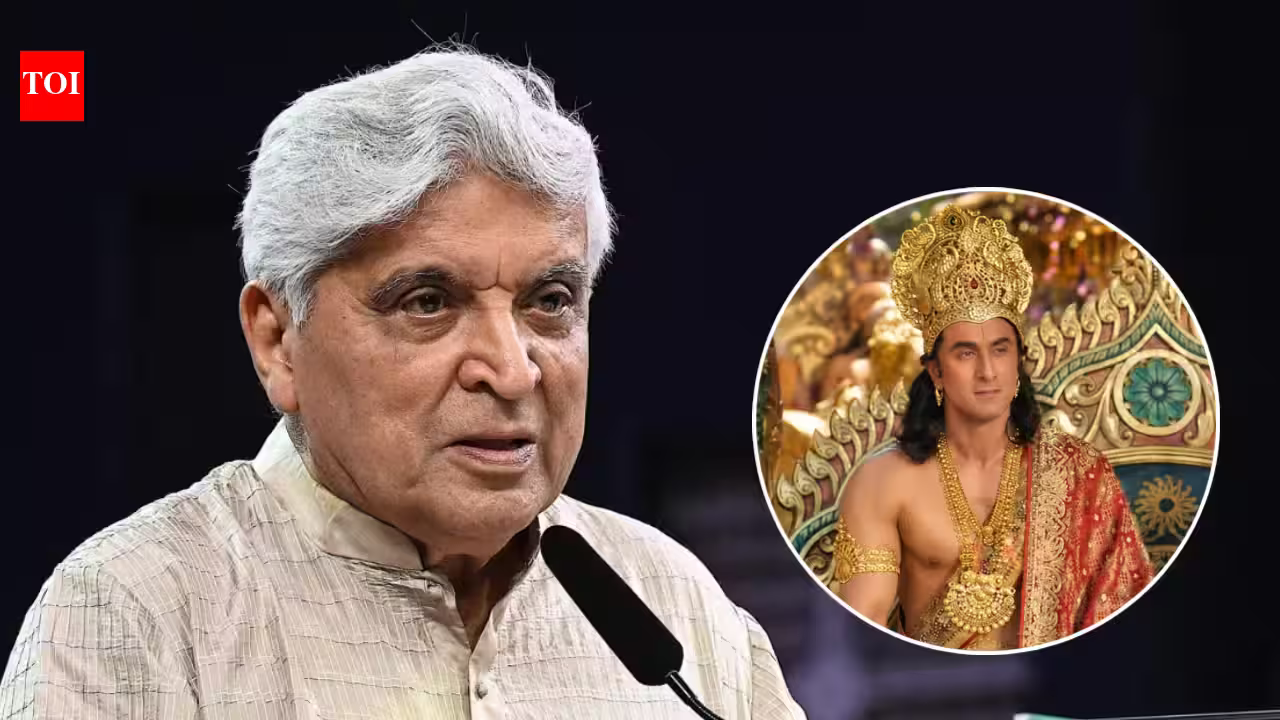
When asked about the latest iteration of the epic Ramayana, directed by Nitesh Tiwari, Akhtar’s response was characteristically nuanced. While the film has been the subject of massive discourse, Akhtar admitted he has yet to view it. However, he offered a ringing endorsement of the source material’s enduring power, one that transcends the cinematic medium entirely.
“Ram is not just a person; Ram is an ideal, a morality, Ram is a way of living,” Akhtar reflected. His words serve as a stark reminder of why the Ramayana remains the bedrock of Indian storytelling. For Akhtar, the deity is not merely a figure from a bygone era but a living, breathing aesthetic of virtue that resides within the collective consciousness of the country. “Many people may be angry with me,” he added, “but the essence of Ram runs in the blood of every Indian, irrespective of religion. While he is sometimes personified as an individual, he is far greater than that.”
This perspective shifts the focus away from the box-office performance or the casting choices of Nitesh Tiwari’s project—starring Ranbir Kapoor, Yash, and Sai Pallavi—and back to the foundational morality that the story represents. It is a philosophy that Akhtar himself famously distilled into the soul-stirring lyrics of ‘Pal Pal Hai Bhaari’ from the film Swades: “Mann se Raavan jo nikaale, Ram uske mann mein hai.”
The Confidence of a Master Wordsmith
The conversation inevitably drifted toward the enduring popularity of his own work versus the modern struggle to strike a chord with audiences. When pressed on why his lyrical contributions continue to resonate so deeply compared to some contemporary musical offerings attached to grand epics, Akhtar didn’t mince words.
With the unshakeable confidence of a man who has penned some of Hindi cinema’s most enduring anthems, he provided a simple, blunt diagnosis: “The simple explanation is that I’m a good writer; let’s start from here. So, my line touches people.”
It is a refreshing display of artistic self-assurance. In an industry that often thrives on performative humility, Akhtar’s acknowledgment of his own craft is a reminder that great art is born from a deep understanding of language, human emotion, and the ability to articulate what the audience feels but cannot express. His praise for his daughter, filmmaker Zoya Akhtar—who he noted is notoriously difficult to please—added a touch of human warmth to the exchange. If Zoya is impressed, it carries more weight in the Akhtar household than any chart-topping metric.
The ‘Generic’ Trap: Why Bollywood Stagnates
Perhaps the most biting part of Akhtar’s commentary was his dissection of why Hindi cinema struggles to break free from its own shadow. He touched upon the chronic lack of literary adaptations in Bollywood, noting that the industry has become addicted to a “safe” formula.
According to Akhtar, the pursuit of mass appeal is precisely what dilutes the quality of the product. “Hindi movies are generic because they want to please everybody,” he explained. The desire to capture a pan-Indian audience—from the landscapes of Gujarat to the bustling streets of UP and Karnataka—has led to a homogenization of storytelling. In trying to appeal to everyone, the films often end up feeling like they belong to no one.
He pointed to his own seminal book, Talking Films, to illustrate his point about the “State of Hindi Cinema.” He posited that the industry has created its own insular culture—a reality that looks nothing like the one experienced by the people living in it. He shared a classic observation from his upbringing in Lucknow: “I’ve never seen anyone in my life who calls his father ‘Abba Huzoor.’ This happens only in films.” It was a classic Javed Akhtar critique—sharp, observant, and highlighting the disconnect between the artificial world of the silver screen and the genuine lived experience of the Indian people.
The Path Forward for Epic Storytelling
The release of Nitesh Tiwari’s Ramayana on November 5, 2026, marks a significant moment for the industry, particularly as it tests how modern technology and star power can bridge the gap between ancient tradition and modern consumption. While the film has garnered attention for its scale, featuring heavyweights like Ranbir Kapoor and Yash, Akhtar’s stance provides a necessary check on the hype.
For the audience, the real challenge is not just the spectacle of the film, but whether the creators can capture the “ideal” and “morality” that Akhtar holds so dear, rather than just settling for another “generic” big-budget production. As the industry grapples with changing viewing habits and the influence of streaming, Akhtar’s words act as a compass. He suggests that if the industry wants to reclaim its cultural soul, it must move away from safe formulas and return to the roots of honest, meaningful storytelling.
Whether it’s the timeless lines of a song or the structural integrity of a grand cinematic adaptation, the lesson from Akhtar is clear: the audience is not as easily fooled as the industry might think. They are looking for something that touches the heart, and as the veteran lyricist implies, if the writer isn’t willing to be good, the audience simply won’t be moved. As we look at the future of Indian cinema, it is voices like his—unafraid, precise, and deeply connected to the pulse of the nation—that remain our most essential guideposts.
Disclaimer: This content is auto-generated for informational purposes only.
Source: Read Original News