








Federal authorities have officially confirmed that a fatal vessel strike was the cause of death for a 61-foot fin whale discovered pinned to the bow of a cruise ship in Seward, Alaska. The incident, which occurred on June 19, 2026, involved the Royal Caribbean-operated vessel Ovation of the Seas and has reignited concerns regarding the impact of heavy maritime traffic on endangered marine populations.
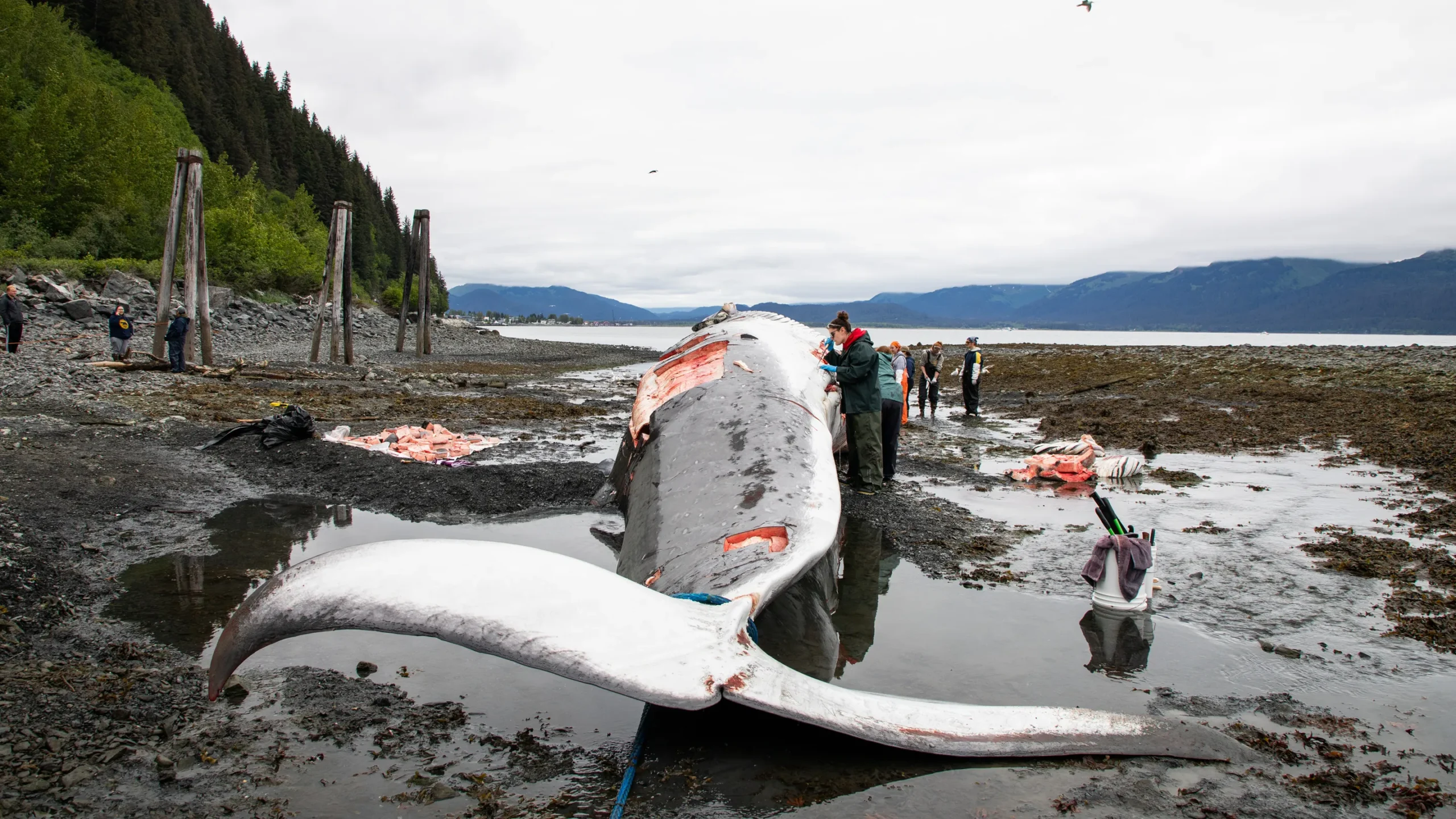
Following the ship’s arrival in port, an initial inspection by the National Oceanic and Atmospheric Administration (NOAA) revealed that the whale—an adult female—was in good nutritional condition and pregnant at the time of the collision. Given the protected status of the species, the event triggered a collaborative necropsy effort led by NOAA Fisheries’ marine mammal response staff, the Alaska SeaLife Center, and Alaska Veterinary Pathology Services.
Dr. Emmanuelle Furst, the veterinarian at the Alaska SeaLife Center who oversaw the examination, confirmed that the physical evidence left no room for ambiguity. “Our necropsy findings are consistent with blunt force trauma, in this case from a vessel strike, as the cause of death for both the adult whale and her unborn calf,” Dr. Furst stated.
Fin whales are the second-largest whale species on the planet and are currently classified as endangered under the Endangered Species Act and depleted under the Marine Mammal Protection Act. The loss of a reproductive female and her calf represents a significant blow to the recovery efforts for the species, which face ongoing threats from commercial shipping lanes.
Following the discovery, the NOAA Fisheries Office of Law Enforcement launched a formal investigation into the circumstances surrounding the strike. Investigators conducted extensive interviews with the captain and crew of the Ovation of the Seas and performed a rigorous review of the vessel’s logs and documentation.
While authorities have concluded the cause of death, the incident serves as a stark reminder of the persistent danger that large cruise and container ships pose to marine megafauna. Dr. Anne Marie Eich, lead for the NOAA Fisheries Alaska Region Protected Resources Division, emphasized the urgency of the situation.
“Accidental collisions with vessels are a serious threat to this endangered species,” Dr. Eich said. “We are committed to working with vessel operators to increase awareness of the risks of whale strikes and the importance of reducing vessel speed where practicable in areas with concentrations of whales, as well as investigating other ways to help avoid such incidents.”
The waters off the coast of Alaska serve as a critical habitat for various cetacean species, creating frequent overlap between industrial shipping routes and migratory paths or feeding grounds. As cruise tourism continues to grow in the region, conservationists argue that increased vessel traffic necessitates stricter adherence to voluntary speed reduction zones and enhanced lookout protocols.
The findings of the investigation and the necropsy are now being used by federal agencies to evaluate whether current maritime safety measures are sufficient to protect whales from similar catastrophic encounters. For now, the death of the fin whale stands as a sobering example of the unintended, yet lethal, consequences that accompany the presence of massive ships in the habitats of Earth’s most vulnerable marine giants.
Disclaimer: This content is auto-generated for informational purposes only.
Source: Read Original News