








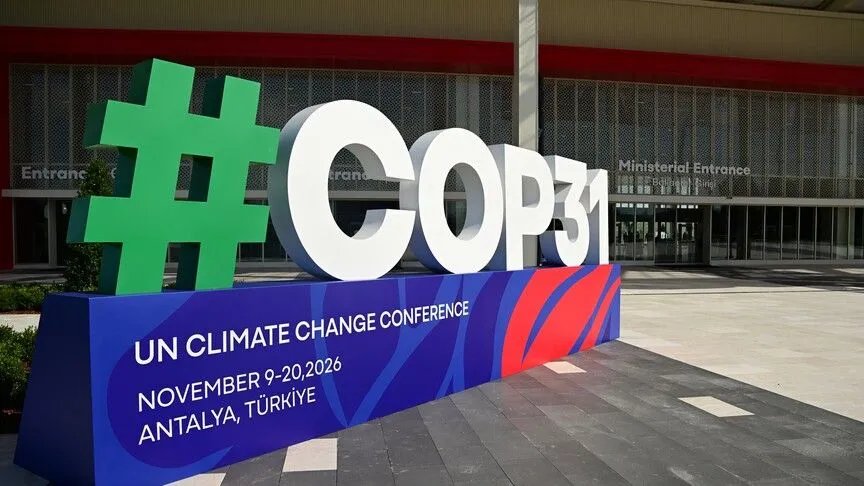
ANTALYA — As COP31 enters its critical final stretch in the Turkish Mediterranean city of Antalya, high-level discussions remain deadlocked over core climate commitments. Chinese Vice Minister of Ecology and Environment Li Gao confirmed on Wednesday that while significant divisions persist among participating nations, intense diplomatic efforts are underway to bridge the gaps before the summit’s conclusion.
“Countries have different ideas on different items, but I think negotiators and ministers are making great efforts to try to bring us to reach the agreement,” Li told reporters on the sidelines of the conference. Emphasizing the time constraints, he added that while the path forward remains complex, the collective urgency among delegates is palpable as the remaining days of the summit tick away.
The atmosphere in Antalya reflects the growing pressure on global powers to finalize an ambitious framework that addresses both the financing of climate resilience and the structural shift in the global energy economy. A pivotal draft decision, released on November 16, has become the focal point of the current negotiations. The document outlines a comprehensive set of targets aimed at accelerating the transition away from fossil fuels, a move seen as essential to meeting the temperature goals set by the Paris Agreement.
Central to the draft is a contentious proposal to triple annual adaptation finance for developing nations. The suggested target is to mobilize at least $120 billion by 2035—a figure that serves as a benchmark for how wealthy nations intend to support the most climate-vulnerable regions. However, the exact mechanisms for funding and the legal obligations of donor nations remain primary points of friction in the closed-door sessions.
Beyond finance, the draft deal proposes aggressive energy reforms. It calls on nations to increase electricity’s share of total global energy consumption to 35% by 2035. This push for deep electrification is coupled with ambitious targets for renewable energy capacity. Negotiators are currently debating language that would commit the global community to tripling renewable capacity and doubling the annual rate of energy-efficiency improvements by 2030.
The inclusion of these specific quantitative targets represents a push for concrete accountability, yet critics and several national delegations have raised concerns regarding the feasibility of such rapid transitions, particularly for nations currently reliant on coal or gas for economic stability. The challenge for the Turkish presidency and the UN delegation is to finalize a document that is stringent enough to satisfy climate activists and scientists, yet flexible enough to secure the consensus of all parties.
As the summit heads into its final days, the focus shifts to ministerial-level bargaining. The success of COP31 hinges on whether these divergent national interests can be reconciled into a unified declaration. The proposed commitment to transition away from fossil fuels, in particular, remains the most scrutinized element of the text, with several oil-producing nations expressing caution regarding the timeline and scope of the mandate.
For now, the hallways of the Antalya summit center remain crowded with negotiators working in marathon sessions. The international community continues to watch closely, waiting to see if the rhetoric of cooperation will translate into the binding agreements necessary to address the escalating climate crisis. The outcome in Antalya is expected to set the trajectory for global climate policy for the remainder of the decade, making the current diplomatic pressure a defining moment for international environmental governance.
Disclaimer: This content is auto-generated for informational purposes only.
Source: Read Original News