







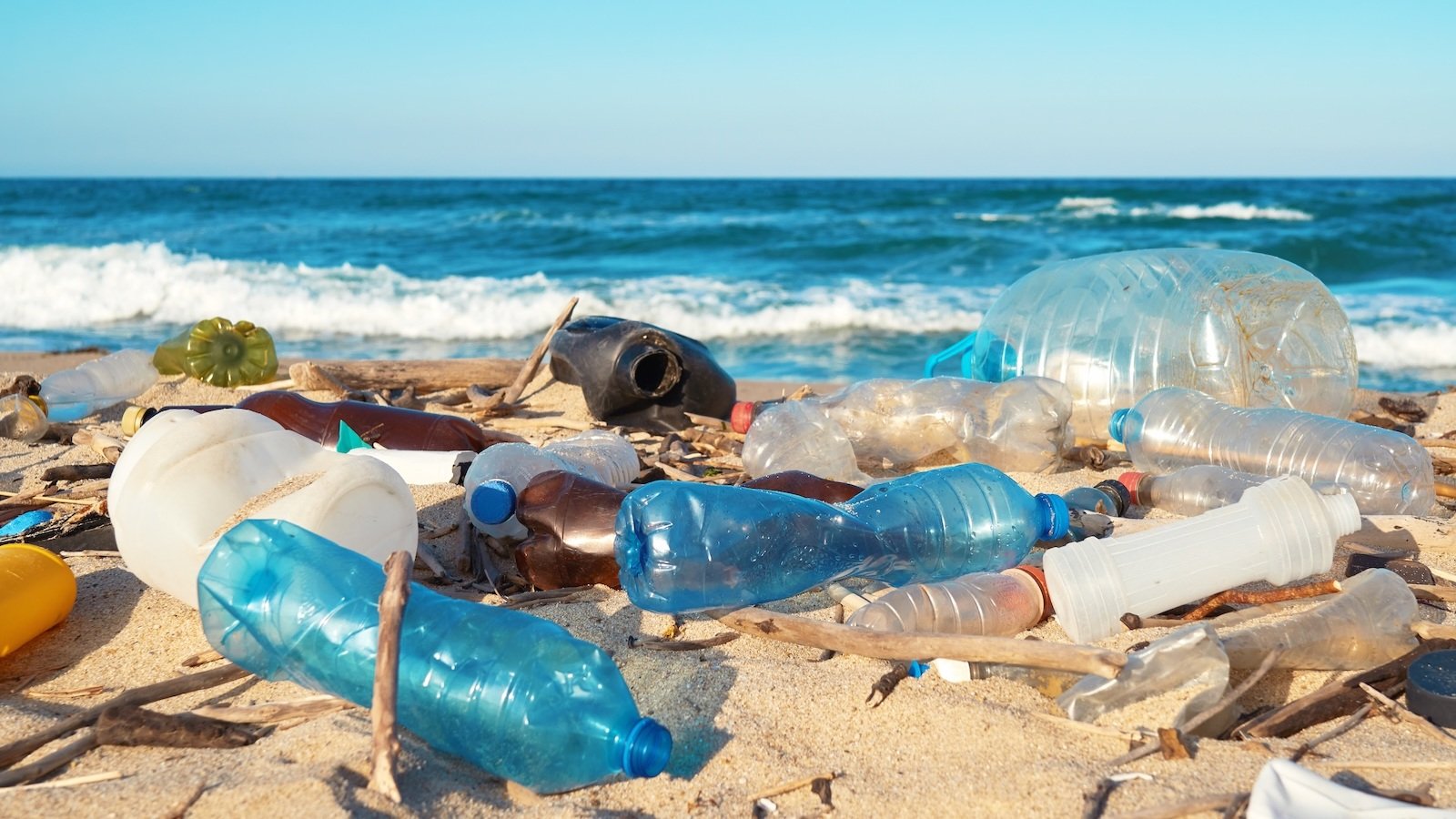
The scale of global plastic production is staggering: every year, 507 million tons of plastic are manufactured worldwide. This output manifests as trillions of plastic pellets, billions of bags, and an endless stream of containers. To put the consumption rate into perspective, in the time it takes to read this sentence, thousands of plastic bottles have already been sold. By the time this article concludes, that figure will have climbed to nearly 3 million.
The life cycle of these products is remarkably short, but their environmental footprint is permanent. Of all the plastic ever produced, approximately 79% has ended up in landfills or directly in the environment. Only 9% has been recycled—much of which eventually reaches a landfill anyway—and 12% has been incinerated, a process that releases dangerous toxins into the air.
For the vast majority of plastic, the destination is a landfill. A single-use bottle discarded in the trash will sit in a repository for centuries, slowly shedding microplastics. Over time, these tiny fragments—and even smaller nanoplastics—become part of the “leachate,” or toxic liquid runoff, that seeps out of landfills and into local watersheds.
Plastic that evades the waste management system entirely follows an even more destructive path. Items discarded in public spaces are frequently carried by wind and weather into stormwater drains, eventually reaching river systems and the open ocean. Once in marine environments, this debris wreaks havoc on wildlife. Seabirds choke on plastic fragments, sea turtles mistake bags for jellyfish, and whales ingest massive quantities of debris. Further down the food chain, fish and crustaceans consume microplastics, facilitating the transfer of pollutants into the diets of marine life—and eventually, humans.
The term “breaking down” is perhaps the most deceptive phrase in the environmental lexicon. While a plastic item may eventually become unrecognizable to the human eye, it never truly decomposes. It simply fragments into smaller pieces. Because plastic does not biodegrade in any meaningful biological sense, these particles remain in the ecosystem indefinitely.
Current research shows that microplastics are now ubiquitous. They have been detected at the summit of Mount Everest, in the deepest trenches of the ocean, and within the isolated streams of the Amazon Rainforest. They hover in the atmosphere, falling to earth with the rain, and have been found within the biological systems of diverse species ranging from wolves to songbirds. Humans are not exempt; as these particles accumulate within our environment, they are increasingly found within the human body, raising significant concerns regarding long-term health.
Archeologists thousands of years from now will likely identify our current era by a distinct geological layer of buried plastic. Despite this reality, global production continues to rise. We are currently adding unprecedented amounts of synthetic materials to planetary systems that were not designed to process them.
However, the trajectory of this crisis is not inevitable. Advocacy networks are already seeing success by pressuring major retailers to reduce plastic packaging and lobbying for state-level regulations on plastic production and disposal. Experts argue that the most effective solution is to “turn off the tap” at the source, moving away from the convenience-driven reliance on single-use materials. As the planet faces the accumulation of a substance that refuses to disappear, the focus is shifting toward large-scale corporate accountability and legislative action to prevent further infiltration of the world’s fundamental ecosystems.
Disclaimer: This content is auto-generated for informational purposes only.
Source: Read Original News