








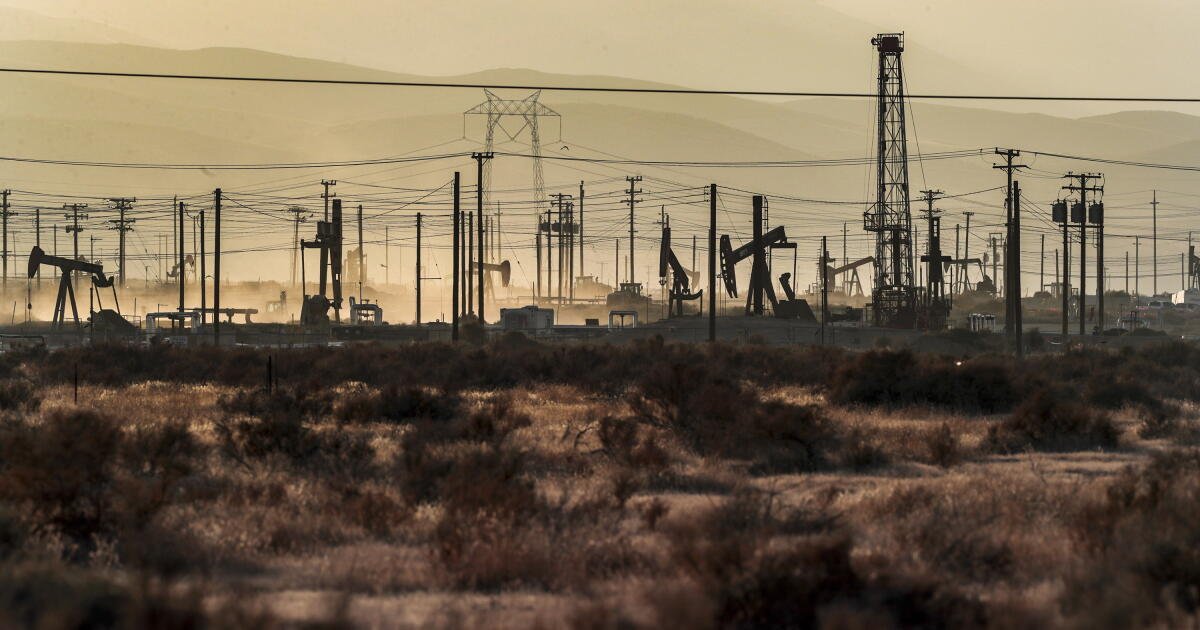
California’s pioneering effort to mitigate climate change through carbon capture and storage (CCS) faces a significant legal hurdle, leaving the future of the state’s flagship project in limbo. A Kern County Superior Court judge is currently weighing whether to force an immediate shutdown of the Carbon TerraVault I (CTV I) project, which captures carbon dioxide from oil and gas operations and injects it into depleted reservoirs a mile underground.
Earlier this year, California Resources Corp. (CRC) launched the project 25 miles west of Bakersfield, aiming to store approximately 48 million metric tons of CO2 over the next 26 years. The facility is a cornerstone of California’s ambitious climate roadmap, which relies on carbon storage to account for nearly 11% of required emission reductions by 2030, scaling to nearly 23% by 2045.
However, the operation’s status was thrown into question after Judge Marcos Camacho ruled that both CRC and Kern County failed to perform a sufficiently rigorous environmental review. Under the California Environmental Quality Act, public agencies must identify, disclose, and implement measures to reduce the environmental impacts of projects before granting approval. Judge Camacho initially ordered a stop to all CO2 injections, though he subsequently granted a temporary reprieve to allow the company and the county time to file objections, permitting the site to remain operational for the time being.
The litigation, brought by a coalition of environmental groups, argues that the county and the company neglected to account for the broader pollution generated by the industrial plants slated to feed CO2 to the CTV I hub.
“I would hope that this court’s opinion sends a message to both the company and government agencies that they need to be as thorough and complete as possible,” said Victoria Bogdan Tejada, an attorney with the Center for Biological Diversity.
In addition to the issue of surrounding industrial emissions, the judge highlighted a discrepancy in the project’s technical reporting. While the environmental review assumed a 95% CO2 capture rate from the Elk Hills gas field, a separate county report issued just before approval cited a capture rate of only 80% to 90%. This discrepancy represents a difference of millions of tons of greenhouse gases that may not be accounted for in the state’s climate projections.
CRC Chief Executive Francisco Leon defended the project, noting that the site is currently storing roughly 100,000 metric tons of carbon annually. Leon cautioned that the lawsuit is counterproductive, warning that legal delays could ultimately result in higher atmospheric emissions. “The actions of these activists come at the cost of real solutions that reduce emissions, strengthen communities and advance climate progress Californians want,” Leon said.
Kern County officials, who led the environmental review process, expressed disappointment with the court’s decision, citing the “extensive amount of environmental review, mitigation and careful consideration” already applied to the project.
The legal skirmish arrives at a critical juncture for California’s climate policy. With over a dozen carbon storage permit applications pending with the U.S. Environmental Protection Agency, CTV I serves as the only operational model currently running in the state. As California prepares to release its next five-year climate plan, advocates like Bogdan Tejada argue that the court’s ruling provides an essential opportunity for state officials to reassess how carbon capture infrastructure is deployed to ensure transparency, accountability, and genuine climate progress.
Disclaimer: This content is auto-generated for informational purposes only.
Source: Read Original News