






In an unconventional bid to capture the attention of younger generations, the government has launched a national security awareness campaign featuring a collaboration with a controversial YouTuber known for peddling poorly substantiated conspiracy theories and urban legends.
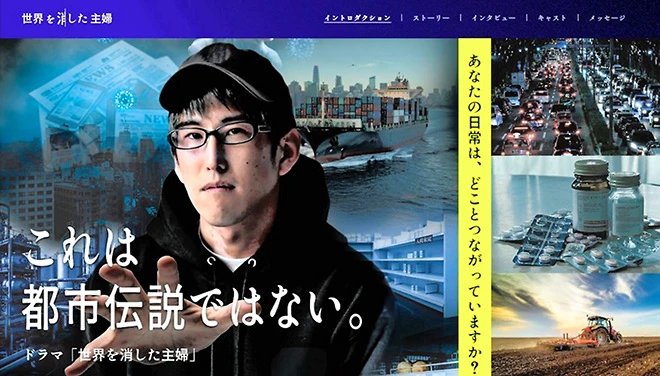
The initiative centers on a dedicated government webpage emblazoned with the slogan, “This is not an urban legend.” The site hosts a serialized drama titled The Housewife Who Erased the World, a narrative that imagines a woman utilizing a mysterious mobile application to sever all digital and social connections with the outside world. As the protagonist disconnects, the drama depicts a catastrophic ripple effect, leading to the total collapse of food and energy supply chains.
The partnership has immediately sparked intense scrutiny regarding the government’s communication strategy. By enlisting a creator whose digital footprint is rooted in sensationalist myths, officials are attempting to bridge the gap between abstract geopolitical concerns and the daily realities of youth. However, critics argue that the choice of spokesperson undermines the gravity of national security.
Chief Cabinet Secretary Minoru Kihara defended the initiative during a press conference on November 17, asserting that the government is simply adapting to modern media consumption habits. “We tried to explain national security in an easy-to-understand way by presenting it as an issue closely connected to people’s everyday lives,” Kihara told reporters. He maintained that the goal is to make a traditionally dry and complex topic accessible to a demographic that often feels alienated from state policy.
This is not the first time the government has veered into unorthodox public relations. Previous efforts included commissioning a husband-and-wife comedy routine to explain the nuances of national security, an experiment that faced significant backlash. At the time, opposition lawmakers questioned both the appropriateness of the format and the taxpayer cost associated with the campaign, suggesting that such “trivialization” of defense issues could diminish public trust.
The latest decision to tap a conspiracy theorist has only amplified these existing concerns. Skeptics point to the inherent contradiction of using a purveyor of misinformation to disseminate “serious” government messaging. Political analysts suggest the strategy carries a high risk: while it may garner clicks and social media engagement, it risks trivializing the very security concerns it aims to highlight.
As the drama unfolds in installments, the administration remains under pressure to justify the move. For now, the government insists that the unconventional platform is the only way to penetrate a fragmented digital media landscape. Whether the campaign serves as an effective educational tool or a costly PR misstep remains to be seen, but it has certainly succeeded in creating the kind of public conversation the government was hoping to avoid—one centered on the credibility of the state’s messengers rather than the message itself.
Disclaimer: This content is auto-generated for informational purposes only.
Source: Read Original News