







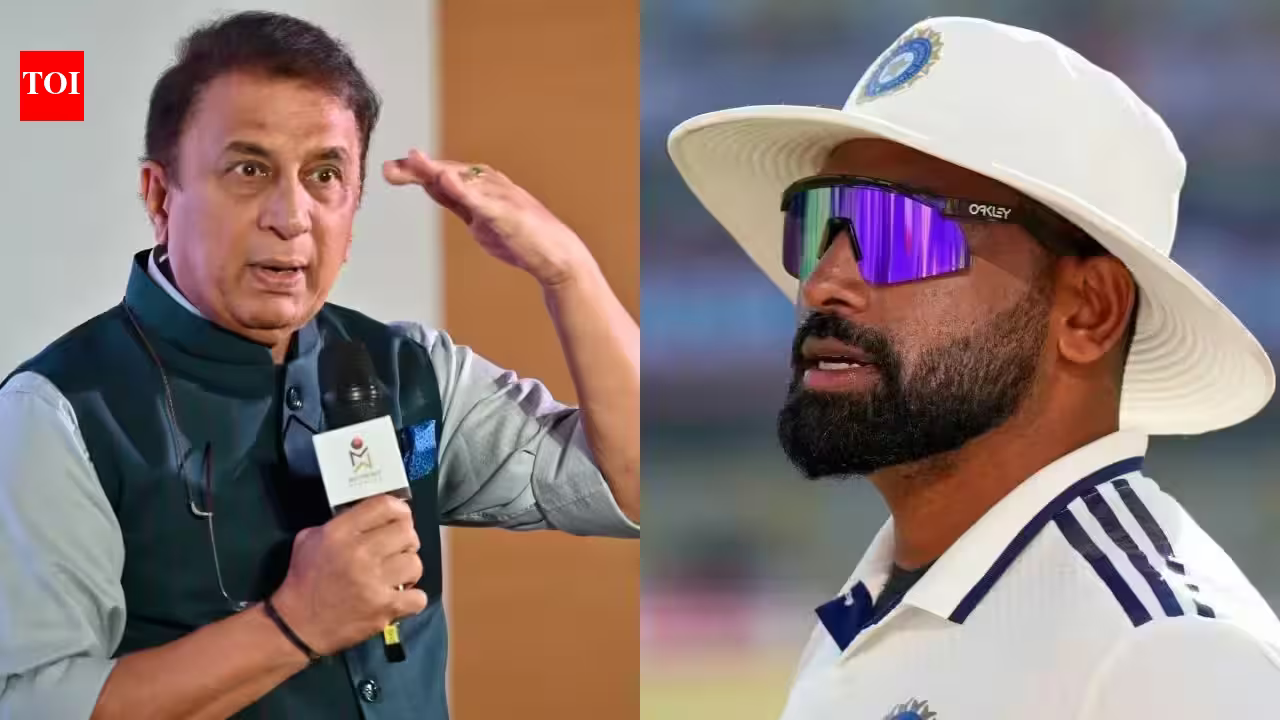
“Baffling” is perhaps the most polite descriptor one could find for the decision that has set the cricketing fraternity ablaze this week. As India took the field for the first Test against New Zealand, all eyes were on the team sheet, and the absence of Mohammed Siraj sent a ripple of disbelief through the commentary box and beyond. Leading the charge in questioning the selection were two of the most influential voices in Indian cricket history: legendary opener Sunil Gavaskar and former head coach Ravi Shastri.
The team management opted for a pace battery featuring Jasprit Bumrah, Prasidh Krishna, Akash Deep, and Anshul Kamboj. While the sheer speed and potential of the youngsters are not in doubt, the exclusion of Siraj—a proven match-winner and a pivotal figure in India’s recent overseas triumphs—has left experts and fans alike searching for an explanation that simply doesn’t seem to exist.
Gavaskar: A proven performer sidelined
Sunil Gavaskar, known for his incisive and often uncompromising analysis, did not mince his words when discussing the omission. For the “Little Master,” the writing had been on the wall for some time, yet the final decision still felt like a tactical misstep.
“It is not surprising, it is baffling,” Gavaskar remarked during his broadcast duties. “But the signs were there when he was drafted into the ODI side and only played the last game. When he did play that last game, I thought they were prepping him for the first Test. Not to see him in the playing eleven is a surprise. I don’t think he has let India down ever. There is nothing that has gone wrong with his bowling.”
Gavaskar’s argument centers on consistency. Siraj has long been the firebrand of the Indian bowling attack, the man skipper Rohit Sharma turns to when a partnership needs to be broken or when the ball needs to be zipped around on a flat track. By removing such a cornerstone of the attack, India hasn’t just dropped a player; they have arguably removed a source of psychological intimidation that Siraj provides in abundance.
Shastri highlights the loss of aggression
Ravi Shastri, whose tenure as head coach was defined by his preference for aggressive, high-intensity cricket, echoed Gavaskar’s sentiments with a focus on the technical profile of the Indian attack. Shastri took to social media to articulate his confusion, emphasizing that if the match conditions demanded pace and seam movement, Siraj was arguably the first name that should have been written in ink.
“Hope India will bounce back strongly,” Shastri noted. “But if pace, skill and seam movement were the criteria, and 140 clicks was hard to come by, one has to ask the question: Where was Mohd Siraj? Experience, aggression, and the ability to make things happen with the ball. Surely that counts for something!”
Shastri’s point is particularly salient given the nature of the modern Test game. While youth provides raw potential, the “ability to make things happen” is an intangible quality that comes with years of toil at the international level—a department where Siraj currently leads the pack among India’s secondary pace options.
A tough day at the office
The validity of the criticism grew louder as the first day of the Test unfolded. After a blistering start that saw Jasprit Bumrah dismantle the top order, reducing the Black Caps to a precarious 70 for 5, it appeared that the Indian seamers were going to dictate terms. However, as the day wore on, the momentum shifted dramatically.
Henry Nicholls and Glenn Phillips, two of New Zealand’s most capable middle-order batters, orchestrated a remarkable recovery. Nicholls, who displayed impeccable discipline and patience, finished the day unbeaten on 113. He was perfectly complemented by Phillips, who played with a fluid aggression, closing the day on 94 not out. The pair put together an unbroken 173-run partnership, dragging New Zealand from the depths of despair to a comfortable 243 for 5 by stumps.
Watching that partnership flourish, one could not help but wonder if the presence of Siraj’s relentless intensity and hit-the-deck bowling might have provided the necessary breakthrough that the Indian attack lacked in the final session. While Bumrah remains a master of his craft, taking three crucial wickets, the lack of support allowed the New Zealand pair to settle, negate the movement, and eventually dominate the bowling attack.
As the series progresses, the pressure will only mount on the team management. If the current bowling combination fails to produce results, the voices of Gavaskar and Shastri will only grow louder. For now, the decision to leave out Mohammed Siraj stands as a curious, high-stakes gamble—one that has already begun to show the cracks in an otherwise formidable Indian setup. The question now remains: will India reinstate their trusted pacer, or will they persist with this new-look lineup, despite the clear warnings from the game’s most seasoned observers?
Disclaimer: This content is auto-generated for informational purposes only.
Source: Read Original News