









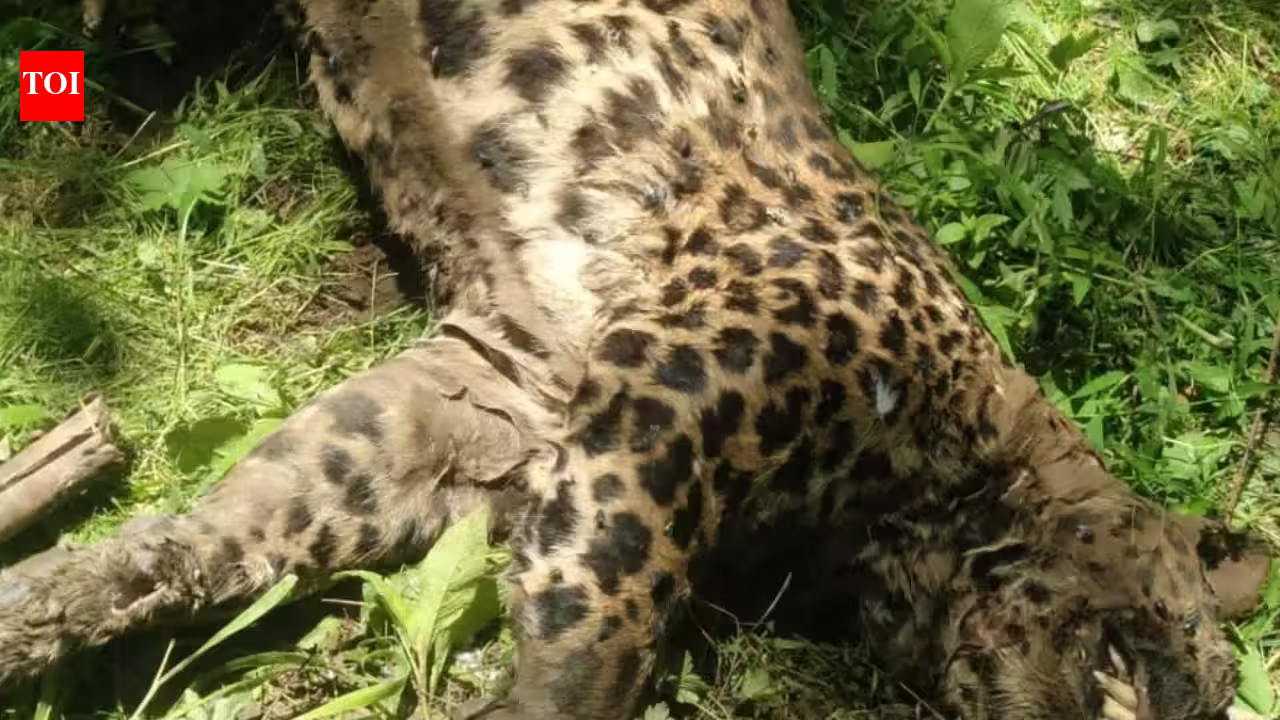
Three Leopards Found Dead in North Kashmir; Poisoning Suspected
SRINAGAR: The wildlife authorities in Jammu and Kashmir have launched an investigation following the mysterious deaths of three leopards in the forest regions of Kunzar, located in the Baramulla district of north Kashmir. The recovery of the carcasses within a 48-hour window has triggered concerns regarding potential human-wildlife conflict or deliberate poisoning, prompting the Wildlife Protection Department to file a formal First Information Report (FIR) against unknown individuals.
Investigation Into Unusual Deaths
The initial discovery occurred on November 17, when two leopard cubs—both female and estimated to be between eight and nine months old—were found deceased. Wildlife official Shahid Sultan stated that the cubs showed no external trauma or visible injuries. Due to the unavailability of a veterinarian on the day of the discovery, the bodies were secured overnight at the department’s control room in Tangmarg.
The situation escalated on Wednesday when local police notified wildlife officials of a third leopard carcass in the same vicinity. This leopard was a fully mature male, aged approximately eight to nine years. Following autopsies conducted on the animals, medical experts have flagged poisoning as the primary suspect behind the fatalities.
“The medical reports indicate a strong suspicion of poisoning,” Sultan noted. He further explained that authorities are investigating multiple avenues, including the possibility that the animals consumed contaminated meat, such as a rabid dog, or were victims of intentional poisoning by locals. To confirm the exact cause of death, tissue and biological samples have been dispatched for detailed forensic analysis.
Rising Human-Wildlife Tensions
This string of deaths comes against a backdrop of increasing anxiety in the region regarding leopard activity. North Kashmir, characterized by its dense mountainous terrain and vast apple orchards, offers an ideal habitat for leopards. However, the proximity of these forests to human settlements has frequently led to dangerous encounters.
The vulnerability of local residents was tragically highlighted just days prior to these incidents. On November 10, a six-year-old boy named Kifayat Bhat was mauled to death by a leopard in the Kreeri area. The incident sparked public outcry, with residents demanding better protection from wildlife movement near residential zones.
A Worrying Trend
Wildlife officials have expressed alarm at the nature of these recent leopard deaths. While conflict-related fatalities are unfortunately not unheard of, the discovery of three leopards—including two cubs—in such a short timeframe without immediate signs of struggle is highly unusual.
“We have never encountered a situation involving suspected poisoning of this nature in this area before,” Sultan added. As the investigation progresses, the department is working to determine whether the leopards’ deaths were a result of an isolated environmental contamination or a retaliatory act linked to recent human-animal conflicts in the Baramulla district. For now, the forest department remains on high alert, urging local communities to exercise caution and avoid any direct contact with wildlife or stray animal carcasses in the forest fringes.
Disclaimer: This content is auto-generated for informational purposes only.
Source: Read Original News