







Rahul Gandhi Criticizes India’s “Side Player” Status in Global Geopolitics
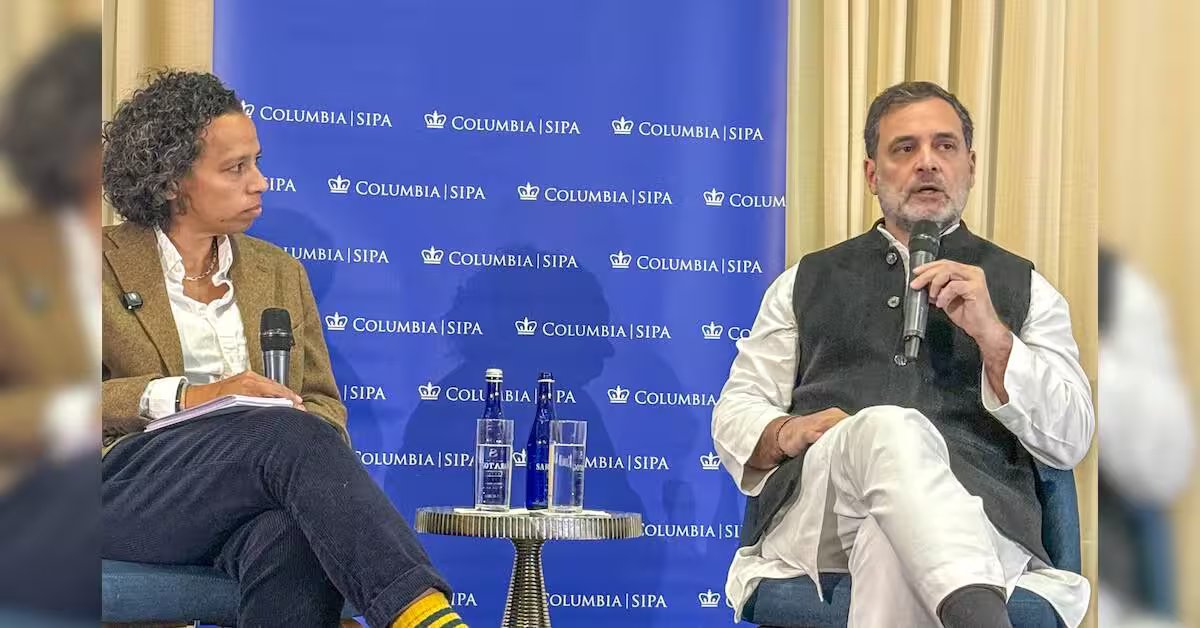
Leader of the Opposition in the Lok Sabha, Rahul Gandhi, has sparked a fresh debate on India’s foreign policy, arguing that the nation has transitioned from a global influencer to a marginal observer on the world stage. During an interactive session with students at the University of Chicago, moderated by Professor Robert Pape, the Congress leader contended that despite India’s inherent size and geopolitical potential, it is currently failing to leverage its position effectively.
From Leading Voice to Passive Observer
Gandhi expressed profound disappointment over India’s lack of participation in critical global mediation efforts. Pointing to the recent diplomatic maneuvers where Pakistan played a role in negotiating between the United States and Iran, Gandhi described the situation as a missed opportunity for New Delhi.
“India, by its size, naturally has a global voice and should be actively involved in global conversations,” Gandhi remarked. “But frankly, India has become a side player.” He lamented that while India maintains diplomatic ties with the US, Iran, and Russia, it has been reduced to merely watching from the sidelines while other nations—including regional rivals—take the lead in high-stakes diplomacy. He drew parallels to the post-Independence era, noting that India once held significant moral and political stature as a leader of the Non-Aligned Movement, a legacy he believes New Delhi should strive to reclaim.
Critique of ‘Personality-Driven’ Foreign Policy
A significant portion of Gandhi’s address was dedicated to critiquing the foreign policy approach of Prime Minister Narendra Modi. Gandhi argued that the current administration’s reliance on personal rapport with world leaders—such as President Donald Trump and President Vladimir Putin—is a flawed strategy.
“Friendship is not the point. Who gives a damn about friendship?” Gandhi challenged. He emphasized that global leaders represent complex economic and political structures, and their decision-making processes are governed by national interests rather than personal camaraderie. “He is not going to make decisions based on whether he likes you or doesn’t like you,” Gandhi stated, stressing that foreign policy should be built upon a sophisticated understanding of a nation’s strategic placement within the global order rather than optics.
Shaping the Future Global Architecture
Looking toward the future, Gandhi posited that the upcoming global security structure will be far more decentralized than the post-World War II order, which was largely designed by the West. He argued that the next era of international relations would be defined by a multi-civilizational approach, involving a coalition of power centers including the United States, China, India, the Middle East, and Russia. India, he insisted, must recognize its potential to be a foundational architect in this evolving system.
The Stance on Pakistan
Addressing a query from a Pakistani participant regarding the potential for normalized relations and an end to the “blame game,” Gandhi maintained a firm, prerequisite-based stance. He made it clear that while there is room for dialogue, the onus of creating a conducive environment lies with Islamabad.
“The moment that support and encouragement of terrorism stops, a conversation can potentially begin,” Gandhi asserted. He underscored that for India, the priority remains the safety of its citizens, stating, “It is impossible for us to accept our innocent people being murdered and have a conversation with Pakistan.”
Disclaimer: This content is auto-generated for informational purposes only.
Source: Read Original News