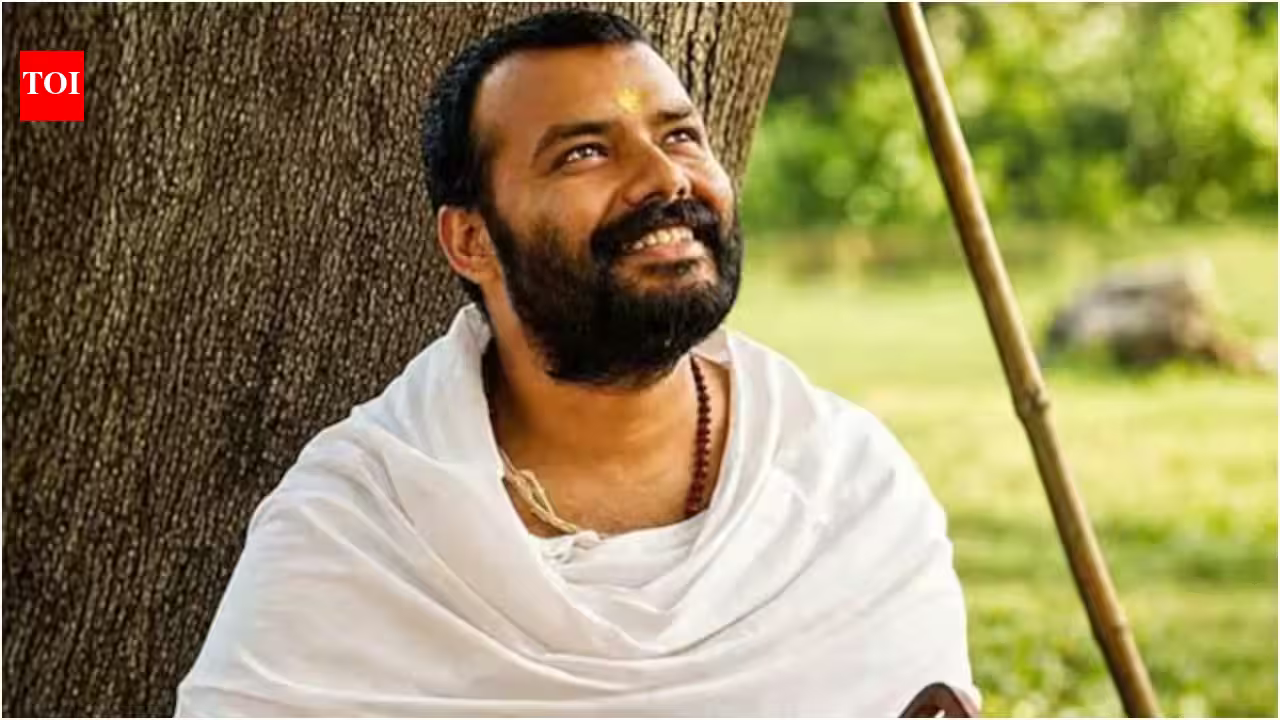










Beyond the Screen: Why Rejin S Babu is Embracing the ‘Bouma’ Fan Theories
In the modern age of cinema, the credits rolling are rarely the end of the conversation. In the age of YouTube analysis essays and Reddit deep-dives, a film is only as good as the discourse it ignites. Malayalam horror-thriller Bouma, directed by Rejin S Babu, has become the latest playground for armchair detectives and cinephiles alike. Since its release, the film—centered on the chilling occurrences at the isolated Rose Villa—has sparked a flurry of “ending explained” videos, turning its complex narrative into an interactive puzzle.
For many filmmakers, the emergence of speculative fan theories can be a point of contention, an unwanted intrusion into a carefully crafted vision. But for Rejin S Babu, the experience has been nothing short of revelatory. In a recent interview with Reporter Films, the director didn’t just accept these interpretations—he celebrated them, suggesting that when an audience begins to deconstruct a film, the movie truly belongs to them.
Rejin S Babu reacts to ‘Bouma’ ending explained videos
Watching the discourse unfold online, Babu found himself in the unusual position of being a student of his own work. He admits that he has sat down to watch several of the high-production analysis videos circulating on social media, and what he found there surprised him.
“To be honest, I have watched these explanation videos too, and I was genuinely surprised,” the director admitted. “People have identified several layers and made videos about things that even we had not intended. I consider that a real success for the movie. Even if those interpretations were not what I originally intended, we can only acknowledge that such elements are present in the film.”
Babu’s humility is striking, particularly when he notes the sheer scope of the viewers’ dedication. The director candidly remarked that the audience’s commitment to researching the symbols and narrative callbacks within Bouma at times exceeded the intensity of his own writing process. For him, the intellectual labor the audience has poured into decoding Rose Villa is the ultimate metric of a film’s impact.
Director recalls ‘Manichitrathazhu’ discussions
To understand why Babu is so receptive to this audience-led post-mortem, one has to look at the lineage of Malayalam cinema. He draws a direct line between the current obsession with Bouma and the cult status of the Malayalam classic Manichitrathazhu.
In the years following the release of the iconic psychological thriller, online communities—specifically platforms like Cinema Paradise and Movie Street—pored over every frame, debate, and character nuance. It became a piece of cultural lore, with fans constantly finding subtext that writer Madhu Muttam may not have consciously inscribed in the script.
Babu recalled a poignant anecdote regarding Muttam’s perspective on the matter: “When people start liking certain films, reviewers rise above the writers.” This shift in perspective is the golden ticket for any creator. Babu isn’t interested in policing the “correct” interpretation of his film; he views the cinematic experience as a collaborative evolution. If the audience finds depth where there was once only surface, it is not a flaw in the film—it is the film’s evolution into something larger than its creator.
Unpacking the Mystery of Rose Villa
For those who haven’t stepped foot in the chilling halls of Rose Villa, Bouma is a masterclass in atmospheric tension. The film follows Celine (played with palpable intensity by Revathy Sharma), who inherits the ancestral Peermade estate alongside her partner, Jacob (Sagar Surya). What starts as a fresh start for the couple quickly devolves into a nightmare rooted in the villa’s tragic, hidden history.
The narrative is expertly bolstered by the performances of Vineeth as the enigmatic former caretaker Samuel and Dileesh Pothan as the police officer Esho, whose investigation into the disappearance of three local women pulls the veil off the villa’s dark secrets. The film cleverly employs the tropes of gothic horror—supernatural dread, isolated locales, and cryptic flashbacks—before pivoting into a grounded, albeit harrowing, exploration of human evil.
The Climax: A Shift from Supernatural to Sinister
The brilliance of Bouma, and perhaps why it has generated so much controversy and analysis, lies in its jarring genre shift. The film utilizes the audience’s fear of the supernatural, only to pull the rug out from under them with a cold, hard dose of reality.
The climactic revelation—that the “ghostly” happenings were merely a cover for a heinous, systemic crime involving an underground medical confinement facility—has been a major point of contention. Some viewers found the pivot from supernatural terror to a human-led conspiracy to be a jarring narrative choice. Yet, for others, the revelation of the doctor’s crimes and the subsequent exposure of Celine’s own childhood trauma elevated the film from a standard “haunted house” flick into a social commentary on the vulnerability of women.
The Verdict: A Success in Engagement
While critical reception for Bouma has been mixed—with outlets like ETimes awarding it 2.5 stars—Rejin S Babu remains unfazed. He recognizes that a film’s quality isn’t always tied to a consensus rating; often, its value is found in the conversation it inspires.
Whether the viewers are critiquing the pacing of the police investigation or debating the ambiguity of the final frames, the fact remains that they are talking. In an industry saturated with content, the ability to provoke a long-form discussion is a rare feat. For Rejin S Babu, Bouma isn’t just a 2.5-star movie or a 5-star masterpiece; it is a successful experiment in audience connection. If a film can take a stranger’s trauma or a director’s vision and force an audience to research, debate, and dream about it long after the screen goes dark, then in the eyes of its director, it has achieved exactly what it set out to do.
Disclaimer: This content is auto-generated for informational purposes only.
Source: Read Original News