







In an industry often defined by the glitz of red carpets, the heft of box office receipts, and the relentless pursuit of the next “prestige” accolade, Ralph Fiennes has long stood as an anomaly. The British stage and screen titan, known for his chilling portrayal of Amon Göth in Schindler’s List and the sinister sophistication of Lord Voldemort, possesses a quiet, reflective interiority that is rarely seen in the upper echelons of A-list celebrity.
Recently, a decades-old sentiment from the actor has resurfaced, acting as a poignant reminder that while the world measures success in statues and salaries, the man himself measures it in something far more intangible. Reflecting on a life defined by craft rather than commerce, Fiennes once shared, “Success… is all about being able to extend love to people… not in a big capital-letter sense but in the everyday: little by little, task by task, gesture by gesture, word by word.”
Deconstructing the Myth of Grandeur
When Fiennes offered these thoughts to Parade magazine in 1997, he was sitting at the pinnacle of industry recognition. He had just earned an Academy Award nomination for his haunting, romantic turn in The English Patient. It would have been the perfect moment for an actor to discuss “reaching the top” or the grind of Hollywood ambition. Instead, he pivoted toward a definition of success that dismantled the very pedestal he was standing on.
Fiennes argues that we have been conditioned to see success as a “capital-letter” event—a climax of ego, a singular moment of triumph, or a high-water mark of status. But by reframing success as a series of mundane, daily acts of care, he effectively neutralizes the toxicity of the Hollywood ambition machine. He suggests that the most profound human connection isn’t found in a grand romantic monologue or a heroic sacrifice on screen, but in the invisible work of being a decent human being. For Fiennes, success isn’t something you capture and place on a mantle; it is a current of goodwill you must actively push out into the world.
The Antidote to Modern Burnout
In our hyper-connected, digital age, this perspective feels more like a necessary intervention than a mere celebrity quote. Today, we are besieged by metrics. Our worth is increasingly tethered to the artificial feedback loops of follower counts, productivity hacks, and the relentless optimization of our personal brands. We are all, in some way, performing for an invisible audience.
Fiennes’ philosophy serves as an antidote to this modern burnout. By encouraging us to find value in the “task by task” nature of our day, he gives us permission to reject the grand narrative of “making it.” If success is found in the way you treat a colleague, the patience you show in a tedious meeting, or the kindness you extend in a brief exchange at the grocery store, then the pressure to achieve “big” results dissipates. It shifts the focus from external validation—which is fleeting and unreliable—to internal character, which is the only thing we truly control.
A Legacy Built Beyond the Lens
Understanding Fiennes’ perspective requires looking at the man behind the method. Born into a family of immense creative intellect—with siblings spanning the worlds of directing, composing, and conservation—Ralph Fiennes was never destined for a conventional path. He began his artistic journey not with a screenplay in hand, but with a paintbrush, studying at the Chelsea College of Arts.
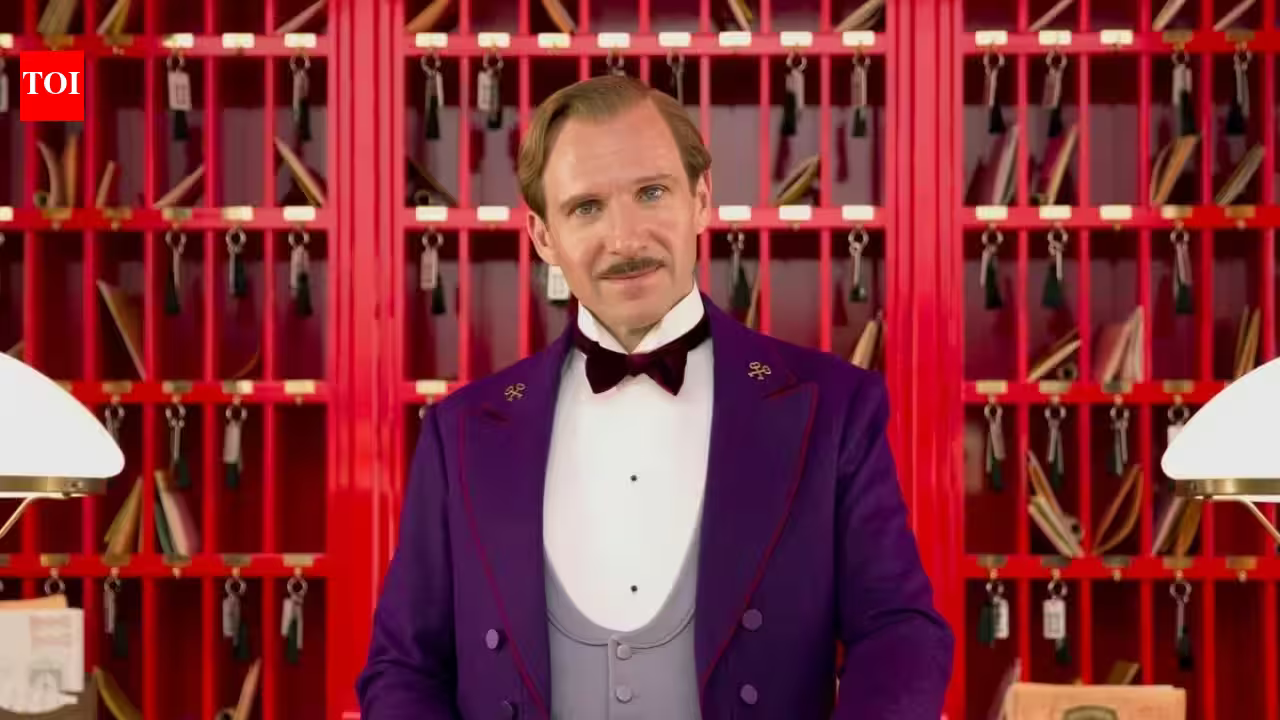
That artistic training explains much about his performance style. He approaches his roles with the precision of a painter, obsessed with the nuance of a gesture or the inflection of a word. When he transitioned from the stage to the screen—from his early days in Prime Suspect to his breakout in Schindler’s List—he carried that same rigorous, almost monastic dedication to his craft. He has never been a “celebrity” in the modern sense; he is a working actor who views his profession as a medium for exploration rather than a vehicle for fame. Whether he is portraying the menacing President Coriolanus Snow in the Hunger Games franchise or the meticulously composed M. Gustave in The Grand Budapest Hotel, there is a level of humanity beneath the performance that speaks to his grounded nature.
Defining the Life Well-Lived
Perhaps what is most refreshing about Fiennes’ stance is his lack of pretension. He doesn’t suggest that success is about grand humanitarian gestures or saving the world in one sweeping movement. That kind of thinking often leads to grandiosity and eventual disappointment. Instead, he highlights the “mundane responsibilities”—the quiet, often invisible labor that sustains relationships and communities.
In a world that demands we be “extraordinary,” Fiennes dares to suggest that being ordinary, but deeply intentional, is the highest form of success. It is a humble manifesto. It tells us that your resume, your LinkedIn profile, and your tax bracket are poor indicators of a life well-lived. Real success is the sum total of your small, quiet mercies.
As we look at the landscape of modern entertainment, where the stars are often shielded by handlers and PR teams, Fiennes’ long-held belief remains a benchmark of integrity. He reminds us that the stage is not where life happens. Life happens in the gaps between the scenes, in the words you choose to speak to a stranger, and the grace you show to those around you.
“Task by task,” Fiennes says. It’s a slow, quiet way to live—and perhaps, given the chaotic state of the world, it is the only way to remain whole. Success, as he defines it, isn’t about winning; it’s about continuing to show up, with heart, for the people who happen to be in your orbit. In that sense, Ralph Fiennes is not just a successful actor; he is a master of the only craft that truly matters: being human.
Disclaimer: This content is auto-generated for informational purposes only.
Source: Read Original News